This Oscar short listed short film tells the story of a Christian woman traveling through Kenya by bus. When the bus is stopped by Islamic militants wanting to kill the Christians the Muslim passengers protect them.
This moving short is a wonderful reminder that there are still good people in the world. Nicely recreating the 2015 attack the film doesn't waste a moment, telling us everything we need to know in with an economy of style that proves less is more. As you watch the film you realize that the small scale recounting is best for this story since it remains laser focused. I have no doubt that had Hollywood made this film it would have been a painfully over long recreation of a several minute event.
This is a stunning little gem and very recommended.
A collection of reviews of films from off the beaten path; a travel guide for those who love the cinematic world and want more than the mainstream releases.
Friday, December 22, 2017
Thursday, December 21, 2017
The Silent Child (2017)
A young teacher is brought in to help a deaf girl preparing for school improve her skills, The teacher begins to have success but ends up on a collision course with the girls parents who don't understand that there is much more to their daughter.
This is a top shelf film on every level will break your heart with it's tale of parents who can't be bothered and schools unequipped to deal with the problem of deafness. No one seems to understand that with the right amount of attention and the right bit of help the young girl will be fine.
Beautifully made I can completely understand how this ended up on the Oscar short list since the film looks and feels like a finely crafted feature. I was disappointed when the film ended after less than 20 minutes because there was still much to say. On the other hand THE SILENT CHILD does an excellent job of not only explaining what deaf children face but also what it feels like not to hear.
Keep an eye out for this film and expect it to show up as an Oscar finalist.
Recommended.
This is a top shelf film on every level will break your heart with it's tale of parents who can't be bothered and schools unequipped to deal with the problem of deafness. No one seems to understand that with the right amount of attention and the right bit of help the young girl will be fine.
Beautifully made I can completely understand how this ended up on the Oscar short list since the film looks and feels like a finely crafted feature. I was disappointed when the film ended after less than 20 minutes because there was still much to say. On the other hand THE SILENT CHILD does an excellent job of not only explaining what deaf children face but also what it feels like not to hear.
Keep an eye out for this film and expect it to show up as an Oscar finalist.
Recommended.
Wednesday, December 20, 2017
January/February 2018 Week-Long Engagements Calendar at Metrograph Announced
Submissions now open for The Brooklyn Horror Film Festival 2018!
BHFF announces new HEAD TRIP sidebar, badge sales, and 2018 dates—spanning eight days!
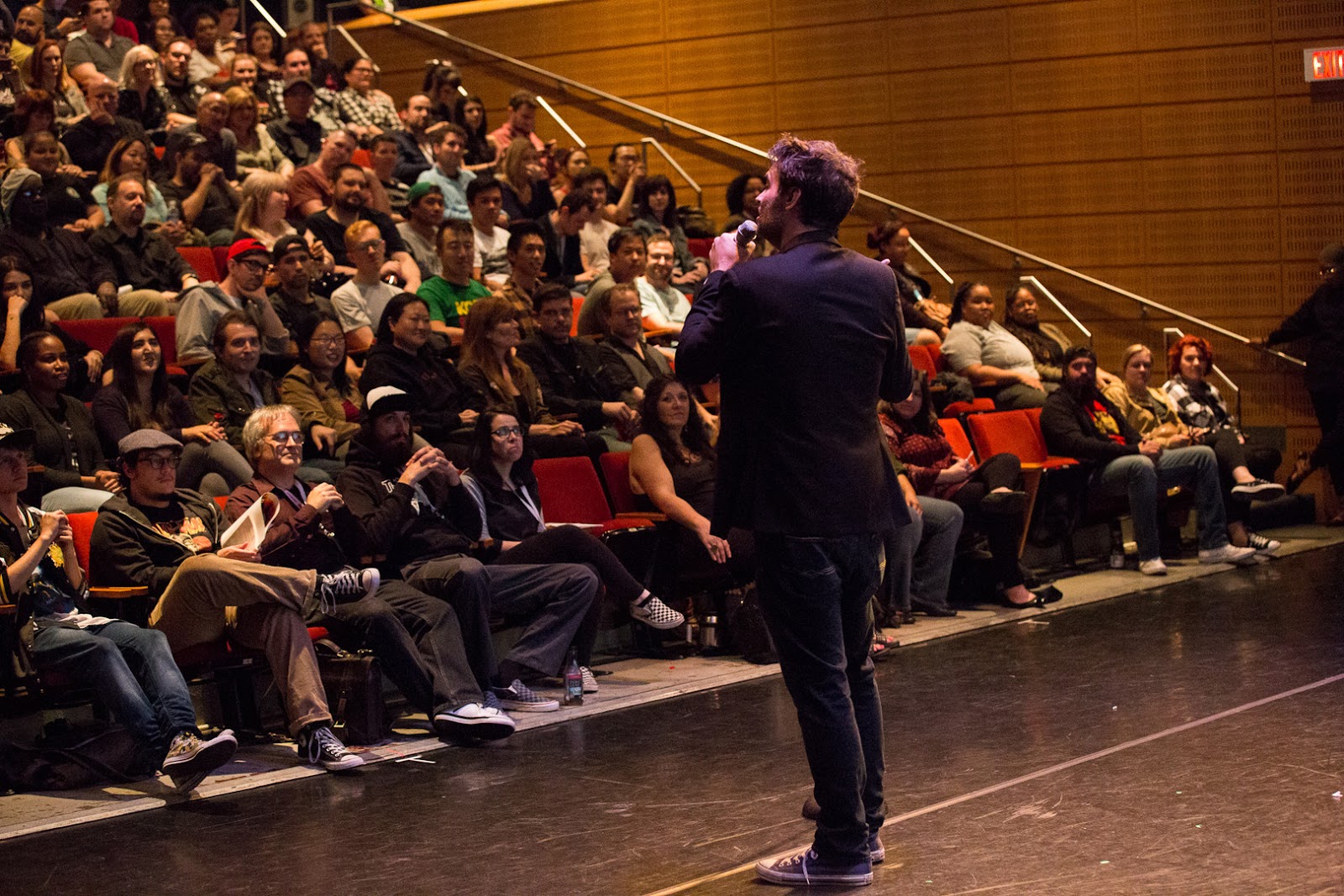
Wednesday, December 20th, 2017 - Following our second edition in October 2017, where the festival doubled in size from our inaugural year, The Brooklyn Horror Film Festival will be expanding significantly once again in 2018. Already established as a premier East Coast genre festival, we’re elated to announce we’ll now span eight days, running from October 11-18, 2018. Adding four more days to the schedule means we’ll have the ability to screen more of the best independent genre film from around the world!
Submissions for The Brooklyn Horror Film Festival 2018 are now open on FilmFreeway & Withoutabox for shorts and features in the horror genre--and beyond! The first submission deadline is January 20th and the final deadline is August 13, 2018.
Horror Buff Badges (12 film selections) and Splatter Packages (6 film selections) are now on sale at early bird prices, so act now before they sell-out! Both of these specials offer pre-selection before individual tickets go onsale to the public and include access to our annual pre-fest kick off event!
We're extremely excited to be partnering with Nitehawk Cinema in 2018 which will become one of our primary screening venues, including Opening and Closing Night. The festival will maintain its tradition of extending our reach to old and new venues across Brooklyn, bringing together the dynamic cinephile culture that sets the borough apart. Stretching eight days the fest will offer the bulk of its screening and events on the weekend, while the weekday schedule will be lighter.
For our third edition we’re also thrilled to announce that our annual HEAD TRIP shorts program, which has spotlighted films that pushed the boundaries and expectations of the horror genre, will be expanding to its own sidebar and will include features as well. The HEAD TRIP program will accept horror films that play with all genres, from sci-fi to fantasy and documentary to (weird) drama!
Submit
Festival Badges
UNNAMED FOOTAGE FESTIVAL ANNOUNCES A WEEKEND OF FOUND FOOTAGE HORROR AT SAN FRANSISCO'S BALBOA THEATER!
The new fest comes to you from a collaboration between Philadelphia's Unnamed Film Festival and the Bay Area's Overlook TheatreWatch the special festival trailer HERE and follow us for more details in 2018!Tuesday, December 19th, San Francisco, CA -- The Unnamed Footage Festival, a weekend of found footage horror, first person cinema, and faux documentary, is coming to the historic Balboa Theater in San Francisco March 24th - 25th, 2018. A collaboration between Philadelphia’s Unnamed Film Festival and the Bay Area-based organization, The Overlook Theatre, The Unnamed Footage Festival will include in-competition new selections from around the world and a series of revival screenings. The two-day event will feature in-person talks and Q&As with filmmakers who contribute to this niche subgenre, as well limited edition art and collectibles for badge holders.The Balboa Theater resides in San Francisco’s Outer Richmond District and has been an operating movie house since 1926, splitting its single screen in two in the late 70’s. Rumors of paranormal activity at the classic cinema, which is built over a former cemetery, have been circulated by staff and patrons for years, making it the perfect location for UFF.The slate of films will consist of narratives shot in the first person, and show the exciting diversity within the medium that has gone uncelebrated until now. While THE BLAIR WITCH PROJECT and PARANORMAL ACTIVITY defined the genre, many others went under the radar. UFF will offer audiences the chance to revisit older titles and discover new ones, while exploring comedy, science fiction, and drama, with an emphasis on the genre most often linked to found footage — horror movies.“There’s nothing scarier than watching a found footage horror film in a creepy old theater ” says an Unnamed Representative, speaking through a phone with a voice modulator. “But the idea behind UFF isn’t just to scare the audience, we want to dissect the way these are made. We want to talk about how the forced perspective is used to manipulate the viewer, and the creativity in the use of different cameras.”UFF is currently looking for films made by anyone, anytime — there are no limits regarding completion date or release status. Due to the nature of this genre, sometimes films take years to complete and slip through the cracks, and UFF’s goal is to hunt down and revive these movies and give new films the chance to screen theatrically.Submissions are being accepted through February 15th, with a flat submission rate of $5 per short and $10 per feature. “Just go out and shoot something,” says the garbled voice of the Unnamed Representative. “A big part of this is to encourage filmmakers to play in this underappreciated storytelling format. There is so much room for exploration, and we want to see what strange and exciting things artists can do with it.”Submissions are now being accepted through Film Freeway: https://filmfreeway.com/UnnamedFootageFestival Badges will be on sale in early 2018. Follow the Unnamed Footage Festival on Facebook, Twitter and Instagram for updates. Updates will also be released as they become available on the weekly Overlook Hour Podcast.
THE UNNAMED FILM FESTIVAL BIOFounded late 2015 in Philadelphia by Madeleine Koestner and Alex Gardner, the Philadelphia Unnamed Film Festival takes place in the Fall in Center City featuring a selection of the best new and undiscovered genre films. Now entering their third year, the festival has grown into a four day event gathering both fans and industry for an impressive slate of films, the most recent edition bringing the premieres of TRAGEDY GIRLS, TERRIFIER, and RUIN ME to the East coast city.THE OVERLOOK THEATRE BIOThe Overlook Theatre is a Bay Area based site whose focus is promoting local events and cultivating a sense of community among genre film fans. In addition to bi-weekly screenings, weekly film release highlights, group film reviews, and think piece editorials, they have branched out into the podcast world, and are quickly coming up on the milestone hundredth episode of The Overlook Hour podcast. To hear interviews with indie filmmakers and discussions on overlooked films, check them out on iTunes, Stitcher, or Soundcloud.
Talking with Bill Pullman and Jared Moshe about The Ballad of Lefty Brown
On the snowy afternoon of Friday December 15th, as THE BALLAD OF LEFTY BROWN was hitting select theaters, I was being ushered into a conference room to spend some time talking to the film’s director Jared Moshe and it’s star the legendary Bill Pullman. Over the course of some twenty five minutes we talked about the film, the western genre, Pullman’s career, theater and a few other things. It was a wonderfully cool experience and one of the high points of the film year.
Before I turn you over to the men behind LEFTY BROWN there are a couple of notes you should be aware of-
First we do discuss some plot points and the ending of the film. While the discussion could technically be considered spoilery, I don’t think it will ruin anything. I showed the interview to some friends and asked them what they thought and they said it was vague enough that it didn’t ruin anything.
Secondly there is a discussion of the Broadway production of Edward Albee's play called The Goat, or Who Is Sylvia. If you are not a theater fan you might not be aware that the play rocked audiences back in 2002 with its examination of the nature of love via the story of a man in love with a goat. That may sound funny but it is in reality a shattering theatrical experience that many theater goers I know still talk about, particularly Pullman’s performance.
Lastly I want to thank Layla and every one at Cinetic Media for making this happen. And I especially want to thank Bill Pullman and Jared Moshe for taking time out of their busy schedules to talk to me.
The meeting began with the failure of my audio recorder and switching to my camera to record the meeting. As I fumbled to change recording devices Bill and Jared switched from talking about New York pizza and discussing Jared’s anxiousness at the film opening and the prominent placement of the reviews in the New York Times and LA Times.
Bill Pullman: You excited?
Jared Moshé: Yeah, I'm kinda nervous.
Bill: [laughs] About tonight?
Jared: Yeah, I mean I shouldn't be. We got great reviews
Steve: You’re nervous because of opening tonight?
Jared: Yeah, just...
Steve: Why? It's a fantastic film.
Jared: It's just Christmas, like, so this is how it was placed in "The New York Times." [Shows Steve the front page of the New York Times Arts section]
Steve: Wow, oh my gosh! That is...
Jared: Like amazing, right?
Steve: Yeah.
Jared: That placement is incredible. The New York Times put us on the page with all the animals of "Star Wars," so anyone who wants to see all the Star Wars creatures, it's like right above it. It's like...
Bill: Oh, cool.
Jared: Yeah, it's awesome.
Steve: Wow, wow.
Jared: Like, so it's like, "Oh yeah, that...it's like it's kinda perfect." "Oh, yeah. I'm intrigued by all these." Hey.
Steve: How were reviews?
Jared: The reviews have been really good for the movie.
Steve: I was curious how they were and how they viewed the film some of the reviews I read seemed to not get what you were doing with references to the films of the 30’s and 40’s and the great sidekicks like Andy Devine, Froggy Burnette or Fuzzy St John.
Jared: Manohla Dargis, her opening of her review is she recognizes that there's a line in the movie "Sorry, don't get it done," that comes right out of something John Wayne says to Walter Brennan in RIO BRAVO. And she picked up on that. She totally picked up on all of that sort of arc.
And, uh, Kenny Turan did, too, actually. You could just see in those reviews how good critics they were. You could see how much they understand, their knowledge of cinema, and the history of this genre...
Bill: Hmm.
Jared: ...which is just really incredible.
Steve: Over the last five or six years I’ve been watching a lot of older westerns from the 30’s and 40’s and so much of you characters seem to be drawn from the films of that period but with a modern take
Jared: Well, I was trying to find a human being behind that sidekick archetype. Whether it was, you know, Andy Divine, Gabby Hayes, Walter Brennan, you know, the list goes on and on, and on.
Normally we just look at this type of character, , who we laugh at, who the other characters laugh at, who the hero laughs at. Yet, you know, in RED RIVER when John Wayne is about to be gunned down by three guys, it's Walter Brennan who throws in the rifle, and allows him to survive.
You know, it's like that dichotomy of someone who the hero relies on to an incredible degree, and everyone laughs at. It's like trying to find that human being.
Steve: Do you think that a character or ta a sidekick would be somebody like John Wayne would not have around if they were as big an idiot as they seem to be in the movies?
Jared: No, exactly.
Steve: I think that's the thing that surprises everybody when you see the film, it's like, "Well, I never thought of the sidekick like that." But if he wasn't that capable, he wouldn't be with “the hero” nor would he know everybody that he knows like the governor. They wouldn’t hang with him if he was just an idiot…
Jared: Mm-hmm.
Steve: ...or just the comic relief.
Jared: No, he understands that there's value in what Lefty brings, and, you know, that doggedness, you know, and, uh, but he sees probably more in Lefty than Lefty sees in himself.
Bill: Mm.
Steve: Did you have input into the character?
Bill: Oh yeah, yeah, it was great to collaboration with Jared. There was a sense that, uh, finding the character was going to be a collection of all these trials and tribulations he's gone through. And what, what he kinda, what gets revealed about him in the course of the journey, so.
Yeah, right up to the end, and I think, we were aware of what did we leave everybody with, you know, with this. And the rule of law is clearly, you know, on Lefty's mind when he says, "You know, hanging this guy isn't exactly gonna look good for a senator." You know, at the top of the story, this hanging gets done.
Even at the end with Jimmy, he wants to bring him to a jail. And then Laura says"You know, let's do it Eddie's way," and so we're going to take him to be hung, and that, that puts the characters in a crucible about what they decide about rule of the law.
Steve: But even then, I think Lefty has a sense of justice. The thing that struck me with the film is the fact that Lefty carries out the hanging. I mean, even if he was absolutely intent on the rule of law I don't think Lefty would have kicked it over.
Jared: Yeah.
Steve: But whereas the absolute sense of, "I have to do this. This is the justice.” This is the only way the governor is going to pay.
Bill: Well, I think that almost more than justice is loyalty. And for him, his decision to do it is an act of loyalty to Edward, 'cause he's gonna save Edward's widow from being, you know, punished for a murder.
So, beyond the rule of law, and beyond that sense of justice is, is that I'm gonna take the rap, 'cause she's determined he's gonna be hung, and "I'm gonna do it so she doesn't have to suffer." And that because of the loss of his friends and everything, in the course of the journey, all he has left is his loyalty.
Steve: Bill the one feature you’ve directed is a western. Jared you've directed two Westerns…have you directed anything other than westerns?
Jared: No, just Westerns. [laughs]
Steve: What is it that you guys find in westerns that they are the stories you want to tell?
Bill: Well the one that I really want to do was The Virginian... which is still the real seminal Western story. John Ford said he based five of his movies off of aspects of The Virginian.
The novel, written by Owen Wister in 1903, and that thing lit up the myth of the cowboy, and everything. So to do that movie is like to go back to the roots, which is Jared's instinct.
You know, he's not a revisionist. He's like comes...he goes deep into the roots and he draws from all the old, oldest impulses, and why that is such an important part of, uh, cinema, an important part of the country's heritage.
Jared: Yeah, for me it's, it's baked into our DNA. You know, and, you know, you have to embrace the sort of tyranny of the genre, and all the little tropes and almost clichés that make it such a wonderful genre that we understand so well.
Um, you know, and it's just naturally a cinematic place to tell stories. You know the first American movie was THE GREAT TRAIN ROBBERY. Hey, it's a Western. [laughs]
Westerns are tied to cinema, and it is such a wonderful canvas to tell stories on.
Steve: One of the things I loved about the film is that the characters are very real. You have, you have
the typical sidekick and characters but then you subvert them It’s things like Kathy Baker absolutely hating Lefty. You know, it's pure jealousy, if nothing else. I mean, Lefty hangs with her husband all the time. She never gets to see him.
Jared: Well, it's like more than that, even. It's like she's his wife yet he goes off on all these things that she cannot, as a woman, get to go and do. Like, you know, so she's sort of stuck in this role, and meanwhile, this guy gets to go out on all these adventures that she probably knows, she do better. She could probably be a better sidekick, a better partner to her husband than Lefty ever could. And, you, there's a lot of anger there. She's really important, you know, as Kathy and I talked about it, she's the only woman in the movie. And she has to feel that she's the only woman in this world, and respond to that, and have the emotion of, be coming from an emotional place of what it is to be that person, to be that woman who's just, you know, surrounded by men. You know, maybe sees her best friend once a year, like, and how tough that is, and how tough that makes her.
Steve: How did you view the mythic ideas of the genre?
Jared: I mean, I love the myth, and I think the myth is fantastic, and even in subverting it, I do feel like I try to embrace the, the myth as value. Um, but I think you have to now, I understand that, like, there's a lot of warts on that myth, and you have to embrace sort of both sides of it, you know. I think we can see the value of the myths in the stories we tell ourselves, but, you know, we also have to say that we know that they're myths and know that they're not real.
Steve: That sort of ties into this thing that I was thinking about on the train ride in. I just came from my day job and I was telling everybody I was coming to Bill, and everybody's talking about WHILE YOU WERE SLEEPING, and INDEPENDENCE DAY and every other of the films you were in.
So you've created all these iconic characters. They are in their way just as mythic as the characters and archetypes of the west. What I wanted to know was how you find that living up to that? How does that affect you? How do you react to, you know, people would come to say, "I know you. I know you from WHILE YOU WERE SLEEPING" or whatever?
Bill: Yeah, well I'm always amazed that certain movies kinda get recycled and hang in there. I never even thought that WHILE YOU WERE SLEEPING would be a Christmas movie, and that's a kind of become a family tradition. Its odd to think families say, "Oh yeah, we sit down after/before Christmas every year and watch WHILE YOU WERE SLEEPING, and I thought, "I don't know if that..." But then I remember, oh yeah, there's all this stuff around the snow, and the tree... and the orb. And yeah, so that's, uh, you know, it's just such a fortunate thing to have.
But you realize how movies, how strong they are for people when you get to stick around for a few decades.
Steve: Are you coming back to Broadway or New York theater?
Bill: Oh it's really always such a good pleasure to get back to New York and do plays, and things, and I keep my eyes out, and I, and I just haven't found the right thing, so, but I'm definitely leaning in.
Steve: I had to ask that, 'cause I’m just a theater nut and as well as film one, and there was this seismic reaction to "The Goat" People are still talking about it
Jared: My grandmother an, 89-year-old woman, she's like, every time she hear’s about Bill… She's got like a crush on you…
Bill: Oh. [groans]
[laughter]
Jared: …from The Goat. She was so impressed with everything.
Bill: I’ll tell ya, on "The Sinner," the guy who's the show runner, Derek Simonds, his mother had seen The Goat, and was one of my first promoters, said, "You got to cast Pullman in this." So it's odd that a play would have that sort of an impact. I think I added up once that I thought I was seen by about 600,000 people, you know, which is like half of, uh, the audience of an opening night of a movie or something.
Jared: But it's a more special experience, I think, to go to a play to see it, and be in the audience. Like, eh, I think you connect much more with the audience. I mean, as an audience member, I know, I feel more connected with the actors...
Bill: Mm.
Jared: ...than when I go to the cinema, just because there's the intimacy of the room.
Steve: And it's happening right before you.
Jared: Yeah.
Steve: There's nothing like that.
Bill: Yeah, if it's a well-made play.
Jared: Well, yes. All right...
[laughter]
Bill: The opposite is the worst experience that you can't ever forget.
Jared: No.
Bill: Oh, then people can't get away from it fast enough
Steve: Um...
Jared: Good point.
[laughter]
Steve: Are you going to direct more?
Bill: Oh, that's an interesting good question. Well, I have been doing some theater pieces lately. I find that's easier to fit into my schedule.
You know, I can kind of workshop pieces that I'm writing and then because I have interest in what we used to call docudramas, you know, basically devised theater. And I'm working on a piece now that involves my daughter. So, when I can get some time off, I usually do a workshop of that, and then I look to direct those, eventually?
Steve: Jared are you going to do something other than Westerns?
Jared: Yeah, my next project is not Western. I have a sci-fi script, and I'm developing some other stuff. But I'm gonna stay in genre.
Steve: It's weird that in this day and age that somebody would direct two Westerns back to back.
Jared: I think I should be directing more Westerns.
Steve: We don’t get a lot of Westerns for the big screen
Bill: Well, there's a lot TV series. But just when everybody says it's nobody's doing Westerns anymore, there's thousands
Jared: People want to see them.
Bill: You know, I think violent Westerns are, you know attention getting. I think Jared's courage is to tell, really a human tale. You know, a tale of loss, a tale of character, and their humanity, of people inside that, without them relying on guns in hands for, you know, most of it, and that kind of thing.
I think that what's been surprising is that so many women have responded to this movie 'cause I think they aren't really needing to see another testosterone-driven, cruel we were or how violence is always in part of America, theme.
You know that there's more to be toldwith the people out and characters from that time.
Steve: This originally appeared on DIRECTV, and now it's going to theaters, was that purely financial or was that...?
Jared: You know we had a ton of offers on the movie, but we really liked what A24 brought to the table in terms of getting the film in front of the broadest audience. And one of the things about a Western is that the audience is so much in these very rural, very isolated places, where even if they were to go to a multi-plex movie it's an hour and a half away. There may not be an Indie theater that is gonna play a movie like this, but, for them to see it on DIRECTV, allows more people to relate to the movie and watch it, which at the end of the day, you want people to watch your movie.
Steve: The reason I'm asking about it is it's just that your performance in is late in the game addition to the awards season game. It's like you think you know how everything is going to go and then you see...
Jared: [laughs]
Steve: ...you see you as Lefty, and you're thinking, "OK that upsets everything."
[laughter]
Steve: I want you to get some awards because this is an iconic role. This is gonna be another one of your iconic roles, where everybody talks about it for years. I hope you get a lot of awards.
[laughter]
Bill: I don't know, it seems as though, uh, you know, there's always that question with Westerns whether the people give them the same… a few have kind of made it through...like "Unforgiven," and that kind of thing.
Jared: There's a Western bias.
Bill: There's a Western, yeah.
Jared: People don't take them as seriously as... they're not taken seriously as much as like art cinema is, or other genres.
Bill: Well, but you get THE REVENANT which feels as much like a Western as...
Jared: Yeah, but that comes in, because that's like you have a last year's Best Picture winner, and...I feel like The Revenant was like everyone deciding like, "OK, Leo deserves an Oscar. We're going to get behind him." You know, like...If they come in with that kind of pedigree, then they can sort of vault over the fact that they're a Western... but I think if it's just you're presenting it as a Western, it can be tough.
Bill: Mm-hmm, and this is like "Get Out," in that it's also humorous.
Jared: Yeah.
Bill: So, it's a really hard one to, for people to say this is drama...
Jared: Yeah.
Bill: It's a curious, uh, beast, yeah.
Steve: Well, it starts off, and you think it's one thing, and then once you're on your, your quest, it becomes something else. It's like a lot of, the humor's still there, but it becomes very serious, and everything has this really dark edge to it.
Bill: Yeah, yeah.
Steve: ... the killings and everything it's just it's like this this is not pleasant. And you're not as bumbling as you seem and you wonder "What am I watching," initially, and then it, then it hits you, and it's like, "Ah, this is what it is," and it clicks, and it goes, and it's...
Bill: Mm.
Steve: It's wonderful.
Jared: Thank you.
Bill: Mm. So good Steve that you, uh, that you enjoyed it and really liked the film.
Bill: I feel like it is something off or something very different from what's out there right now.
Jared: Very much so...
Steve: Yeah, it's just better than most of the other stuff out now.
Jared: Well, thank you.
Steve: What I really like is that I sort of thought one thing when I watched it. When I wrote it up I thought something else, and it's been a week, or however long since I've seen it, and it's like I've not stopped thinking about it...
Jared: That's awesome...
Steve: ...which is the better way, which to me, means it's like, it's a better film than most which evaporate after you watch them
Jared: I'm glad that it stays with you because I want, you know, you want people to think about it and talk about it.
Steve: Yeah, well, this is, this is something to I wanted. I have a lot of friends and family who love Westerns. It's like, "You've got to see this! You've got to see this!" [laughs]
Jared: Please, spread the word. Thank you so much.
Steve: Sorry I’m gushing.
Jared: It's OK.
Bill: Mm, mm.
Jared: Thank you so much.
Steve: Well, thank you all.
THE BALLAD OF LEFTY BROWN is currently in theaters, DIRECTV and on VOD
Before I turn you over to the men behind LEFTY BROWN there are a couple of notes you should be aware of-
First we do discuss some plot points and the ending of the film. While the discussion could technically be considered spoilery, I don’t think it will ruin anything. I showed the interview to some friends and asked them what they thought and they said it was vague enough that it didn’t ruin anything.
Secondly there is a discussion of the Broadway production of Edward Albee's play called The Goat, or Who Is Sylvia. If you are not a theater fan you might not be aware that the play rocked audiences back in 2002 with its examination of the nature of love via the story of a man in love with a goat. That may sound funny but it is in reality a shattering theatrical experience that many theater goers I know still talk about, particularly Pullman’s performance.
Lastly I want to thank Layla and every one at Cinetic Media for making this happen. And I especially want to thank Bill Pullman and Jared Moshe for taking time out of their busy schedules to talk to me.
The meeting began with the failure of my audio recorder and switching to my camera to record the meeting. As I fumbled to change recording devices Bill and Jared switched from talking about New York pizza and discussing Jared’s anxiousness at the film opening and the prominent placement of the reviews in the New York Times and LA Times.
Bill Pullman: You excited?
Jared Moshé: Yeah, I'm kinda nervous.
Bill: [laughs] About tonight?
Jared: Yeah, I mean I shouldn't be. We got great reviews
Steve: You’re nervous because of opening tonight?
Jared: Yeah, just...
Steve: Why? It's a fantastic film.
Jared: It's just Christmas, like, so this is how it was placed in "The New York Times." [Shows Steve the front page of the New York Times Arts section]
Steve: Wow, oh my gosh! That is...
Jared: Like amazing, right?
Steve: Yeah.
Jared: That placement is incredible. The New York Times put us on the page with all the animals of "Star Wars," so anyone who wants to see all the Star Wars creatures, it's like right above it. It's like...
Bill: Oh, cool.
Jared: Yeah, it's awesome.
Steve: Wow, wow.
Jared: Like, so it's like, "Oh yeah, that...it's like it's kinda perfect." "Oh, yeah. I'm intrigued by all these." Hey.
Steve: How were reviews?
Jared: The reviews have been really good for the movie.
Steve: I was curious how they were and how they viewed the film some of the reviews I read seemed to not get what you were doing with references to the films of the 30’s and 40’s and the great sidekicks like Andy Devine, Froggy Burnette or Fuzzy St John.
Jared: Manohla Dargis, her opening of her review is she recognizes that there's a line in the movie "Sorry, don't get it done," that comes right out of something John Wayne says to Walter Brennan in RIO BRAVO. And she picked up on that. She totally picked up on all of that sort of arc.
And, uh, Kenny Turan did, too, actually. You could just see in those reviews how good critics they were. You could see how much they understand, their knowledge of cinema, and the history of this genre...
Bill: Hmm.
Jared: ...which is just really incredible.
Steve: Over the last five or six years I’ve been watching a lot of older westerns from the 30’s and 40’s and so much of you characters seem to be drawn from the films of that period but with a modern take
Jared: Well, I was trying to find a human being behind that sidekick archetype. Whether it was, you know, Andy Divine, Gabby Hayes, Walter Brennan, you know, the list goes on and on, and on.
Normally we just look at this type of character, , who we laugh at, who the other characters laugh at, who the hero laughs at. Yet, you know, in RED RIVER when John Wayne is about to be gunned down by three guys, it's Walter Brennan who throws in the rifle, and allows him to survive.
You know, it's like that dichotomy of someone who the hero relies on to an incredible degree, and everyone laughs at. It's like trying to find that human being.
Steve: Do you think that a character or ta a sidekick would be somebody like John Wayne would not have around if they were as big an idiot as they seem to be in the movies?
Jared: No, exactly.
Steve: I think that's the thing that surprises everybody when you see the film, it's like, "Well, I never thought of the sidekick like that." But if he wasn't that capable, he wouldn't be with “the hero” nor would he know everybody that he knows like the governor. They wouldn’t hang with him if he was just an idiot…
Jared: Mm-hmm.
Steve: ...or just the comic relief.
Jared: No, he understands that there's value in what Lefty brings, and, you know, that doggedness, you know, and, uh, but he sees probably more in Lefty than Lefty sees in himself.
Bill: Mm.
Steve: Did you have input into the character?
Bill: Oh yeah, yeah, it was great to collaboration with Jared. There was a sense that, uh, finding the character was going to be a collection of all these trials and tribulations he's gone through. And what, what he kinda, what gets revealed about him in the course of the journey, so.
Yeah, right up to the end, and I think, we were aware of what did we leave everybody with, you know, with this. And the rule of law is clearly, you know, on Lefty's mind when he says, "You know, hanging this guy isn't exactly gonna look good for a senator." You know, at the top of the story, this hanging gets done.
Even at the end with Jimmy, he wants to bring him to a jail. And then Laura says"You know, let's do it Eddie's way," and so we're going to take him to be hung, and that, that puts the characters in a crucible about what they decide about rule of the law.
Steve: But even then, I think Lefty has a sense of justice. The thing that struck me with the film is the fact that Lefty carries out the hanging. I mean, even if he was absolutely intent on the rule of law I don't think Lefty would have kicked it over.
Jared: Yeah.
Steve: But whereas the absolute sense of, "I have to do this. This is the justice.” This is the only way the governor is going to pay.
Bill: Well, I think that almost more than justice is loyalty. And for him, his decision to do it is an act of loyalty to Edward, 'cause he's gonna save Edward's widow from being, you know, punished for a murder.
So, beyond the rule of law, and beyond that sense of justice is, is that I'm gonna take the rap, 'cause she's determined he's gonna be hung, and "I'm gonna do it so she doesn't have to suffer." And that because of the loss of his friends and everything, in the course of the journey, all he has left is his loyalty.
Steve: Bill the one feature you’ve directed is a western. Jared you've directed two Westerns…have you directed anything other than westerns?
Jared: No, just Westerns. [laughs]
Steve: What is it that you guys find in westerns that they are the stories you want to tell?
Bill: Well the one that I really want to do was The Virginian... which is still the real seminal Western story. John Ford said he based five of his movies off of aspects of The Virginian.
The novel, written by Owen Wister in 1903, and that thing lit up the myth of the cowboy, and everything. So to do that movie is like to go back to the roots, which is Jared's instinct.
You know, he's not a revisionist. He's like comes...he goes deep into the roots and he draws from all the old, oldest impulses, and why that is such an important part of, uh, cinema, an important part of the country's heritage.
Jared: Yeah, for me it's, it's baked into our DNA. You know, and, you know, you have to embrace the sort of tyranny of the genre, and all the little tropes and almost clichés that make it such a wonderful genre that we understand so well.
Um, you know, and it's just naturally a cinematic place to tell stories. You know the first American movie was THE GREAT TRAIN ROBBERY. Hey, it's a Western. [laughs]
Westerns are tied to cinema, and it is such a wonderful canvas to tell stories on.
Steve: One of the things I loved about the film is that the characters are very real. You have, you have
the typical sidekick and characters but then you subvert them It’s things like Kathy Baker absolutely hating Lefty. You know, it's pure jealousy, if nothing else. I mean, Lefty hangs with her husband all the time. She never gets to see him.
Jared: Well, it's like more than that, even. It's like she's his wife yet he goes off on all these things that she cannot, as a woman, get to go and do. Like, you know, so she's sort of stuck in this role, and meanwhile, this guy gets to go out on all these adventures that she probably knows, she do better. She could probably be a better sidekick, a better partner to her husband than Lefty ever could. And, you, there's a lot of anger there. She's really important, you know, as Kathy and I talked about it, she's the only woman in the movie. And she has to feel that she's the only woman in this world, and respond to that, and have the emotion of, be coming from an emotional place of what it is to be that person, to be that woman who's just, you know, surrounded by men. You know, maybe sees her best friend once a year, like, and how tough that is, and how tough that makes her.
Steve: How did you view the mythic ideas of the genre?
Jared: I mean, I love the myth, and I think the myth is fantastic, and even in subverting it, I do feel like I try to embrace the, the myth as value. Um, but I think you have to now, I understand that, like, there's a lot of warts on that myth, and you have to embrace sort of both sides of it, you know. I think we can see the value of the myths in the stories we tell ourselves, but, you know, we also have to say that we know that they're myths and know that they're not real.
Steve: That sort of ties into this thing that I was thinking about on the train ride in. I just came from my day job and I was telling everybody I was coming to Bill, and everybody's talking about WHILE YOU WERE SLEEPING, and INDEPENDENCE DAY and every other of the films you were in.
So you've created all these iconic characters. They are in their way just as mythic as the characters and archetypes of the west. What I wanted to know was how you find that living up to that? How does that affect you? How do you react to, you know, people would come to say, "I know you. I know you from WHILE YOU WERE SLEEPING" or whatever?
Bill: Yeah, well I'm always amazed that certain movies kinda get recycled and hang in there. I never even thought that WHILE YOU WERE SLEEPING would be a Christmas movie, and that's a kind of become a family tradition. Its odd to think families say, "Oh yeah, we sit down after/before Christmas every year and watch WHILE YOU WERE SLEEPING, and I thought, "I don't know if that..." But then I remember, oh yeah, there's all this stuff around the snow, and the tree... and the orb. And yeah, so that's, uh, you know, it's just such a fortunate thing to have.
But you realize how movies, how strong they are for people when you get to stick around for a few decades.
Steve: Are you coming back to Broadway or New York theater?
Bill: Oh it's really always such a good pleasure to get back to New York and do plays, and things, and I keep my eyes out, and I, and I just haven't found the right thing, so, but I'm definitely leaning in.
Steve: I had to ask that, 'cause I’m just a theater nut and as well as film one, and there was this seismic reaction to "The Goat" People are still talking about it
Jared: My grandmother an, 89-year-old woman, she's like, every time she hear’s about Bill… She's got like a crush on you…
Bill: Oh. [groans]
[laughter]
Jared: …from The Goat. She was so impressed with everything.
Bill: I’ll tell ya, on "The Sinner," the guy who's the show runner, Derek Simonds, his mother had seen The Goat, and was one of my first promoters, said, "You got to cast Pullman in this." So it's odd that a play would have that sort of an impact. I think I added up once that I thought I was seen by about 600,000 people, you know, which is like half of, uh, the audience of an opening night of a movie or something.
Jared: But it's a more special experience, I think, to go to a play to see it, and be in the audience. Like, eh, I think you connect much more with the audience. I mean, as an audience member, I know, I feel more connected with the actors...
Bill: Mm.
Jared: ...than when I go to the cinema, just because there's the intimacy of the room.
Steve: And it's happening right before you.
Jared: Yeah.
Steve: There's nothing like that.
Bill: Yeah, if it's a well-made play.
Jared: Well, yes. All right...
[laughter]
Bill: The opposite is the worst experience that you can't ever forget.
Jared: No.
Bill: Oh, then people can't get away from it fast enough
Steve: Um...
Jared: Good point.
[laughter]
Steve: Are you going to direct more?
Bill: Oh, that's an interesting good question. Well, I have been doing some theater pieces lately. I find that's easier to fit into my schedule.
You know, I can kind of workshop pieces that I'm writing and then because I have interest in what we used to call docudramas, you know, basically devised theater. And I'm working on a piece now that involves my daughter. So, when I can get some time off, I usually do a workshop of that, and then I look to direct those, eventually?
Steve: Jared are you going to do something other than Westerns?
Jared: Yeah, my next project is not Western. I have a sci-fi script, and I'm developing some other stuff. But I'm gonna stay in genre.
Steve: It's weird that in this day and age that somebody would direct two Westerns back to back.
Jared: I think I should be directing more Westerns.
Steve: We don’t get a lot of Westerns for the big screen
Bill: Well, there's a lot TV series. But just when everybody says it's nobody's doing Westerns anymore, there's thousands
Jared: People want to see them.
Bill: You know, I think violent Westerns are, you know attention getting. I think Jared's courage is to tell, really a human tale. You know, a tale of loss, a tale of character, and their humanity, of people inside that, without them relying on guns in hands for, you know, most of it, and that kind of thing.
I think that what's been surprising is that so many women have responded to this movie 'cause I think they aren't really needing to see another testosterone-driven, cruel we were or how violence is always in part of America, theme.
You know that there's more to be toldwith the people out and characters from that time.
Steve: This originally appeared on DIRECTV, and now it's going to theaters, was that purely financial or was that...?
Jared: You know we had a ton of offers on the movie, but we really liked what A24 brought to the table in terms of getting the film in front of the broadest audience. And one of the things about a Western is that the audience is so much in these very rural, very isolated places, where even if they were to go to a multi-plex movie it's an hour and a half away. There may not be an Indie theater that is gonna play a movie like this, but, for them to see it on DIRECTV, allows more people to relate to the movie and watch it, which at the end of the day, you want people to watch your movie.
Steve: The reason I'm asking about it is it's just that your performance in is late in the game addition to the awards season game. It's like you think you know how everything is going to go and then you see...
Jared: [laughs]
Steve: ...you see you as Lefty, and you're thinking, "OK that upsets everything."
[laughter]
Steve: I want you to get some awards because this is an iconic role. This is gonna be another one of your iconic roles, where everybody talks about it for years. I hope you get a lot of awards.
[laughter]
Bill: I don't know, it seems as though, uh, you know, there's always that question with Westerns whether the people give them the same… a few have kind of made it through...like "Unforgiven," and that kind of thing.
Jared: There's a Western bias.
Bill: There's a Western, yeah.
Jared: People don't take them as seriously as... they're not taken seriously as much as like art cinema is, or other genres.
Bill: Well, but you get THE REVENANT which feels as much like a Western as...
Jared: Yeah, but that comes in, because that's like you have a last year's Best Picture winner, and...I feel like The Revenant was like everyone deciding like, "OK, Leo deserves an Oscar. We're going to get behind him." You know, like...If they come in with that kind of pedigree, then they can sort of vault over the fact that they're a Western... but I think if it's just you're presenting it as a Western, it can be tough.
Bill: Mm-hmm, and this is like "Get Out," in that it's also humorous.
Jared: Yeah.
Bill: So, it's a really hard one to, for people to say this is drama...
Jared: Yeah.
Bill: It's a curious, uh, beast, yeah.
Steve: Well, it starts off, and you think it's one thing, and then once you're on your, your quest, it becomes something else. It's like a lot of, the humor's still there, but it becomes very serious, and everything has this really dark edge to it.
Bill: Yeah, yeah.
Steve: ... the killings and everything it's just it's like this this is not pleasant. And you're not as bumbling as you seem and you wonder "What am I watching," initially, and then it, then it hits you, and it's like, "Ah, this is what it is," and it clicks, and it goes, and it's...
Bill: Mm.
Steve: It's wonderful.
Jared: Thank you.
Bill: Mm. So good Steve that you, uh, that you enjoyed it and really liked the film.
Bill: I feel like it is something off or something very different from what's out there right now.
Jared: Very much so...
Steve: Yeah, it's just better than most of the other stuff out now.
Jared: Well, thank you.
Steve: What I really like is that I sort of thought one thing when I watched it. When I wrote it up I thought something else, and it's been a week, or however long since I've seen it, and it's like I've not stopped thinking about it...
Jared: That's awesome...
Steve: ...which is the better way, which to me, means it's like, it's a better film than most which evaporate after you watch them
Jared: I'm glad that it stays with you because I want, you know, you want people to think about it and talk about it.
Steve: Yeah, well, this is, this is something to I wanted. I have a lot of friends and family who love Westerns. It's like, "You've got to see this! You've got to see this!" [laughs]
Jared: Please, spread the word. Thank you so much.
Steve: Sorry I’m gushing.
Jared: It's OK.
Bill: Mm, mm.
Jared: Thank you so much.
Steve: Well, thank you all.
THE BALLAD OF LEFTY BROWN is currently in theaters, DIRECTV and on VOD
The Family I Had (2017) plays on Investigation Discovery tomorrow
I saw the FAMILY I HAD at Tribeca where it was one of the best films of the fest. With the film hitting TV tomorrow I'm reposting my review.
THE FAMILY I HAD is a punch in the face. This is one of those stories that will leave you broken and shaken and thankful that this isn’t your family. It’s a film that will shock you with its revelations which keep coming until the end credits. There are so many twists that several people in the audience I saw this with were sitting in their seat even after the film ended waiting for the post credits sequence which changes everything.
The film begins with the day that 13 year old Paris Bennett stabbed his 4 year old sister 17 times before calling the police to say that he had killed someone. From there it spins out as a portrait of a dysfunctional family in crisis. We watch as we see what lead up to the events that night and see how the family and its members are dealing with the fallout still.
Despite wanting to tell you the whole story I’m not. This is just one of those films where you need to just see it and not know so the revelations can smack you in the face. It’s one of those films where the stray comment about not having a jury to manipulate says volumes about the world.
While the overriding thing I’ve taken away from the film is a sense that I should be thankful that my own family obviously isn’t that bad. all things considered, this film is a damning look at the criminal justice system. Paris went to jail when he was 13 and he will be there until he is at least 33. As his mother has said he may or may not have been sociopathic when he went in, he most certainly is now because that was how he had to be to survive. What has been gotten out of Paris being in a cage for two decades without help? Looking into Paris’s eyes you can see the darkness dancing behind them.
The film is also a striking call to reconsider how we raise our kids. Not to give too much away the trouble that lead to the murder was set in motion a generation earlier with the tension between Paris’s mom and grandmother. Had they made different choices things may have gone differently. No one is without blame.
I don’t know what to say beyond see this film. Buy a ticket. Belt yourself in and go for it. The emotional punch from this film is killer and its after effect is to leave you staggering about for hours afterward.
One of Tribeca's best and an absolute must see
THE FAMILY I HAD is a punch in the face. This is one of those stories that will leave you broken and shaken and thankful that this isn’t your family. It’s a film that will shock you with its revelations which keep coming until the end credits. There are so many twists that several people in the audience I saw this with were sitting in their seat even after the film ended waiting for the post credits sequence which changes everything.
The film begins with the day that 13 year old Paris Bennett stabbed his 4 year old sister 17 times before calling the police to say that he had killed someone. From there it spins out as a portrait of a dysfunctional family in crisis. We watch as we see what lead up to the events that night and see how the family and its members are dealing with the fallout still.
Despite wanting to tell you the whole story I’m not. This is just one of those films where you need to just see it and not know so the revelations can smack you in the face. It’s one of those films where the stray comment about not having a jury to manipulate says volumes about the world.
While the overriding thing I’ve taken away from the film is a sense that I should be thankful that my own family obviously isn’t that bad. all things considered, this film is a damning look at the criminal justice system. Paris went to jail when he was 13 and he will be there until he is at least 33. As his mother has said he may or may not have been sociopathic when he went in, he most certainly is now because that was how he had to be to survive. What has been gotten out of Paris being in a cage for two decades without help? Looking into Paris’s eyes you can see the darkness dancing behind them.
The film is also a striking call to reconsider how we raise our kids. Not to give too much away the trouble that lead to the murder was set in motion a generation earlier with the tension between Paris’s mom and grandmother. Had they made different choices things may have gone differently. No one is without blame.
I don’t know what to say beyond see this film. Buy a ticket. Belt yourself in and go for it. The emotional punch from this film is killer and its after effect is to leave you staggering about for hours afterward.
One of Tribeca's best and an absolute must see
Tuesday, December 19, 2017
Thoughts on Bangsokol: A Requiem for Cambodia at Brooklyn Academy of Music
Seeing Bangsokol: A Requiem for Cambodia at the Brooklyn Academy of Music was one of those moments where you could feel the world shift with in you. It was a magical experience that seemed to change the very core of your being.
Entering the theater we were given while shrouds to drape over our shoulders. We were going on a journey and we had to dress appropriately. We then witnessed a procession as the performers and others walked through the audience and up and around on the stage. Snaking around and behind the stage they picked up “packages” and then brought them to the foot of the stage where a young woman arranged them. The musicians, dancers and chorus then took their places and the performance began.
Mixing dance, music and film the Howard Gillman Opera House was turned into a large place of mourning. Traditional Cambodian instruments mixed with a chamber orchestra and the voices of a chorus and solo singers to tell the story of the lost and the survivors of the Khmer Rouge. Faces of the lost, of the war, of the killing fields and the sky filled not only the screen over the stage but the walls of the opera house- We couldn’t look away- we were in that place…
On the stage the offerings were rearranged. People danced, and moved.
In the audience the universe shifted, our souls traveled. We mourned those we lost but never met. We celebrated those that survived and bore witness.
This was a performance that transcended the earthy notion of a kind of requiem mass to be a universal healing rite.
And when it was done and we filed out we were all given envelopes with a picture of one of the dead. A reminder of the evening and of the loss of a life.
Words cannot express what happened Friday night. It was more than theater, more than cultural rite. It was something greater. It was something almost other worldly and glorious.
Entering the theater we were given while shrouds to drape over our shoulders. We were going on a journey and we had to dress appropriately. We then witnessed a procession as the performers and others walked through the audience and up and around on the stage. Snaking around and behind the stage they picked up “packages” and then brought them to the foot of the stage where a young woman arranged them. The musicians, dancers and chorus then took their places and the performance began.
Mixing dance, music and film the Howard Gillman Opera House was turned into a large place of mourning. Traditional Cambodian instruments mixed with a chamber orchestra and the voices of a chorus and solo singers to tell the story of the lost and the survivors of the Khmer Rouge. Faces of the lost, of the war, of the killing fields and the sky filled not only the screen over the stage but the walls of the opera house- We couldn’t look away- we were in that place…
On the stage the offerings were rearranged. People danced, and moved.
In the audience the universe shifted, our souls traveled. We mourned those we lost but never met. We celebrated those that survived and bore witness.
This was a performance that transcended the earthy notion of a kind of requiem mass to be a universal healing rite.
And when it was done and we filed out we were all given envelopes with a picture of one of the dead. A reminder of the evening and of the loss of a life.
Words cannot express what happened Friday night. It was more than theater, more than cultural rite. It was something greater. It was something almost other worldly and glorious.
Monday, December 18, 2017
Tell Me: Women Filmmakers, Women's Stories Starts February 2 at The Metrograph
|
|
|
|
Subscribe to:
Posts (Atom)