 |
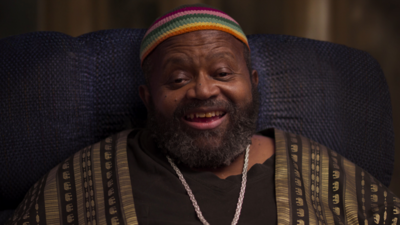
| Andre and Jackie |
After watching MILES AWAY a couple of time I reached out
about doing an interview with writer director and star Jackie Quinones and star
and executive producer Andre Royo. Because I couldn’t fit in something on their
press day, we arranged to do the interview
the next day. We arranged a time and a couple of minutes before the scheduled
time, right before I could park the car the call came in. I parked and we began to talk. Since the film is about a ride share driver over the course of a day the fact that the interview was happening while I was in my car seemed appropriate.
I don’t know about Ms. Quinones and Mr. Royo, but I had a
blast. Rarely have I smiled as much doing an interview. They we warm and
charming. They made me feel as if I had been their best friend for years. We
spoke for 25 minutes but I could have and wanted to continue speaking with
them. Amazingly we pretty much stayed
locked on the film, with the result the almost all of the interview follows.
The interview was done on the speaker as I sat in my car in an empty parking lot while Ms Quinones and Mr Royo were in Austin for the weekend premiere of the film.
I want to thank Linda Brown for arranging this interview. I
also must thank Ms. Quinones and Mr. Royo for taking the time to speak with me.
JACKIE: As soon as you're parked and ready,
I'll merge him in.
STEVE: I'm parked, I'm ready.
JACKIE: All right, let me merge him in. Andre?
ANDRE: Yeah, what's up?
JACKIE: Hey, we're on with Steve Kopian.
ANDRE: Hey, what's up my man?
STEVE: How are you?
ANDRE: I'm all right.
STEVE:I heard that you were wild on Zoom.
ANDRE: I was wild on Zoom? Yeah, I don't know.
Now you'll never know. You'll never know my man.
STEVE: When I was trying to
set this up and Linda was insisting that I had to do it on Zoom. But where I am
I couldn’t do it.
ANDRE: Next time, next time my boy, next time.
STEVE: Absolutely. How did you, I don't know where to
start. You're an executive producer of the film. How
did end up as an executive producer as well as in the film?
ANDRE: I just helped out as much as I could
creatively and she felt that, you know, she wanted to bless me and make me an
executive producer. But it was really on this huge support and huge belief that
this filmmaker has something to say if she's going to execute it the right way.
JACKIE: Yeah, Andre is kind of downplaying his
expertise in storytelling. He is definitely downplaying it.
He is like an encyclopedia of film knowledge and just incredible with story,
worked with the Independent Spirit Awards selecting the films that were going
to be up for awards for about five or six years?
ANDRE: Probably, yeah.
JACKIE: So he is really, really great with
story,. Really, really great with character development. Just a fantastic actor,
as you know. And so incredibly supportive that it just, without him, this film
wouldn't be where it is. He was so instrumental in the post-production
process and just really a champion throughout. And I'm so grateful. I should
tell you more often. I think I tell you pretty often. But I'm very
grateful to have him on this team.
ANDRE: I believe in you, I love you, so
yes. It was the perfect combination and it was a joy to be a part of.
STEVE: When you
wrote the script did you know who you were going to get for
all the parts or did e have the basic script and then l I'm doing this film, do you want
to be in it and we'll write you a role or did you write all the roles?
JACKIE: The way that I
usually write is I write around a theme and each character becomes a different
sort of mouthpiece of a different part of the, the argument for that theme. I
didn't do that with this one. This one, it was more about plot first, so it was
about the Uber driver and the different rides.
And then once I had the rides in mind, I knew
that there were probably some actors that would suit other roles better, but I
kind of gave them a choice. Andre, I think I asked you which one
you wanted to play, didn't I?
ANDRE: I believe so. I believe the first time you
sent me the script, you were like, you know, if there's any character that
speaks to you, let me know.
JACKIE: Right. So I wasn't really married to any one
particular person and I knew as long as I had great actors, which thank the
Lord I do, that they would be able to perform and bring something to the role
that wasn't already on the page, which they all did.
STEVE:I find it interesting because you have actually the hardest role in the film, which is you have to
allow all these crazy people to act around you and you have to hold the center. It's a brilliant. It's a brilliant performance you get
these towering performances hapening around you, Andre, Luis Guzman, everybody else and you have to stay normal, you have to stay a regular person. Was that hard?
JACKIE: It was definitely intimidating acting with
both Andre and Luis for sure. It's like, you know, Luis and I had worked
together in the past, but ve worked in different capacities. I
don't think we had been on screen together since the first time we met, which
was almost 20 years ago now. So, it was very intimidating to work with two
people that I just admire so much and I don't, I don't know that you know this,
Andre, but I was so nervous. I just
tried my best to be in the moment with them and Andre's so grounded and Luis so
grounded that immediately they kind of, they changed the energy, you know, so
they made me feel comfortable.
ANDRE: Yes, and I think Jackie is downplaying
her theatrical, her background as an artist and an actor. She's very talented,
she's very trained. Thank you.
And listen, this is what you do when you're in
New York and you're doing theater and you're doing movies, you make the other
person better. We share the experience and we share the storytelling together
so one can't overpower, if it's done correctly, one can't overpower the other
one or it doesn't balance. She's good enough to know when to give,
when not to give because she's receiving, she's in the moment. She's not
something orchestrated. Right.
And if you stand truthful and grounded, you
know, you're going to meld and you're going to blend. You know, if you go
outside of that, that's when you're starting to push and try too hard because
you're not, you're not in the moment, you're trying to make a moment.
STEVE: Well, it's one of the things that I love about
the film is that you've got these moments, even when you're on
the phone or in these wonderful two-handed pieces everything is grounded, you're together, you're in the moment. It remains real, nobody steals the scene.
ANDRE: Not if it's done correctly. Nobody steals the
scene. I mean, the moment they steal the scene is the person, the lead, we're
following.
She's bringing us in and out of this world by
sharing her car. Like, she's sharing her car with us and we're watching her,
you know, play with these other artists and experience, you know, what you
wanted to, you know, emotionally what you wanted to put in your scene.
STEVE: I'm curious. I watched the film a couple of
times because there was a point where I'm watching it and I'm going, okay, this
is a great scene and this is a great scene and this is a great scene and then,
and then all of a sudden you get to the end of the, towards the end of the film
and suddenly you realize that there's a through line, there's more of a through
line than you realize. It's not these great scenes. You have your phone conversations with your
mother or whomever and everybody on the phone and what everybody's saying to you
lfeeds into your journey, your arc, over the course of your day driving.
JACKIE: Right. It's kind of hidden in there.
STEVE: And it's, there's this moment where I realized that you've got all these great actors and you've got all these crazy
things and then, as I got to
the end and I knew have to watch this again. I have to see this
again because I missed all these little things that
were said.
JACKIE: The little hints, yeah, yeah. I've heard that
before. Thank you for watching it more than once. That's like a huge compliment. Really
appreciate that.
STEVE: I generally don't, but when when you
get the "aha moment" and I have to go back and rewatch the film. And I
did, it was leven before I had said that I had wanted to do
the interview. And when I'm watching the
film, the second time and part of a third time and it was like, wait,
no, I have to talk to you because I had to know how you constructed it. Because you've got this perfect
through line and it's almost like you clicked in pieces that amplify it. Does
that make any sense? Does that make any sense?
JACKIE: No, no, no, it does, absolutely. I think,
honestly, I'm not sure. That's a bad answer, but I think, ultimately.
STEVE: No, it's an honest answer.
JACKIE: I think, ultimately,
like, a lot, a lot of what was on the page didn't actually make it to screen
and we had to figure out ways to work around that because in the
original script, we realized maybe we had too much on screen with phone calls
and things like that. Originally we were going to have an anxiety
meter for the character to kind of give us more of a through line and we
realized that wasn't going to work because it was a little too gimmicky and we
wanted the film to be more grounded. I had to kind of go back through
the script and just make sure that there were moments that would feed back to
the end. It's, it's writing and rewriting and trying new things and trying
different things and then, of course, you're also always rewriting in the post
process and, like I said, Andre was super instrumental in the post process. The amount of notes he gave us and such great notes, too. For example there
were some really cool shots and we had to get rid of those because, you know,
they were artsy-fartsy and they didn't really work for the film. It was just really kind of like finessing the story as I went and, and as we
went along and not staying married to anything and making sure that we made
something that, that made sense and that was great, that wasn't just my vision,
but our vision, if that makes sense.
STEVE: How changed is the script compared to the finished film? Did you, did you lose a lot?
JACKIE: We did drop one scene and we dropped the, anxiety meter in place of her anxious tics, um, and
then maybe some changes to scenes here and there with dialogue if something was
a bit more fun on the day, you know, to make it more comedic or more dramatic,
but ultimately, most of that stuff was there before we shot.
STEVE: How, much, did you, did you
improvise or was it all just, was all on the page?
JACKIE: I like to work
with different actors however they work and if they choose to improvise, I
improvise with them, but I like to make sure that we come back to the script as
well, so if we do go off a bit, we come back to the original. For
instance, Andre and I rehearsed. And Andre stayed very true to the material and what was on
the page and brought something to it that was so grounded and beautiful because
in my head, this character was kind of a jerk, but Andre made him so relatable
and, and honest and it made him, I was like, dang, he's making me look like the
bad guy.
ANDRE: As the girl who left me, you were the
jerk, and it was my job to make it clear that it was your
fault, we didn't make it.
STEVE: Andre, how much were you on the set?
ANDRE: I was on the set for one
day. They call me one take Dre,
baby.
I Was there for a day
but I'm the red phone you call me You need me you call me. When
you want to talk it out, you call me. We were able to stay
connected throughout the whole process But as far as shooting and being, you
know hands-on on set, you know she had a great crew. And s I believe
in her.
STEVE: How big was the crew It almost feels like you were alone. It doesn't feel you like there was any crew theree. It's like you in the car
and it's just like there's nobody around
JACKIE: We wanted that, to feel we wanted it
to feel like there's there is no camera. We did everything with natural lighting . We didn't use any artificial lighting except
for, obviously, some of the night stuff. I would say it depended on
the day but sometimes we would have six people, sometimes we would have 15 to 20
That was the most that we had on set any given day But yeah, we went from small
to big depending on what we were shooting and what we needed people for
STEVE: How long did it take you to shoot?
JACKIE: We shot for 14 days, then we did 2 pickup
days and we did a couple of days of extra B roll. So I'd say about 16 total
if because it wasn't full days.
STEVE: Not full days? Were you doing other projects and shooting around them?
JACKIE: So, we had a really cool schedule which allowed
me to prepare. There were so many things that happened on this film that were kismet, that created an atmosphere where we were able to put things together in
a way that you wouldn't normally. We were shooting on weekends only which
allowed us every week before the shoot to put together whatever else we might
need. And it gave us time in between to rehearse if we needed to. And then on
those weekends we would usually shoot one to two scenes per day and because the
scenes are you know, one-off. They don't crossover.
It was really kind of a blessing that we were
able to kind to have the actors in for half a day or a day and then
move on to the next actor. This is opposed to the typical
film where you're kind of trying to track every day and track every character
and figure out where in the story. They are the only character. I really had to
do worry about on a bigger scale was my own, so it made it a lot easier for the production process.
STEVE: How meticulously was this planned? I've got a friend who does independent films and he shoots on ultra
micro budgets, but every detail everything is
planned down to the final detail. There's a little bit of room for improve but mostly it's what is planned. Did you
have everything planned for every
shot?
JACKIE: But you know, obviously when you get on set
there are things that go awry sometimes and you have to be able to pivot. Filmmaking is all about problem-solving because you have a plan, but it doesn't
always work out So there was a lot of pivoting. There was a lot of meticulous planning that
didn't pan out like on any film set
STEVE: It
premieres when?
JACKIE: Premieres Sunday Sunday the 26th at 6 30
p.m at the galaxy theater 6 and then we have an encore screening on the 29th at
4 10 p.m.
We're going to Urban World in New York right after
that for an East Coast premiere on the 30th and then after that we have we've heard back
from a few places I can't mention.




.jpg)


.jpg)


