Monday, September 24, 2018

Ken Foster (2018)

Ken Foster is a Vancouver street artist who has been compared to Vincent Van Gogh. A mentally ill man with a drug addiction he paints some truly amazing pictures at a prolific rate. Foster’s prolific rate of production is a matter of survival since he needs the money to buy food, supplies and his next fix.

Charting Foster’s life over an 18 month period the film is a warts and all portrait of the man and his life. We see him painting, selling, and discussing his life. We also get to hear about the man from his family (Mother and daughter), friends, buyers and doctors. It’s a rough and raw portrait of a man somewhere past the edge. Everyone, including the man himself, would love Foster to be able to get clean and function but there are issues and problems, not the least of which is the fact that the antipsychotic drugs he’s on kill his ability to express himself creativity. That may not sound like a problem until you realize that for some people being able to create is everything. I’ve met several people over the years who have gone off their mental illness meds because they had to create and feel.

While Foster’s life can be seen as being similar to Richard Hambleton who was profiled I the film SHADOW MAN, Foster is a much more an agreeable sort of fellow. He’s a nice guy and it’s clear why he has friends and family who care about him. This is a film that is a walk on a side of life most of us don’t know nor want to know the film reveals the work of a great talent. Director Josh Laner' does our appreciation for the man and the artist a huge favor by showing us as rounded a portrait as possible. The fact we see all sides of Foster makes us like him for who he genuinely is. It also rips our hearts out because we know he shouldn’t have to live that sort of a life.

And then there is the art work. Fantastic portraits and stunning landscapes that delight the eye. That Foster turns them out with such ease is truly mind blowing. It kind of bogles the mind that he can create so much glorious art- that is something more than the typical factory art work of people like Thomas Kincade who use a style to just sell paintings without heart and soul. Foster’s art have a soul to them and an arresting quality. I love that Josh Laner shows us dozens and dozens of his paintings because while many are similar they are all unique.

KEN FOSTER the film is a wonderful portrait of an artist. While it’s gritty you are there style is not going to be for everyone, for those who click with it are going to be thrilled… so thrilled they may try to make a trip to Vancouver to buy some of his art.

KEN FOSTER is released on VOD and DVD Tuesday September 25.

306 Hollywood (2018) opens Friday

Evidence of the 1950s and 1960s was visibly apparent throughout Annette Ontell’s house. In contrast, you can see the influence of uber-postmodern aesthetics throughout the documentary her grandchildren made about her. Much of the film probably would have baffled Ontell, but she surely would have been proud of the sibling filmmakers anyway. Elan and Jonathan Bogarín consider their grandmother through the prisms of archaeology and fashion, while struggling to catalogue the resulting clutter in the Bogaríns’ 306 Hollywood, which opens Friday in theaters.

306 will be quite a programming challenge for many subsequent festivals. Ontell is an audience-pleasing kind of figure. For years, she put up with her husband, while building a reputation as an ultra-exclusive dress designer. Generally, she made only two of each chic frock—one for her Park Avenue clients and one for herself. They lived modestly, but comfortably in Newark at 306 Hollywood Avenue for decades. The Bogaríns also had the foresight to film her extensively during the last ten years of her lives. However, when it came time to box up the old house on Hollywood, the sibling filmmakers and their mother, Marilyn Ontell, were at a loss.

Every dress told a story and every knick-knack seemed to hint at a wider narrative. Their dilemma took on spiritual-metaphysical dimensions when told by various experts the souls of the dead linger in their homes for eleven months. The family decides to keep the house during that time, so they can commence a psychological excavation of everything Ontell accumulated. As part of the process, they solicit commentary from pop culture physicist Alan Lightman, funeral director Sherry Anthony, and fashion conservator Nicole Bloomfield.

The Bogaríns also incorporate a great deal of the footage they shot of Ontell in her late eighties and early nineties, some of which she would have probably preferred not to over-share. When a stray audio cassette is discovered, they even resort to using actors to lip-synch the scene. Yet, it is their representational collages that really would have made Ontell shake her head in confusion. They have cited Wes Anderson and Agnes Varda as influences, which definitely makes sense, that puts the film on the rather playfully experimental end of the spectrum, exactly where those most inclined to identify with Ontell will feel decidedly uncomfortable.

Yet, this is such a rarified work unto itself, it is impossible to identify anything that does not belong. Frankly, this is the sort of film that ought to be preserved in a terrarium, much like the dioramas it features. Indeed, its colorful stylistic eccentricities are refreshing to those of us who have done our time with Marker and his followers.

There is a lot of family love in 306 Hollywood that all viewers ought to be able to recognize and appreciate. There is also quite a bit of craftsmanship, some of which might be lost on its presumed target demo. If Ontell were not such a warm, motherly figure, we would definitely tag it as a better fit for experimentally minded documentary festivals like RIDM and DOXA, rather than Sundance. Recommended for viewers inclined to be both adventurous and sentimental.

Sunday, September 23, 2018

Bully explains why there will be no New York Film Festival Curtain Raiser this year

HI Hi Hi- this is  Bully. Steve is too busy working on the Unseen Films coverage for this year's New York Film Festival so he asked me to explain what it takes to cover the festival so you know why he didn't get a chance to put a curtain raiser together.

First  thing you have to do is get up early in the morning and then get on an LIRR train. It's so early it's still dark out. Its also so early you may not get a chance to have breakfast until later

When you get to the theater you have to stand in a long line of people who also got up early to see the same movies as you. You iften have to wait a real long time to go in.

Once inside you have to make notes of what films you are going to see.

And maybe have breakfast.

Then you open up  your notebook and prepare to make notes as the movie starts.

After you see a film you go over the notes to make sure you can read them.

And then discuss the films with friends like Hubert.

And then you do it again four more times every day before taking the train home to write the films up on your computer.

Then you collapse and go to bed and do it again the next day.

As this posts we've seen over 30 films from the festival and are kind of behind in writing everything up. But that's okay we'll make the deadline.

Steve did say that there are a couple of films you really should try and see:

CARMINE STREET GUITARS- which is awesome music doc about the NYC store and it' owner. This is far and away the best film Steve and I have seen at the festival.

NON-FICTION- the latest from Olivier Assayas which is nominally about publishing but also the internet and how we get our information

ASH IS PUREST WHITE - a relationship drama wrapped in a gangster film from Jia Zhangke. It maybe his most beautiful film.

There will be more of course but those are the cream of the crop so far

The New York Film Festival starts Friday and reviews will start Tuesday.

For tickets and more information go here.

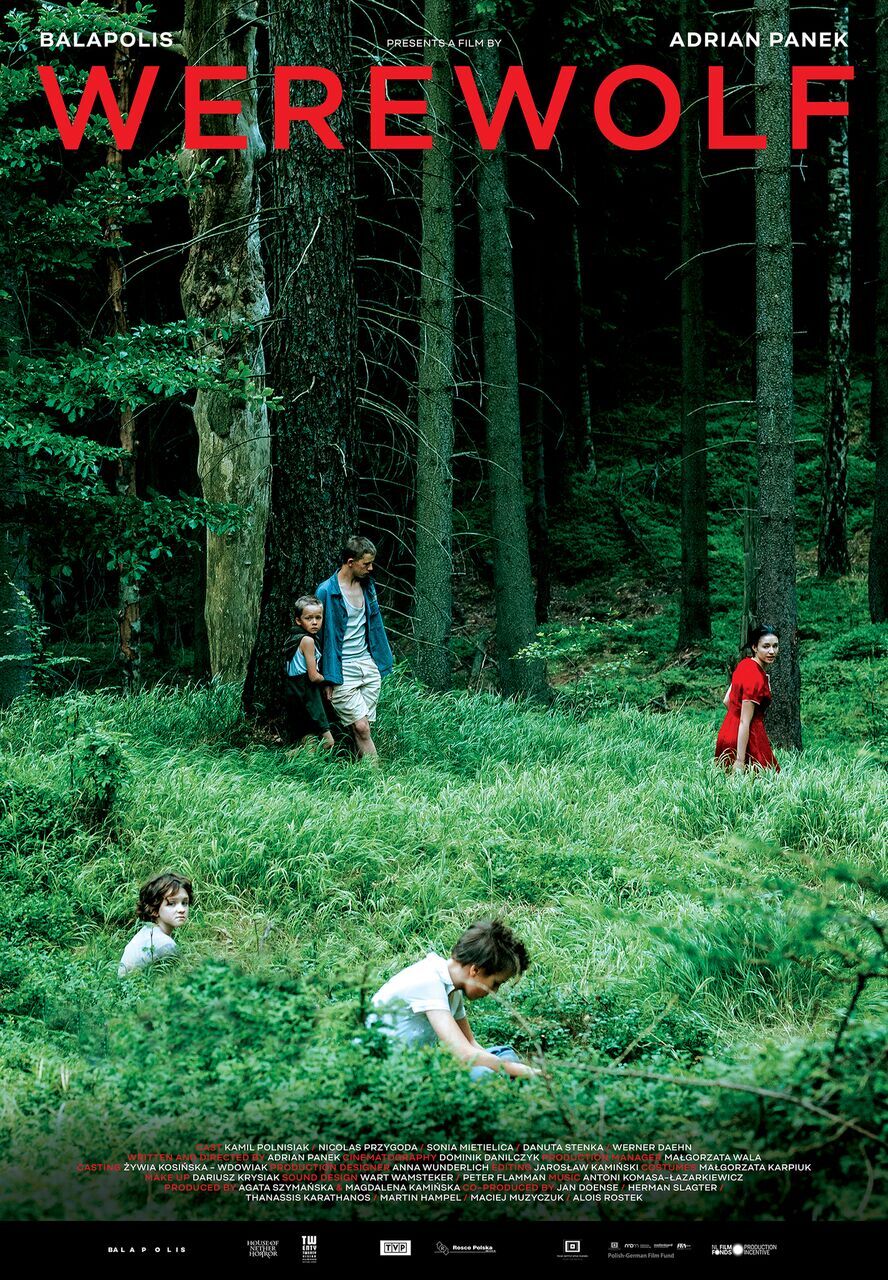
WEREWOLF (Wilkołak) (2018) Fantastic Fest 2018

A group of children are rescued from a concentration camp in Poland in 1945. Given over to a woman in a big house to keep safe they kids struggle to find food and comeback to humanity. Things become dangerous when they have to deal with a pack of attack dogs let loose and some German and Russian soldiers prowling about.

I'm going to kind of give something away and say that the title is kind of a wrong in that the film is not really about supernatural monsters but the evil inside all of us. I say that because I watched the whole film waiting for it to becomes the film I thought it was instead of just taking it for what it is.

What it is is a solid little war time thriller about the destruction of the human soul created by war.  While formulated to be in the framework of a horror film, it clearly has a great deal more on it's mind with it's exploration of the darkness that lives inside us and can grow there. Yes we are frightened by the dogs and the soldiers but it's the darkness in the kids that really puts the screws to us.

I'm guessing that the film is going to be one that boomerangs back to find favor with horror fans sometime after its initial release. I'm guessing this film, and it's kind of misleading title, will disappoint horror fans to start. I think they will be like me and go "oh man". However I am pretty sure that after careful reflection the film will be seen to be what it really is, a super little war time thriller that wants to do more than thrill.

Very Recommended. WEREWOLF made its International premiere earlier tonight at Fantastic Fest.

LUNCH LADIES (2018)

On the day the lunch ladies discover that they have won a culinary contest run by Johnny Depp, their existence as lunch ladies is threatened when lunch goes badly and they are told to make a better lunch the bet day or be fired.

Over the top comedy mixes with low brow humor and a touch of horror to make a delightful little confection. While there is no doubt that the film goes a little too far over the top in the early scenes (it tries way too hard to make the lunches disgusting), once it focuses in on the through line it all settles down and becomes a solid laugh producer.

Recommended.

Souls of Totality (2018) Raindance


As members of a doomsday cult that believe that if you die during a total eclipse they will be transported to heaven have to deal with the fact that they have fallen in love as the eclipse is close to happening.

Beautiful little film hits all the right buttons to become a gripping tale where you really aren’t uncertain how it will all turn out. I’m not telling, so you’ll have to just see this film when it plays at the Raindance  Film Festival

Worth tracking down where ever you can find it.

Christina M Tucker looks at We Have Always Lived in the Castle (2018) LA Film Festival 2018

We Have Always Lived in the Castle begins in a once-beautiful manor that has fallen into disrepair. Chronologically, this is the last scene in the film. Mary Katherine ”Merricat” Blackwood (Taissa Farmiga)’s narration introduces us to her family, the Blackwoods. She begins to write down her story, and the film jumps to the events of the previous week, with an intertitle that reads “Last Tuesday,” appearing on screen, a time when things in the Blackwood’s home were markedly different. “Last Tuesday” must eventually lead to “This Tuesday;” these days must eventually lead to the present, to the state of dilapidation we saw at the start of the film. It’s an effective start to a film mostly focused on this very question: how and why do things, people, and families - fall apart?

THE FAMILY

In Stacie Passon’s We Have Always Lived in the Castle, an adaptation of Shirley Jackson’s 1962 novel of the same name, Merricat and her older sister Constance Blackwood (Alexandra Daddario), live in a large manor, and care for their unstable, wheelchair bound Uncle Julian (Crispin Glover). They are the only remaining members of the once-powerful and wealthy Blackwood family, ostracized and feared by the nearby town ever since their family was poisoned five years previously, presumably by Constance herself, who has been acquitted of the crime. When the girls’ cousin Charles Blackwood (Sebastian Stan) arrives with a mission of his own, tense family dynamics are thrown into further disarray.

Merricat Blackwood is a peculiar, superstitious young woman with an interest in spells, curses, potions, and poisons. She has a black cat named Jonas. She has memorized a vinyl recording of Richard III. Most importantly, she is an unreliable narrator, a trait, we discover, runs in the family. Farmiga gives a performance as Merricat that feels fully realized, from her awkward posture to her alert, nervous eyes, she adheres to the quirky, otherworldly feel of the film while grounding the character in some realism.

Constance Blackwood appears wholly put-together, a perfect picture of a mid-century housewife. She is bound to the house and its grounds by agoraphobia, as well as her overwhelming responsibilities to the house and her family. Constance is fabulously acted by Daddario, whose face is plastered with a painfully bright smile as she constantly cooks, cleans, gardens, appeases, and diffuses. She, seemingly used to her painstakingly thorough routine, has no idea how to react when Charles (the weakest character by virtue of being the most transparently motivated of the main cast) re-enters the family’s life.

Crispin Glover as Uncle Julian is eery, his dialogue poetic; he has long, wandering monologues that only add to his unsettling effect. Thematically the story is brought together well by Uncle Julian - we discover that despite his constant poring over details of the night of his family’s demise, gaps in his memory have led him to be an unreliable storyteller as well.

“This is a mad house,” Charles says, and at some points in the story this seems true, that the house itself has cursed the Blackwoods and caused their bad luck. But the family’s curse has wordly, more simple causes: the questionable behavior of human beings. It is cycles of instability, abuse, and emotional manipulation that lead to tragedy and suffering for the Blackwoods, and ultimately destroy the family from the inside.

A somewhat narratively aimless but thematically and aesthetically cohesive film, We Have Always Lived in the Castle is a tragic rumination on what destroys families, and what saves them.

THE MANOR
The Blackwood Manor is central to the family’s identity, and the setting in which most of the film’s scenes take place. As such, the manor understandably feels like its own world, beautifully crafted, toeing a line between realistically lived-in and as whimsically decorated as a book’s illustration. There are two distinct states the manor is shown to us - before and after its destruction, and the juxtaposition of these images is beautifully accomplished. The gorgeously furnished hallway, kitchen, and dining room of just a week prior are juxtaposed with the decaying, hollow manor seen in the first and final scenes.

There is a dark but kitschy whimsy in the aesthetic choices, particularly the color palette and musical cues. The yellowed greens and red accents add a unique and interesting visual character without feeling unfit for the story, and also add a sense of cohesion throughout. The score, more heavily used in the first act, is comparatively more heavy-handed, but as the film begins to quiet toward the second half, the select period-appropriate musical cues feel more fitting.

The shot variety is delightful in this film; there are some gorgeous overhead inserts and extreme close-ups that enhance kitschy props and delightful set design, and beautiful editing creates effective momentum in several emotionally heightened scenes. The sound design is detailed, scintillating, as well. Taps of glass and dishware bring attention to the details of the set dressing and props. It’s these details that make the filmmaking choices feel thorough, above all, and contribute to the sense of a fully crafted storybook world.

The elements that mark this film most clearly as an adaptation of a novel are impressively well-incorporated, and make everything feel like a personal entry in Merricat’s diary, linking every scene to the image we saw at the start of Merricat sitting down to write the events of the previous week. The voiceover, illustrations, and intertitles marking the time enhance the themes of unreliable narration and emphasize the nature of storytelling, rather than feeling like adaptational shortcuts.

THE STORY

The dinner wherein the Blackwood family is poisoned is referenced like a myth or folktale by the Blackwoods and others, mistold, misremembered, and twisted to create a sense of frustration and doubt in the viewer. This doubt, that comes from both the failings of memory and deliberate lies, are at the heart of this story, and what makes the mystery of the film confounding and enthralling.
It is these lapses in objective storytelling that create the mystery of the film, not the usual thrill of apprehending a killer or seeking justice. This film is not a classic whodunit or a whimsical story of magic and witchcraft, but rather a slow, almost comically confounding folktale, where the underlying, creeping suspense throughout comes from the tension of the interpersonal interactions. This may frustrate viewers expecting a shocking revelation or twist they won’t be expecting; this film is largely lacking in twists and turns. This film is more interested in exploring the dynamics of a family who has fallen from grace, as well as the stories and lies they tell themselves and others. “I wonder in about a month from now, who will still be here,” Charles says to Merricat, “You or me?” It is this tension that drives interest in the film as it proceeds, the way these destructive, isolated people have destroyed their own family, and the potential they have to do so again.

We Have Always Lived in the Castle has a rough start, its focus initially unclear and its narrative aimless. By the second act, the film begins to more singularly explore,in a way that feels both delightfully literary the remains of a once-powerful American family. A young woman’s retelling of the tragic fall of her family is made more enthralling by strong performances, a unique visual character, and a world that through small but important choices in cinematography and sound design, feels fully realized.

Saturday, September 22, 2018

President's Visit (2018)

Wickedly funny comedy has a down on his luck soap maker getting a call from the President that he will be arriving to get his best soap to use as part of his "clean up" campaign for the country. However he is not to tell anyone. Word leaks out and chaos and mayhem ensue.

Low key humor becomes laugh out loud belly laughs as the situation goes more and more off the rails. Our hero just can't catch a break and while our hearts break at his plight we can't help but roar with laughter at the insanity of it all.

This is a sweet little film that you need to track down as it makes its way across the globe in various film festivals.

Two Strangers who Meet Five Times (2018)


The title says it all. This is the story of two strangers who meet several times over the decades and we watch as their fortunes change and shift.

While the film is a bit too contrived to fully flower as a short (this would be a killer feature or great short play) Two Strangers works because the performances are so good. The three actors playing the two roles (Laurence Spellman, Sargon Yelda, Dimitri Andreas, Alister Cameron, Luko Gale and Gino Azzopardi) are stunning. They take material that would in lesser hands make it resonant and moving. I would love to see a longer version of this film but with these actors.

Recommended.

Early Days (2018) Raindance

Early Days is a wonderful film. Based on writer director Nessa Wrafter’s experience after the birth of her first child the film makes you feel what it is like to have post-partum depression. We feel the dislocation and disconnection. We wach as the world goes joyously on as the mum feels like there is something horribly wrong. Even I, a guy who will never actually experience the feelings was clued into what it is like.

That the film works as well as it does is entirely to the work of Maimie McCoy as Kate. An award worthy performance she gives her all physically and emotionally. Watch her transform from sequence to sequence rocked me. I felt as though I could feel watch was going on in every part of her even her soul. It is beyond masterful.

Highly recommended the film will be playing at the Raindance Film Festival.

Friday, September 21, 2018

Dirty Game (1965)

Grossly underseen, The Dirty Game (aka The Secret Agents) is neat little spy film that acts as a counter to all of the spy nonsense of the James Bond craze. It is a solid little film which has intriguing turns by Henry Fonda and Robert Ryan that make the film worth tracking down.

Essentially three separate films by three different directors linked by the Robert Ryan character who narrates the film seeks to show what the life of spies is really like. Gritty, down beat and dark the stories are simple but not simplistic. The first story concerns an Italian scientist who has a new formula the various powers want. He is then manipulated toward siding with the US. The second has a spy running down information concerning Polaris submarines. The final story has Henry Fonda as deep cover agent who comes in from the cold and is put in a hotel against his wishes and thus left a target for assassins.

There are no super heroics just men and women doing their job. This is more John LaCarre territory and not Ian Fleming. People screw up, are captured and die. While the stories are simple of necessity, this is really 3 short films, they convey the tough life of a spy. We get a sense of the danger which most other films and TV programs never seem to convey. We also get a sense of the action happening across the globe and not one exotic locale.

While the film could never be considered the best of it’s kind, it is a damn fine film. It has genuine suspense especially in the final Henry Fonda segment. Fonda is excellent and he makes this final bit work. It is one of the best pieces of work he turned out and the fact that most people have never seen it is a sin.

I highly recommend the film.

One last note IMDB lists the running time as 118 minutes but the only version I’ve seen is a 90 minute one

Thursday, September 20, 2018

Tea With The Dames (2018)

Eileen Atkins, Maggie Smith, Judi Dench, Joan Plowright meet regularly for tea. Roger Michell who directed NOTTING HILL convinced them to let him film them and answer questions about their lives.

This is exactly what you think it is going to be. Four strong women taking nothing from no one and chatting about their achievements.

Are there grand revelations? Nothing too earth shaking but for anyone who is a fan, of one or all of the ladies, its simply the chance to be in the company of some great actresses for a while.

You will forgive me it's hard to really review this. Its a bit of fluff. Yes, it is informative but it's fluff. Never intended to be a grand career retrospective, simply the talk in an afternoon. The title infers that there is going to be limits so you can't get upset if it never goes too deep.

 Frankly I enjoyed it and recommend it.

There is however one caveat.(At this is the point anyone connected with the PR firm or IFC should stop reading) My understanding is that this was put together as a TV special for the BBC. A friend saw it as such just as I was getting the promotional material for this. As much as I liked it I don't think there is really enough here to ask anyone to pay movie theater prices to see this on a big screen. I would have no problem with VOD but the increased theater costs is a bit much.

TEA WITH THE DAMES hit theaters tomorrow.

Wednesday, September 19, 2018

Ariela listens to The Other Story (2018) Toronto 2018

The Other Story was another Israeli film that I saw at Toronto Film Festival.

The movie consists of a couple of stories happening. One is the absent father whose father asks him to come to help stop his daughter from marrying a popular singer turned Hasid (very religious man). Her family is conservative, and their daughter used to be as well, but now she is religious, and about to marry a man who also became ultra religious. The family doesn't trust the singer and are determined to find out dirt on the man to break them apart.

The second one concerns, the same man and his father. They are both therapists The father wants him to help him with two of his patients who are a couple. They are in a custody battle and have a Court order to go to therapy. The wife is involved in some pagan cult and the husband thinks she's going crazy, and is scared for their son.

I really enjoyed this drama a lot, and was kept wondering how things would end up. After seeing the film I discovered it is based on a true story. I wish I had been able to go to one of the public screenings to hear the director talk.

I definitely recommend it.

Coyote (2018) LA FILM FESTIVAL 2018

This bizarre animated fever dream about a coyote who is "killed" by some wolves, as is his family as they feast on a dead bison. The Bison then resurrects the coyote in humanoid form and he goes off to get revenge.

Trippy, gross and at times very WTF, COYOTE is a a very strange film. I'm not really sure what I think of it, not because it is so odd but more because I don't think the plot really all hangs together. Its a film that intellectually is all there because I can connect up the pieces but I'm not sure its all on the screen. Something, I'm not sure what, seems to be missing.

That said it is a singular vision and as such is definitely worth a look, especuially if you get the chance to see it at a festival, such as LA where it is playing this weekend.

Kino Polska ’18: Zud

Nomads can’t bet the farm, but they have livestock. Unfortunately, young Sukhbat’s family lost their herd to a sudden snap of winter foulness. Now their only hope to avoid ruin is winning a regional horse race. Growing up is hard, but so is every other aspect of life in Marta Minorowicz’s Zud, which screens during this year’s Kino Polska at the BAM Cinematek.

The characters and settings are pure Mongolian, but this is a Polish film. Likewise, it certainly has the look and feel of an unscripted observational documentary, but it is in fact a fictional narrative. However, the difficulties facing Mongolia’s nomadic herders is certainly true enough. Presumably, the cast of steppe-based nomads could relate. Indeed, there is probably a good deal of inadvertent method acting going on in this film.

Sukhbat’s father is deeply in debt and the note is already past-due. The lending authorities will not give him anymore time, despite the loss of his cattle. He therefore places all his hopes on a promising young wild stallion he has just broken. Sukhbat will be the jockey and serve as the horse’s primary training, or at least that is what he is told. Alas, nothing he does is ever good enough for his micromanaging father, who is clearly feeling the pressure of their precarious situation.

This is one tough coming of age story. Minorowicz’s portrayal of nomadic life clearly suggests families are not held together by love but by a survival imperative. It certainly feels true to life, since it was shot on remote locations, employing nonprofessional local actors, seemingly playing thinly fictionalized analogs of themselves. She also films with an anthropologist’s eye, investing considerable time in many of the regular tasks and everyday rituals that have defined her characters’ lives.

Frankly, Minorowicz could have easily passed Zud off as a legit documentary if she wanted to, so give her credit for being forthright. Presumably, she also made the film she set out to make, so she and Kenneth McBride should want all their due credit for their screenplay. Yet, it is hard to imagine how scripted many of these scenes could have been.

Regardless of all that, as his namesake, Sukhbat Batsaikhan is a highly compelling young protagonist. You would assume he is really just going about his chores, heedless of the camera. However, Batsaikhan Budee is an even more impressive actor, because all of his anxiety and stress looks alarmingly real.

Zud is a quiet, immersive film, but it packs an arsenic-laced punch in the final minutes. Despite being a narrative, it will not be sufficiently narrative-driven for conventional viewers, but it absolutely lets the audience place themselves in lives that are radically different from our own. Recommended more as an experience than a film per se, Zud screens Friday night (9/21), as part of Kino Polska at BAM.

American Dresser (2018)

Tom Berenger is a recent widower who has crawled into a bottle. After discovering a 25 year old hidden letter,Berenger decides to take is motorcycle to unravel the secret. He takes his best friend played by Keith David and heads to the Pacific North West. Along the way they pick up the roguish Willie, played by writer director Carmine Cangialosi, and meet a whole bunch of nice people.

If you don’t look too hard at the details American Dresser is an entertaining little film. This is a good time with good people. I liked that, for the most part there isn’t a great any real gloom and doom. Yes it starts in a dark place but it comes around to be a film about healing.

Actually the one point where the film loses its way is the inclusion of a run in with a bad bunch of cops who beat Keith David up because they think he committed a crime. It’s out of place with the rest of the film and kind of seems to be there in order to to add in a some third act tension which isn’t needed because by then we are so invested in the characters we will gladly follow them to the end.

While nothing earth shaking American Dresser is just a great way to pass an evening. Its actually good enough that it’s going to be the sort of film you’ll stop to watch whenever you run across it on its eventual trip into TV rotation

Recommended

Tuesday, September 18, 2018

The Great Battle: The Siege of Ansi

Today, the ruins of ancient Ansi happen to be in China, but the local spirits can’t be too happy about that. During the mid-7th Century, it was squarely a part of the Goguryeo Empire, a forerunner to Korea. Unfortunately, its commander was not in good standing with the generals at court, so when the Tang emperor laid siege to the fort, they were on the own. The tenacious defense of Ansi comes to the big screen in a big way in Kim Kwang-sik’s The Great Battle, which opens this Friday in New York.

The Great Battle is not kidding around. It starts with a disastrous route of the Goguryeo forces that Samul, a young cadet commander just barely survives. Naturally, at such a time of crisis, his next assignment is to assassinate Yang Manchun, the slightly off-the-reservation commander of Ansi, who seems to think he knows better than his commanding officers, because he does.

Not so shockingly, Yang is onto Samul right from the start, but he still lets the long-absent Ansi-native back into the fortress city. Despite his orders, Samul is quickly won over by Yang’s close, protective relationship with his people. Soon, Samul is standing shoulder-to-shoulder with Yang’s lieutenants defending Ansi. They manage to foil most of Emperor Taizong’s siege devices, but things start to looking iffy when the Tang forces start getting creative. Things will get loud and bloody, but the film stays surprisingly close to the historical record.

There is some drama interspersed throughout Great Battle, but the warfighting scenes are what this film is all about. If you enjoyed movies like Braveheart, 300, and Red Cliff than Great Battle will be like catnip for you. It is often brutal, but the battle scenes are remarkably well-choreographed and crisply shot. This was a tough war to fight, but Kim certainly makes it quite a cinematic spectacle.

So, yes, the action is the thing, but there are still some nice performances, particularly Seol Hyun and Um Tae-goo as Beck-ha and Pa-so, two of Yang’s trusted warriors (and in her case, his sister too), who are also engaged in a tragic romance. Zo In-sung is truly commanding as Yang, in what could be his career best performance to date. Although Park Sung-woong has played plenty of bag guys before (including a different sort of emperor in For the Emperor), he is totally cold-blooded (and almost unrecognizable) chewing the scenery as the ruthless Taizong.

Obviously, a lot of stuff was built and destroyed for Great Battle. It is large in scope and packed with voluminous carnage. Kim’s previous films (including the thriller Tabloid Truth) were small-scale affairs in comparison, but with Battle he definitely proves he has epic chops. Recommended for anyone who enjoys action-packed bloody-flag-wavers, The Great Battle opens this Friday (9/21) in New York, at the AMC Empire.

A Happening of Monumental Proportions (2018)

Judy Greer's A HAPPENING OF MONUMENTAL PROPORTIONS is a great deal of fun. A grand comedy of the lives of various people in and a round a school on Career Day, the film takes a formula that Hollywood hasn't been doing well for years and makes it highly entertaining.

I really won't go too much into the plot, way too much happens to explain simply, but the story revolves around Common and his daughter. He works in publishing and is supposed to speak at his daughter's career day. In to the mix add a new kid in class with a crush on Common's daughter, Allison Janney trying to deal with a dead body at the school, a cut power cord in an office kitchen, the discovery of an affair, an angsty teacher teaching little kids about failure and existential crisis, a fist fight and paramedics who really won't help anyone.

There is way more going on with the cast of stars, including one surprise cameo at the end and Greer handles it all with near perfection. This is the sort of film where timing is everything and Greer nails it. She keeps pacing tight, the actors under control and the laughs coming.  We never have time to look away or ponder how silly it all is, we just smile and wait for the next funny bit.

What I really like about the film is that in an age when so many films come out where no one really cares or at least it seems that way from the way things bleed off the screen, here is a film where everyone seems to be having a good time. The broad spectrum of actors who grace the screen actually all seem to want to be there and appear to be having a good time. This clearly wasn't just a paycheck job for anyone involved and as a result we in the audience have a good time.

I'm not going to lie and say this is high art, it's not, but it is entertaining. This is film to curl up with a bowl of popcorn, a big drink and some friends and have a good time.

Recommended when the film his theaters Friday.

Monday, September 17, 2018

Ariela briefly discusses Ben is Back (2018) Toronto 2018

Julia Roberts should get the mother of the year award with this film. Ben is Back is the story of Ben(played by Lucas Hedges) who unexpectedly comes home when he’s supposed to be in rehab. The family initially freaks out, his mom (Julia Roberts) hides all the pills from the bathroom, and also hides her jewelry. They initially want to send him back, but then because it’s Christmas the mom decides he can stay for one day, makes him take a drug test, and says he can’t leave her sight for even a moment. Things seem pretty good, until they come home from church and their dog is missing.

This was a good film. I wish there was a bit more back story, but seemed like they didn’t want to focus on the past too much, and more so deal with the 24hrs. I didn’t love it, but it was good. It shows what someone dealing with addiction goes through and what the family goes through too. I won’t be surprised if this gets Julia Roberts an Oscar nomination.

Call Her Ganda (2018) opens Friday

Heart breaking and heady CALL HER GANDA is a truly sad film. While focusing on the murder of Jennifer Laudes literally at the hands of US serviceman Joseph Pemberton, the film lays bare the piss poor treatment given the Philippines by United States as well as reminding us how dangerous it is to be transgender.

There is so much in Call Her Ganda I don’t know where to begin. The film is such an emotional rollercoaster that even some months after seeing the film (I saw the film originally during Tribeca) I am still processing it and still trying to find the words.

Director PJ Raval beautifully balances all of the factors at play in the case. I love that no matter where the discussion goes we never lose sight of the fact that there was human being at the center of it all. Raval keeps this a personal story with the result that our emotions are moved. Too often when we are discussing gender and international politics we forget the people sparking the discussion. Raval makes certain that Jennifer Laudes is front and center.

While I knew things were tense between the Philippines and the US I never realized how bad things were and how badly the US abused what is supposed to be a sovereign nation. I never realized that the US military basically carte blanche to beat rape and kill without any real fear of prosecution. I truly didn’t know that until Pemberton had been convicted of Laudes’s murder no service man had ever been successfully prosecuted. Money be damned I’m shocked that the people living near US military bases didn’t kill anyone who left the base. America should be ashamed.

CALL HER GANDA kicked me to the curb. My heart broke, not just for Jennifer but her mother who has had to fight for justice. No parent should have to bury their child. And if a parent should bury their child there should be an accounting.

I don’t know what to say but go and see it and be moved.