We Have Always Lived in the Castle begins in a once-beautiful manor that has fallen into disrepair. Chronologically, this is the last scene in the film. Mary Katherine ”Merricat” Blackwood (Taissa Farmiga)’s narration introduces us to her family, the Blackwoods. She begins to write down her story, and the film jumps to the events of the previous week, with an intertitle that reads “Last Tuesday,” appearing on screen, a time when things in the Blackwood’s home were markedly different. “Last Tuesday” must eventually lead to “This Tuesday;” these days must eventually lead to the present, to the state of dilapidation we saw at the start of the film. It’s an effective start to a film mostly focused on this very question: how and why do things, people, and families - fall apart?
THE FAMILY
In Stacie Passon’s We Have Always Lived in the Castle, an adaptation of Shirley Jackson’s 1962 novel of the same name, Merricat and her older sister Constance Blackwood (Alexandra Daddario), live in a large manor, and care for their unstable, wheelchair bound Uncle Julian (Crispin Glover). They are the only remaining members of the once-powerful and wealthy Blackwood family, ostracized and feared by the nearby town ever since their family was poisoned five years previously, presumably by Constance herself, who has been acquitted of the crime. When the girls’ cousin Charles Blackwood (Sebastian Stan) arrives with a mission of his own, tense family dynamics are thrown into further disarray.
Merricat Blackwood is a peculiar, superstitious young woman with an interest in spells, curses, potions, and poisons. She has a black cat named Jonas. She has memorized a vinyl recording of Richard III. Most importantly, she is an unreliable narrator, a trait, we discover, runs in the family. Farmiga gives a performance as Merricat that feels fully realized, from her awkward posture to her alert, nervous eyes, she adheres to the quirky, otherworldly feel of the film while grounding the character in some realism.
Constance Blackwood appears wholly put-together, a perfect picture of a mid-century housewife. She is bound to the house and its grounds by agoraphobia, as well as her overwhelming responsibilities to the house and her family. Constance is fabulously acted by Daddario, whose face is plastered with a painfully bright smile as she constantly cooks, cleans, gardens, appeases, and diffuses. She, seemingly used to her painstakingly thorough routine, has no idea how to react when Charles (the weakest character by virtue of being the most transparently motivated of the main cast) re-enters the family’s life.
Crispin Glover as Uncle Julian is eery, his dialogue poetic; he has long, wandering monologues that only add to his unsettling effect. Thematically the story is brought together well by Uncle Julian - we discover that despite his constant poring over details of the night of his family’s demise, gaps in his memory have led him to be an unreliable storyteller as well.
“This is a mad house,” Charles says, and at some points in the story this seems true, that the house itself has cursed the Blackwoods and caused their bad luck. But the family’s curse has wordly, more simple causes: the questionable behavior of human beings. It is cycles of instability, abuse, and emotional manipulation that lead to tragedy and suffering for the Blackwoods, and ultimately destroy the family from the inside.
A somewhat narratively aimless but thematically and aesthetically cohesive film, We Have Always Lived in the Castle is a tragic rumination on what destroys families, and what saves them.
THE MANOR
The Blackwood Manor is central to the family’s identity, and the setting in which most of the film’s scenes take place. As such, the manor understandably feels like its own world, beautifully crafted, toeing a line between realistically lived-in and as whimsically decorated as a book’s illustration. There are two distinct states the manor is shown to us - before and after its destruction, and the juxtaposition of these images is beautifully accomplished. The gorgeously furnished hallway, kitchen, and dining room of just a week prior are juxtaposed with the decaying, hollow manor seen in the first and final scenes.
There is a dark but kitschy whimsy in the aesthetic choices, particularly the color palette and musical cues. The yellowed greens and red accents add a unique and interesting visual character without feeling unfit for the story, and also add a sense of cohesion throughout. The score, more heavily used in the first act, is comparatively more heavy-handed, but as the film begins to quiet toward the second half, the select period-appropriate musical cues feel more fitting.
The shot variety is delightful in this film; there are some gorgeous overhead inserts and extreme close-ups that enhance kitschy props and delightful set design, and beautiful editing creates effective momentum in several emotionally heightened scenes. The sound design is detailed, scintillating, as well. Taps of glass and dishware bring attention to the details of the set dressing and props. It’s these details that make the filmmaking choices feel thorough, above all, and contribute to the sense of a fully crafted storybook world.
The elements that mark this film most clearly as an adaptation of a novel are impressively well-incorporated, and make everything feel like a personal entry in Merricat’s diary, linking every scene to the image we saw at the start of Merricat sitting down to write the events of the previous week. The voiceover, illustrations, and intertitles marking the time enhance the themes of unreliable narration and emphasize the nature of storytelling, rather than feeling like adaptational shortcuts.
THE STORY
The dinner wherein the Blackwood family is poisoned is referenced like a myth or folktale by the Blackwoods and others, mistold, misremembered, and twisted to create a sense of frustration and doubt in the viewer. This doubt, that comes from both the failings of memory and deliberate lies, are at the heart of this story, and what makes the mystery of the film confounding and enthralling.
It is these lapses in objective storytelling that create the mystery of the film, not the usual thrill of apprehending a killer or seeking justice. This film is not a classic whodunit or a whimsical story of magic and witchcraft, but rather a slow, almost comically confounding folktale, where the underlying, creeping suspense throughout comes from the tension of the interpersonal interactions. This may frustrate viewers expecting a shocking revelation or twist they won’t be expecting; this film is largely lacking in twists and turns. This film is more interested in exploring the dynamics of a family who has fallen from grace, as well as the stories and lies they tell themselves and others. “I wonder in about a month from now, who will still be here,” Charles says to Merricat, “You or me?” It is this tension that drives interest in the film as it proceeds, the way these destructive, isolated people have destroyed their own family, and the potential they have to do so again.
We Have Always Lived in the Castle has a rough start, its focus initially unclear and its narrative aimless. By the second act, the film begins to more singularly explore,in a way that feels both delightfully literary the remains of a once-powerful American family. A young woman’s retelling of the tragic fall of her family is made more enthralling by strong performances, a unique visual character, and a world that through small but important choices in cinematography and sound design, feels fully realized.
A collection of reviews of films from off the beaten path; a travel guide for those who love the cinematic world and want more than the mainstream releases.
Showing posts with label Christina M Tucker. Show all posts
Monday, May 13, 2019
Monday, February 11, 2019
Christina Tucker takes a look at Hong Sang-Soo's HOTEL BY THE RIVER, or Gangbyun Hotel (2018) which opens Friday
Hong Sangsoo’s Hotel by the River (his 22nd feature) is a film that seems to take place inside of a dream, a liminal space of coincidence, premonition, and visually stunning simplicity not found in reality. The nearly-empty hotel alongside the Han River feels separated from space and time, peaceful ambient noise and snow-covered landscapes a meditative vision in black and white.
Here, an aging poet Ko Younghwan (Ki Joobong) has invited his sons Kyungsoo (Kwon Hae-hyo) and Byungsoo (Yoo Jun-sang) to visit him, as he senses that he is near death. Ko is handling the aging process with the often-entertaining dramatics you would expect from a poet - he is poetic, lyrical with his every observation, as peaceful as a martyr, and has isolated himself in a riverside hotel for two weeks. As such, his sons, and the audience, take his premonition with a grain of salt. Still, they humor his attempts to reconnect with his sons Byungsoo and Kyungsoo, whom he left in their childhood. The younger of which, Byungsoo, barely remembers him. Byungsoo, Ko’s youngest son, is a film director, something Sangsoo plays for a few meta jokes throughout. He’s not a real auteur,” a young woman named Yeonju (Song Seonmi) says, and that his films are ambivalent.
Down the hall, Yeonju visits her friend Sanghee (Kim Minhee) who has gone through a breakup - she also has a burn on her hand, from an unknown cause, that effectively adds a physical sense of helplessness and injury to her character to parallel her emotional one. Their plot is undoubtedly the less prominent, but overlaps charmingly with the main story. The two also have some less than mystical coincidences that connect them to the other men - for example Kyungsoo’s car is the same that Yeonju crashed in the past, that has since been repaired.
Hotel by the River’s exploration and visual character are characterized by a frankness, and as Yeonju said of Byungsoo’s, ambivalence. Sangsoo has made himself an observer, presenting us with often-limited information and leaving us to wonder, contemplate, and make our own conclusions about the coincidences, interactions, and natural events that take place. Its ending is depicted with as much gravitas, and as much reasoning as its beginning, which creates an inescapable, effective feeling of heartbreaking melancholy and contemplation.
A Sublime Painting
Every element of Hotel by the River’s form is simple and striking, allows nothing to distract from every interaction. At the start, voiceover narration quickly lists the title, production company, and stars at the beginning of the film, seemingly eager to move on to the meat of the trim 96 minute runtime. A black and white palette allows figures to stand out shockingly against the snow of the hotel, and simple but striking shot composition allows nothing to take away from the interactions taking place.
Throughout, character’s voice-overs state their assessments of the goings-on, the same mundane observations present in the conversations.
Ko’s relationship with his aging body - for example, a scene depicting the chore of getting dressed, as he labors to put on his socks - is presented with such unflinching commitment, effective in its focus. We see him grapple with aging in a single scene before he says anything to his sons, and this informs much of the subsequent sympathy you feel for a father with a lackluster history with his family. Ko’s various struggles, with social interactions, with his guilt, with what seems like depression about his age - make a sympathetic character of a man who is a somewhat unreliable person.
Humor in this film, comes from the misunderstandings, monotony, and repetition inherent in everyday conversation, especially with between close friends and family. People of different genders, of different ages, are victims of losses of translation. The performative nature of impressing family members you are aiming to impress or reconnect with, particularly because of Ko’s anxiety and lack of social graces, are genuinely funny.
Part of the connection the viewer cannot help but feel toward these characters is due to the dialogue, aided by the use of long takes. Entire conversations taking place in minutes-long takes make every conversation feel immservie, as real as any conversation one has had with a family member or friend. Again, there is a sense of focus that demands observation and contemplation.
“Men are incapable of love.”
Just like in any conversation with a loved-one, no matter how close, there are things left unsaid. Kyungsoo never tells his father his marriage has fallen apart. We never find out the details of Sanghee’s breakup, or her injury, or the nature of the car accident. It is these gaps in our understanding that add a layer of mystery to the realism present in the interpersonal reactions, and lend the ending that much more of an emotional punch. There is still a yearning, in watching a film, to understand what has gone on, and why, and when that catharsis is not given, in this case, there are resounding questions of how? and why? That are likely more effective than any straightforward resolution, that would ultimately feel false.
There is, however, a drunken conversation at a restaurant that turns explosive reveals the truths that the three men have been hiding this entire time that approaches the sense of catharsis that a film still needs to signal a change, some manner of conclusion. Byungsoo and Kyungsoo explain their hurt, and their mother’s, to Ko, who explains his reasoning as a younger man for leaving his family. They reach an understanding, but nothing is “solved,” and the two sons return to the hotel separately from their father.
The characters themselves, particularly the sons of poetic Ko, particularly Byungsoo, are shocked and distraught at the night’s tragic end, and what begins as an enthralling, peaceful story of a family reunion and a woman helping a friend through a breakup, becomes one where both the characters and the audience are made to feel guilty for disregarding the feelings of its main character. The ending and its commitment to the frankness that permeates the rest of the film, is an impressive feat that puts the preceding film into perspective.
Ko describes Yeonju and Sanghee, when he comes across them standing in the snow, as a “sublime painting,” a fitting description of this film as a whole. It is a meditation, on nature, on natural processes, on aging, on death, on family, and on the way these indescribable things are at the center of human lives. Hotel by the River, with striking and focused filmmaking, presents a story full of the kind of coincidences and interactions that fill everyday life, and does so without explanations, simple solutions, or concern for direct cause and effect, allowing the viewer to truly feel the powerful emotional dissatisfaction, frustration, and confusion inherent in human life.
Here, an aging poet Ko Younghwan (Ki Joobong) has invited his sons Kyungsoo (Kwon Hae-hyo) and Byungsoo (Yoo Jun-sang) to visit him, as he senses that he is near death. Ko is handling the aging process with the often-entertaining dramatics you would expect from a poet - he is poetic, lyrical with his every observation, as peaceful as a martyr, and has isolated himself in a riverside hotel for two weeks. As such, his sons, and the audience, take his premonition with a grain of salt. Still, they humor his attempts to reconnect with his sons Byungsoo and Kyungsoo, whom he left in their childhood. The younger of which, Byungsoo, barely remembers him. Byungsoo, Ko’s youngest son, is a film director, something Sangsoo plays for a few meta jokes throughout. He’s not a real auteur,” a young woman named Yeonju (Song Seonmi) says, and that his films are ambivalent.
Down the hall, Yeonju visits her friend Sanghee (Kim Minhee) who has gone through a breakup - she also has a burn on her hand, from an unknown cause, that effectively adds a physical sense of helplessness and injury to her character to parallel her emotional one. Their plot is undoubtedly the less prominent, but overlaps charmingly with the main story. The two also have some less than mystical coincidences that connect them to the other men - for example Kyungsoo’s car is the same that Yeonju crashed in the past, that has since been repaired.
Hotel by the River’s exploration and visual character are characterized by a frankness, and as Yeonju said of Byungsoo’s, ambivalence. Sangsoo has made himself an observer, presenting us with often-limited information and leaving us to wonder, contemplate, and make our own conclusions about the coincidences, interactions, and natural events that take place. Its ending is depicted with as much gravitas, and as much reasoning as its beginning, which creates an inescapable, effective feeling of heartbreaking melancholy and contemplation.
A Sublime Painting
Every element of Hotel by the River’s form is simple and striking, allows nothing to distract from every interaction. At the start, voiceover narration quickly lists the title, production company, and stars at the beginning of the film, seemingly eager to move on to the meat of the trim 96 minute runtime. A black and white palette allows figures to stand out shockingly against the snow of the hotel, and simple but striking shot composition allows nothing to take away from the interactions taking place.
Throughout, character’s voice-overs state their assessments of the goings-on, the same mundane observations present in the conversations.
Ko’s relationship with his aging body - for example, a scene depicting the chore of getting dressed, as he labors to put on his socks - is presented with such unflinching commitment, effective in its focus. We see him grapple with aging in a single scene before he says anything to his sons, and this informs much of the subsequent sympathy you feel for a father with a lackluster history with his family. Ko’s various struggles, with social interactions, with his guilt, with what seems like depression about his age - make a sympathetic character of a man who is a somewhat unreliable person.
Humor in this film, comes from the misunderstandings, monotony, and repetition inherent in everyday conversation, especially with between close friends and family. People of different genders, of different ages, are victims of losses of translation. The performative nature of impressing family members you are aiming to impress or reconnect with, particularly because of Ko’s anxiety and lack of social graces, are genuinely funny.
Part of the connection the viewer cannot help but feel toward these characters is due to the dialogue, aided by the use of long takes. Entire conversations taking place in minutes-long takes make every conversation feel immservie, as real as any conversation one has had with a family member or friend. Again, there is a sense of focus that demands observation and contemplation.
“Men are incapable of love.”
Just like in any conversation with a loved-one, no matter how close, there are things left unsaid. Kyungsoo never tells his father his marriage has fallen apart. We never find out the details of Sanghee’s breakup, or her injury, or the nature of the car accident. It is these gaps in our understanding that add a layer of mystery to the realism present in the interpersonal reactions, and lend the ending that much more of an emotional punch. There is still a yearning, in watching a film, to understand what has gone on, and why, and when that catharsis is not given, in this case, there are resounding questions of how? and why? That are likely more effective than any straightforward resolution, that would ultimately feel false.
There is, however, a drunken conversation at a restaurant that turns explosive reveals the truths that the three men have been hiding this entire time that approaches the sense of catharsis that a film still needs to signal a change, some manner of conclusion. Byungsoo and Kyungsoo explain their hurt, and their mother’s, to Ko, who explains his reasoning as a younger man for leaving his family. They reach an understanding, but nothing is “solved,” and the two sons return to the hotel separately from their father.
The characters themselves, particularly the sons of poetic Ko, particularly Byungsoo, are shocked and distraught at the night’s tragic end, and what begins as an enthralling, peaceful story of a family reunion and a woman helping a friend through a breakup, becomes one where both the characters and the audience are made to feel guilty for disregarding the feelings of its main character. The ending and its commitment to the frankness that permeates the rest of the film, is an impressive feat that puts the preceding film into perspective.
Ko describes Yeonju and Sanghee, when he comes across them standing in the snow, as a “sublime painting,” a fitting description of this film as a whole. It is a meditation, on nature, on natural processes, on aging, on death, on family, and on the way these indescribable things are at the center of human lives. Hotel by the River, with striking and focused filmmaking, presents a story full of the kind of coincidences and interactions that fill everyday life, and does so without explanations, simple solutions, or concern for direct cause and effect, allowing the viewer to truly feel the powerful emotional dissatisfaction, frustration, and confusion inherent in human life.
Wednesday, November 14, 2018
Christina M Tucker ponders The Orange Years: The Nickelodeon Story (2018) DOC NYC 2018
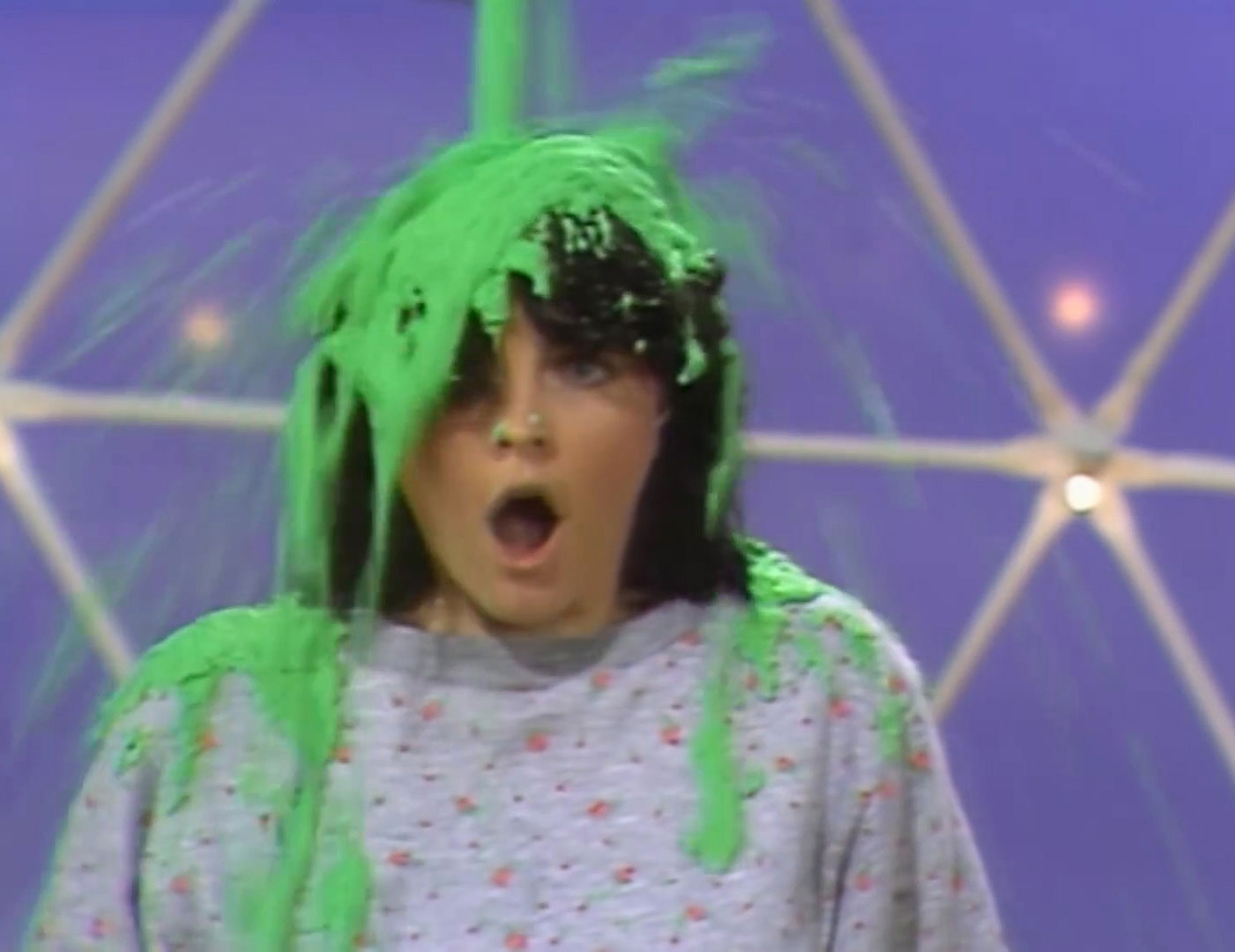
Premiering at DOC NYC this year, The Orange Years: The Nickelodeon Story, directed by Scott Barber and Adam Sweeney, documents the history of Nickelodeon, the first children’s-only television network from its founding through its heyday.
The story begins with Qube, an early cable television system from 1977 that explored interactivity, and one of the team members at the forefront of the endeavor, Dr. Vivian Horner, who began the earliest incarnation of Nickelodeon, a program called Pinwheel. (The documentary makes a point to highlight the numerous women whose insight and talent made Nickelodeon what it was.)
The team from the Pinwheel program went to New York and began the Nickelodeon network in 1979. The documentary starts here, from Nickelodeon’s humble beginnings. Much of the film is centered around the Founder and President of Nickelodeon Geraldine Laybourne, exploring her leadership methods, perspective, and philosophy, and ending with her exit in the late 90s. The Orange Years is thorough, reverent, and interesting with an impressive amount of archival video and printed material to supplement fascinating interviews.
PANTONE 021
The exposition, in which Nickelodeon’s philosophy and origins is explored, effectively sets up an emotionally genuine and still moving story. It makes every victory for the studio (their first original programming, their studio lot in Orlando, Florida, their foray into animation) feel inspiring and meaningful. Nickelodeon is positioned, both in this film and throughout history, as a contrast to Disney, and the philosophy and execution of typical Saturday morning cartoons. They presented entertainment without condescension, with a hint
of irreverence and rebellion that spoke to children’s experiences. Nickelodeon was an underdog with a team full of talent and creativity that was pushed and challenged by an initial lack of funds and struggles to find programming that created a network that became a powerhouse, and The Orange Years capitalizes on this inspiring underdog story throughout to marvelous emotional effect.
The film explores the creative risks Nickelodeon were willing to pursue in their original programming including Hey Dude, Salute Your Shorts, The Adventures of Pete & Pete, Clarissa Explains it All and Nick News in their commitment to realistically depicting the high and low points of childhood. Their profile of Clarissa Explains It All is particularly interesting, as it shows without preaching or bragging, that boys will in fact watch a show with a female protagonist if it is well-made and speaks to something real.
The Orange Years also explores Nickelodeon’s history with animation Ren & Stimpy, Doug, and Rugrats, their first three animated projects that all became hits, which all subverted of the norms of children’s programming in different ways, while all using top-notch animation, voice-acting, and writing talent.
“If a Show is Good, Anyone Will Watch”
The Orange Years effectively defends its assertions of Nickelodeon’s uniqueness with extensive archival finds including video and printed material, that are both informative and keep the documentary kinetic and energized. The film is also peppered with original new animations that accompany interviewer stories, another sign of the overwhelming effort that went into making this film a documentary that doesn’t simply pander to nostalgia, but is engaging in its own right.
There are a wide range of interview subjects from talent (including Melissa Joan Hart and Kenan Thompson) as well as producers and executives. Most interesting is the insight of the executive production members. Former President Geraldine Laybourne, Former VP of Nickelodeon Scott Webb, QUBE executive Burt Dubrow, Former Creative Director Anne Kramer, figures who may be unknown to the general public, are full of humor, admiration, and knowledge about the channel and its history.
The Orange Years doesn’t entirely shy away from negative elements of Nickelodeon’s existence (the tours of the studio that made young talent feel like creatures in a zoo and infringed upon their private lives, the deterioration of Nickelodeon’s relationship with Ren & Stimpy creator John Kricfalusi due to issues with content, timeliness, and budget.)
Most notable is the bittersweet ending that brings Nickelodeon into the present day. There is a feeling that the film and its interview subjects is holding back harsher sentiments as the film refers to the recent monetary successes that have come from the licensing of Spongebob Squarepants and Dora the Explorer, and an initial commitment to originality and subversion has been replaced with a commitment to monetary gains. Nickelodeon is no longer an underdog, and there is an implication that the company has become stagnant in the successes of the last several years and that without Laybourne’s unique vision the network has abandoned its former philosophy of honesty, experimentation, and creativity.
Sometimes the music is mixed too high, or a conversation on a particular series goes on for too long, but overall this is a near-perfect film that chronicles a revolutionary and inspirational method of engaging with children through entertainment that still resonates with people who grew up with these programs.
The story begins with Qube, an early cable television system from 1977 that explored interactivity, and one of the team members at the forefront of the endeavor, Dr. Vivian Horner, who began the earliest incarnation of Nickelodeon, a program called Pinwheel. (The documentary makes a point to highlight the numerous women whose insight and talent made Nickelodeon what it was.)
The team from the Pinwheel program went to New York and began the Nickelodeon network in 1979. The documentary starts here, from Nickelodeon’s humble beginnings. Much of the film is centered around the Founder and President of Nickelodeon Geraldine Laybourne, exploring her leadership methods, perspective, and philosophy, and ending with her exit in the late 90s. The Orange Years is thorough, reverent, and interesting with an impressive amount of archival video and printed material to supplement fascinating interviews.
PANTONE 021
The exposition, in which Nickelodeon’s philosophy and origins is explored, effectively sets up an emotionally genuine and still moving story. It makes every victory for the studio (their first original programming, their studio lot in Orlando, Florida, their foray into animation) feel inspiring and meaningful. Nickelodeon is positioned, both in this film and throughout history, as a contrast to Disney, and the philosophy and execution of typical Saturday morning cartoons. They presented entertainment without condescension, with a hint
of irreverence and rebellion that spoke to children’s experiences. Nickelodeon was an underdog with a team full of talent and creativity that was pushed and challenged by an initial lack of funds and struggles to find programming that created a network that became a powerhouse, and The Orange Years capitalizes on this inspiring underdog story throughout to marvelous emotional effect.
The film explores the creative risks Nickelodeon were willing to pursue in their original programming including Hey Dude, Salute Your Shorts, The Adventures of Pete & Pete, Clarissa Explains it All and Nick News in their commitment to realistically depicting the high and low points of childhood. Their profile of Clarissa Explains It All is particularly interesting, as it shows without preaching or bragging, that boys will in fact watch a show with a female protagonist if it is well-made and speaks to something real.
The Orange Years also explores Nickelodeon’s history with animation Ren & Stimpy, Doug, and Rugrats, their first three animated projects that all became hits, which all subverted of the norms of children’s programming in different ways, while all using top-notch animation, voice-acting, and writing talent.
“If a Show is Good, Anyone Will Watch”
The Orange Years effectively defends its assertions of Nickelodeon’s uniqueness with extensive archival finds including video and printed material, that are both informative and keep the documentary kinetic and energized. The film is also peppered with original new animations that accompany interviewer stories, another sign of the overwhelming effort that went into making this film a documentary that doesn’t simply pander to nostalgia, but is engaging in its own right.
There are a wide range of interview subjects from talent (including Melissa Joan Hart and Kenan Thompson) as well as producers and executives. Most interesting is the insight of the executive production members. Former President Geraldine Laybourne, Former VP of Nickelodeon Scott Webb, QUBE executive Burt Dubrow, Former Creative Director Anne Kramer, figures who may be unknown to the general public, are full of humor, admiration, and knowledge about the channel and its history.
The Orange Years doesn’t entirely shy away from negative elements of Nickelodeon’s existence (the tours of the studio that made young talent feel like creatures in a zoo and infringed upon their private lives, the deterioration of Nickelodeon’s relationship with Ren & Stimpy creator John Kricfalusi due to issues with content, timeliness, and budget.)
Most notable is the bittersweet ending that brings Nickelodeon into the present day. There is a feeling that the film and its interview subjects is holding back harsher sentiments as the film refers to the recent monetary successes that have come from the licensing of Spongebob Squarepants and Dora the Explorer, and an initial commitment to originality and subversion has been replaced with a commitment to monetary gains. Nickelodeon is no longer an underdog, and there is an implication that the company has become stagnant in the successes of the last several years and that without Laybourne’s unique vision the network has abandoned its former philosophy of honesty, experimentation, and creativity.
Sometimes the music is mixed too high, or a conversation on a particular series goes on for too long, but overall this is a near-perfect film that chronicles a revolutionary and inspirational method of engaging with children through entertainment that still resonates with people who grew up with these programs.
Sunday, November 11, 2018
Christina M Tucker looks at Takumi A 60,000 Hour Story On The Survival Of Human Craft (2018) DOC NYC 2018
If human physical capabilities can never compete with automation in efficiency and consistency, how should we assess the benefits of making an object, a piece of art, a car, by hand? Clay Jeter’s Takumi: A 60,000 hour story on the survival of human craft, premiering at this year’s DOC NYC, explores the nature of craftsmanship in Japan, and the dedication and commitment that accompanies the title of takumi, or “artisan.” This film is not only about the difficult process of making something by hand, but is a larger exploration of the tension between traditional and contemporary values as technological advancement threatens to further outpace human beings.
Although the film concentrates on Japan in particular, it addresses a broader trend, namely a modern obsession with speed and brevity. Our short attention spans and demand for instant gratification are often in conflict with the nature of individual mastery, which requires thousands of hours of practice and study. This film posits, however, that the possibilities of human craft have the capacity to push innovation forward, and that technological advancements and human creativity are not as incompatible as it can sometimes seem. Takumi is a quiet, contemplative profile of craftsmen of the 21st century, and the way their commitment to traditional cultural knowledge and skills interacts with the overwhelming cultural demand for novelty.
“A craftsperson understands something in its entirety.”
Takumi is beautifully shot and edited, and remarkably successful at drawing attention to its thematic throughlines using only visuals. Worn and often aged hands tell their own stories of time and commitment. Cityscapes in Japan show the way tradition and modernity connect and overlap. Narration from Neil MacGregor, along with interviews with academics in various fields, pepper the documentary, but most of the film is dedicated to the voices and work of the subjects themselves. There is a commitment, despite the film’s trim 58 runtime, to highlighting the details of the creative process, with reverence and respect. There is no hierarchy here: crafting buildings is just as inspirational, visually beautiful, and reverentially treated as cooking or traditional paper cutting.
“In harmony with the future”
This film takes no simple stance, not admonishing technology or single-mindedly lamenting the death of handmade objects, but is more interested in showing the ways innovation and traditional craftsmanship can coexist if we nurture that relationship. Nahoko Kojima, for example, a paper artist in the long-standing tradition of Kirie, has taken the seemingly unchangeable rules of the paper cutting art form and adapted it, adding innovative dimension and movement to a historically one-dimensional and static artform, while still maintaining the core values of the artistic tradition. There is the presence of individual human interaction at a Japanese Lexus dealership, the film shows, even among the automation and machines, as Katsuaki Suganuma examines finished vehicles with 32 years, over 60,000 hours’ worth of instinct, knowledge, and perception. It is this complex overlap of traditional values of mastery and skill and modern efficiency and technology and that makes the film most interesting.
Takumi tells a varied story, and has something to say about futurism, human history, technology, art, cultural identity, and more, all shown to be connected to our approach to the act of making objects. Contemplative, convincing, varied but thematically cohesive, beautifully shot, Takumi is a beautiful profile of craftsmen, as well as a moving defense of tradition, cultural knowledge, and human creativity, and the ability of human beings to create and connect in a way that machines, on their own, cannot.
Although the film concentrates on Japan in particular, it addresses a broader trend, namely a modern obsession with speed and brevity. Our short attention spans and demand for instant gratification are often in conflict with the nature of individual mastery, which requires thousands of hours of practice and study. This film posits, however, that the possibilities of human craft have the capacity to push innovation forward, and that technological advancements and human creativity are not as incompatible as it can sometimes seem. Takumi is a quiet, contemplative profile of craftsmen of the 21st century, and the way their commitment to traditional cultural knowledge and skills interacts with the overwhelming cultural demand for novelty.
“A craftsperson understands something in its entirety.”
Takumi is beautifully shot and edited, and remarkably successful at drawing attention to its thematic throughlines using only visuals. Worn and often aged hands tell their own stories of time and commitment. Cityscapes in Japan show the way tradition and modernity connect and overlap. Narration from Neil MacGregor, along with interviews with academics in various fields, pepper the documentary, but most of the film is dedicated to the voices and work of the subjects themselves. There is a commitment, despite the film’s trim 58 runtime, to highlighting the details of the creative process, with reverence and respect. There is no hierarchy here: crafting buildings is just as inspirational, visually beautiful, and reverentially treated as cooking or traditional paper cutting.
“In harmony with the future”
This film takes no simple stance, not admonishing technology or single-mindedly lamenting the death of handmade objects, but is more interested in showing the ways innovation and traditional craftsmanship can coexist if we nurture that relationship. Nahoko Kojima, for example, a paper artist in the long-standing tradition of Kirie, has taken the seemingly unchangeable rules of the paper cutting art form and adapted it, adding innovative dimension and movement to a historically one-dimensional and static artform, while still maintaining the core values of the artistic tradition. There is the presence of individual human interaction at a Japanese Lexus dealership, the film shows, even among the automation and machines, as Katsuaki Suganuma examines finished vehicles with 32 years, over 60,000 hours’ worth of instinct, knowledge, and perception. It is this complex overlap of traditional values of mastery and skill and modern efficiency and technology and that makes the film most interesting.
Takumi tells a varied story, and has something to say about futurism, human history, technology, art, cultural identity, and more, all shown to be connected to our approach to the act of making objects. Contemplative, convincing, varied but thematically cohesive, beautifully shot, Takumi is a beautiful profile of craftsmen, as well as a moving defense of tradition, cultural knowledge, and human creativity, and the ability of human beings to create and connect in a way that machines, on their own, cannot.
Tuesday, October 9, 2018
Christina Tucker takes a look at Hong Sang-Soo's HOTEL BY THE RIVER, or Gangbyun Hotel (2018) NYFF 2018
Hong Sangsoo’s Hotel by the River (his 22nd feature) is a film that seems to take place inside of a dream, a liminal space of coincidence, premonition, and visually stunning simplicity not found in reality. The nearly-empty hotel alongside the Han River feels separated from space and time, peaceful ambient noise and snow-covered landscapes a meditative vision in black and white.
Here, an aging poet Ko Younghwan (Ki Joobong) has invited his sons Kyungsoo (Kwon Hae-hyo) and Byungsoo (Yoo Jun-sang) to visit him, as he senses that he is near death. Ko is handling the aging process with the often-entertaining dramatics you would expect from a poet - he is poetic, lyrical with his every observation, as peaceful as a martyr, and has isolated himself in a riverside hotel for two weeks. As such, his sons, and the audience, take his premonition with a grain of salt. Still, they humor his attempts to reconnect with his sons Byungsoo and Kyungsoo, whom he left in their childhood. The younger of which, Byungsoo, barely remembers him. Byungsoo, Ko’s youngest son, is a film director, something Sangsoo plays for a few meta jokes throughout. He’s not a real auteur,” a young woman named Yeonju (Song Seonmi) says, and that his films are ambivalent.
Down the hall, Yeonju visits her friend Sanghee (Kim Minhee) who has gone through a breakup - she also has a burn on her hand, from an unknown cause, that effectively adds a physical sense of helplessness and injury to her character to parallel her emotional one. Their plot is undoubtedly the less prominent, but overlaps charmingly with the main story. The two also have some less than mystical coincidences that connect them to the other men - for example Kyungsoo’s car is the same that Yeonju crashed in the past, that has since been repaired.
Hotel by the River’s exploration and visual character are characterized by a frankness, and as Yeonju said of Byungsoo’s, ambivalence. Sangsoo has made himself an observer, presenting us with often-limited information and leaving us to wonder, contemplate, and make our own conclusions about the coincidences, interactions, and natural events that take place. Its ending is depicted with as much gravitas, and as much reasoning as its beginning, which creates an inescapable, effective feeling of heartbreaking melancholy and contemplation.
A Sublime Painting
Every element of Hotel by the River’s form is simple and striking, allows nothing to distract from every interaction. At the start, voiceover narration quickly lists the title, production company, and stars at the beginning of the film, seemingly eager to move on to the meat of the trim 96 minute runtime. A black and white palette allows figures to stand out shockingly against the snow of the hotel, and simple but striking shot composition allows nothing to take away from the interactions taking place.
Throughout, character’s voice-overs state their assessments of the goings-on, the same mundane observations present in the conversations.
Ko’s relationship with his aging body - for example, a scene depicting the chore of getting dressed, as he labors to put on his socks - is presented with such unflinching commitment, effective in its focus. We see him grapple with aging in a single scene before he says anything to his sons, and this informs much of the subsequent sympathy you feel for a father with a lackluster history with his family. Ko’s various struggles, with social interactions, with his guilt, with what seems like depression about his age - make a sympathetic character of a man who is a somewhat unreliable person.
Humor in this film, comes from the misunderstandings, monotony, and repetition inherent in everyday conversation, especially with between close friends and family. People of different genders, of different ages, are victims of losses of translation. The performative nature of impressing family members you are aiming to impress or reconnect with, particularly because of Ko’s anxiety and lack of social graces, are genuinely funny.
Part of the connection the viewer cannot help but feel toward these characters is due to the dialogue, aided by the use of long takes. Entire conversations taking place in minutes-long takes make every conversation feel immservie, as real as any conversation one has had with a family member or friend. Again, there is a sense of focus that demands observation and contemplation.
“Men are incapable of love.”
Just like in any conversation with a loved-one, no matter how close, there are things left unsaid. Kyungsoo never tells his father his marriage has fallen apart. We never find out the details of Sanghee’s breakup, or her injury, or the nature of the car accident. It is these gaps in our understanding that add a layer of mystery to the realism present in the interpersonal reactions, and lend the ending that much more of an emotional punch. There is still a yearning, in watching a film, to understand what has gone on, and why, and when that catharsis is not given, in this case, there are resounding questions of how? and why? That are likely more effective than any straightforward resolution, that would ultimately feel false.
There is, however, a drunken conversation at a restaurant that turns explosive reveals the truths that the three men have been hiding this entire time that approaches the sense of catharsis that a film still needs to signal a change, some manner of conclusion. Byungsoo and Kyungsoo explain their hurt, and their mother’s, to Ko, who explains his reasoning as a younger man for leaving his family. They reach an understanding, but nothing is “solved,” and the two sons return to the hotel separately from their father.
The characters themselves, particularly the sons of poetic Ko, particularly Byungsoo, are shocked and distraught at the night’s tragic end, and what begins as an enthralling, peaceful story of a family reunion and a woman helping a friend through a breakup, becomes one where both the characters and the audience are made to feel guilty for disregarding the feelings of its main character. The ending and its commitment to the frankness that permeates the rest of the film, is an impressive feat that puts the preceding film into perspective.
Ko describes Yeonju and Sanghee, when he comes across them standing in the snow, as a “sublime painting,” a fitting description of this film as a whole. It is a meditation, on nature, on natural processes, on aging, on death, on family, and on the way these indescribable things are at the center of human lives. Hotel by the River, with striking and focused filmmaking, presents a story full of the kind of coincidences and interactions that fill everyday life, and does so without explanations, simple solutions, or concern for direct cause and effect, allowing the viewer to truly feel the powerful emotional dissatisfaction, frustration, and confusion inherent in human life.
Here, an aging poet Ko Younghwan (Ki Joobong) has invited his sons Kyungsoo (Kwon Hae-hyo) and Byungsoo (Yoo Jun-sang) to visit him, as he senses that he is near death. Ko is handling the aging process with the often-entertaining dramatics you would expect from a poet - he is poetic, lyrical with his every observation, as peaceful as a martyr, and has isolated himself in a riverside hotel for two weeks. As such, his sons, and the audience, take his premonition with a grain of salt. Still, they humor his attempts to reconnect with his sons Byungsoo and Kyungsoo, whom he left in their childhood. The younger of which, Byungsoo, barely remembers him. Byungsoo, Ko’s youngest son, is a film director, something Sangsoo plays for a few meta jokes throughout. He’s not a real auteur,” a young woman named Yeonju (Song Seonmi) says, and that his films are ambivalent.
Down the hall, Yeonju visits her friend Sanghee (Kim Minhee) who has gone through a breakup - she also has a burn on her hand, from an unknown cause, that effectively adds a physical sense of helplessness and injury to her character to parallel her emotional one. Their plot is undoubtedly the less prominent, but overlaps charmingly with the main story. The two also have some less than mystical coincidences that connect them to the other men - for example Kyungsoo’s car is the same that Yeonju crashed in the past, that has since been repaired.
Hotel by the River’s exploration and visual character are characterized by a frankness, and as Yeonju said of Byungsoo’s, ambivalence. Sangsoo has made himself an observer, presenting us with often-limited information and leaving us to wonder, contemplate, and make our own conclusions about the coincidences, interactions, and natural events that take place. Its ending is depicted with as much gravitas, and as much reasoning as its beginning, which creates an inescapable, effective feeling of heartbreaking melancholy and contemplation.
A Sublime Painting
Every element of Hotel by the River’s form is simple and striking, allows nothing to distract from every interaction. At the start, voiceover narration quickly lists the title, production company, and stars at the beginning of the film, seemingly eager to move on to the meat of the trim 96 minute runtime. A black and white palette allows figures to stand out shockingly against the snow of the hotel, and simple but striking shot composition allows nothing to take away from the interactions taking place.
Throughout, character’s voice-overs state their assessments of the goings-on, the same mundane observations present in the conversations.
Ko’s relationship with his aging body - for example, a scene depicting the chore of getting dressed, as he labors to put on his socks - is presented with such unflinching commitment, effective in its focus. We see him grapple with aging in a single scene before he says anything to his sons, and this informs much of the subsequent sympathy you feel for a father with a lackluster history with his family. Ko’s various struggles, with social interactions, with his guilt, with what seems like depression about his age - make a sympathetic character of a man who is a somewhat unreliable person.
Humor in this film, comes from the misunderstandings, monotony, and repetition inherent in everyday conversation, especially with between close friends and family. People of different genders, of different ages, are victims of losses of translation. The performative nature of impressing family members you are aiming to impress or reconnect with, particularly because of Ko’s anxiety and lack of social graces, are genuinely funny.
Part of the connection the viewer cannot help but feel toward these characters is due to the dialogue, aided by the use of long takes. Entire conversations taking place in minutes-long takes make every conversation feel immservie, as real as any conversation one has had with a family member or friend. Again, there is a sense of focus that demands observation and contemplation.
“Men are incapable of love.”
Just like in any conversation with a loved-one, no matter how close, there are things left unsaid. Kyungsoo never tells his father his marriage has fallen apart. We never find out the details of Sanghee’s breakup, or her injury, or the nature of the car accident. It is these gaps in our understanding that add a layer of mystery to the realism present in the interpersonal reactions, and lend the ending that much more of an emotional punch. There is still a yearning, in watching a film, to understand what has gone on, and why, and when that catharsis is not given, in this case, there are resounding questions of how? and why? That are likely more effective than any straightforward resolution, that would ultimately feel false.
There is, however, a drunken conversation at a restaurant that turns explosive reveals the truths that the three men have been hiding this entire time that approaches the sense of catharsis that a film still needs to signal a change, some manner of conclusion. Byungsoo and Kyungsoo explain their hurt, and their mother’s, to Ko, who explains his reasoning as a younger man for leaving his family. They reach an understanding, but nothing is “solved,” and the two sons return to the hotel separately from their father.
The characters themselves, particularly the sons of poetic Ko, particularly Byungsoo, are shocked and distraught at the night’s tragic end, and what begins as an enthralling, peaceful story of a family reunion and a woman helping a friend through a breakup, becomes one where both the characters and the audience are made to feel guilty for disregarding the feelings of its main character. The ending and its commitment to the frankness that permeates the rest of the film, is an impressive feat that puts the preceding film into perspective.
Ko describes Yeonju and Sanghee, when he comes across them standing in the snow, as a “sublime painting,” a fitting description of this film as a whole. It is a meditation, on nature, on natural processes, on aging, on death, on family, and on the way these indescribable things are at the center of human lives. Hotel by the River, with striking and focused filmmaking, presents a story full of the kind of coincidences and interactions that fill everyday life, and does so without explanations, simple solutions, or concern for direct cause and effect, allowing the viewer to truly feel the powerful emotional dissatisfaction, frustration, and confusion inherent in human life.
Sunday, September 23, 2018
Christina M Tucker looks at We Have Always Lived in the Castle (2018) LA Film Festival 2018
We Have Always Lived in the Castle begins in a once-beautiful manor that has fallen into disrepair. Chronologically, this is the last scene in the film. Mary Katherine ”Merricat” Blackwood (Taissa Farmiga)’s narration introduces us to her family, the Blackwoods. She begins to write down her story, and the film jumps to the events of the previous week, with an intertitle that reads “Last Tuesday,” appearing on screen, a time when things in the Blackwood’s home were markedly different. “Last Tuesday” must eventually lead to “This Tuesday;” these days must eventually lead to the present, to the state of dilapidation we saw at the start of the film. It’s an effective start to a film mostly focused on this very question: how and why do things, people, and families - fall apart?
THE FAMILY
In Stacie Passon’s We Have Always Lived in the Castle, an adaptation of Shirley Jackson’s 1962 novel of the same name, Merricat and her older sister Constance Blackwood (Alexandra Daddario), live in a large manor, and care for their unstable, wheelchair bound Uncle Julian (Crispin Glover). They are the only remaining members of the once-powerful and wealthy Blackwood family, ostracized and feared by the nearby town ever since their family was poisoned five years previously, presumably by Constance herself, who has been acquitted of the crime. When the girls’ cousin Charles Blackwood (Sebastian Stan) arrives with a mission of his own, tense family dynamics are thrown into further disarray.
Merricat Blackwood is a peculiar, superstitious young woman with an interest in spells, curses, potions, and poisons. She has a black cat named Jonas. She has memorized a vinyl recording of Richard III. Most importantly, she is an unreliable narrator, a trait, we discover, runs in the family. Farmiga gives a performance as Merricat that feels fully realized, from her awkward posture to her alert, nervous eyes, she adheres to the quirky, otherworldly feel of the film while grounding the character in some realism.
Constance Blackwood appears wholly put-together, a perfect picture of a mid-century housewife. She is bound to the house and its grounds by agoraphobia, as well as her overwhelming responsibilities to the house and her family. Constance is fabulously acted by Daddario, whose face is plastered with a painfully bright smile as she constantly cooks, cleans, gardens, appeases, and diffuses. She, seemingly used to her painstakingly thorough routine, has no idea how to react when Charles (the weakest character by virtue of being the most transparently motivated of the main cast) re-enters the family’s life.
Crispin Glover as Uncle Julian is eery, his dialogue poetic; he has long, wandering monologues that only add to his unsettling effect. Thematically the story is brought together well by Uncle Julian - we discover that despite his constant poring over details of the night of his family’s demise, gaps in his memory have led him to be an unreliable storyteller as well.
“This is a mad house,” Charles says, and at some points in the story this seems true, that the house itself has cursed the Blackwoods and caused their bad luck. But the family’s curse has wordly, more simple causes: the questionable behavior of human beings. It is cycles of instability, abuse, and emotional manipulation that lead to tragedy and suffering for the Blackwoods, and ultimately destroy the family from the inside.
A somewhat narratively aimless but thematically and aesthetically cohesive film, We Have Always Lived in the Castle is a tragic rumination on what destroys families, and what saves them.
THE MANOR
The Blackwood Manor is central to the family’s identity, and the setting in which most of the film’s scenes take place. As such, the manor understandably feels like its own world, beautifully crafted, toeing a line between realistically lived-in and as whimsically decorated as a book’s illustration. There are two distinct states the manor is shown to us - before and after its destruction, and the juxtaposition of these images is beautifully accomplished. The gorgeously furnished hallway, kitchen, and dining room of just a week prior are juxtaposed with the decaying, hollow manor seen in the first and final scenes.
There is a dark but kitschy whimsy in the aesthetic choices, particularly the color palette and musical cues. The yellowed greens and red accents add a unique and interesting visual character without feeling unfit for the story, and also add a sense of cohesion throughout. The score, more heavily used in the first act, is comparatively more heavy-handed, but as the film begins to quiet toward the second half, the select period-appropriate musical cues feel more fitting.
The shot variety is delightful in this film; there are some gorgeous overhead inserts and extreme close-ups that enhance kitschy props and delightful set design, and beautiful editing creates effective momentum in several emotionally heightened scenes. The sound design is detailed, scintillating, as well. Taps of glass and dishware bring attention to the details of the set dressing and props. It’s these details that make the filmmaking choices feel thorough, above all, and contribute to the sense of a fully crafted storybook world.
The elements that mark this film most clearly as an adaptation of a novel are impressively well-incorporated, and make everything feel like a personal entry in Merricat’s diary, linking every scene to the image we saw at the start of Merricat sitting down to write the events of the previous week. The voiceover, illustrations, and intertitles marking the time enhance the themes of unreliable narration and emphasize the nature of storytelling, rather than feeling like adaptational shortcuts.
THE STORY
The dinner wherein the Blackwood family is poisoned is referenced like a myth or folktale by the Blackwoods and others, mistold, misremembered, and twisted to create a sense of frustration and doubt in the viewer. This doubt, that comes from both the failings of memory and deliberate lies, are at the heart of this story, and what makes the mystery of the film confounding and enthralling.
It is these lapses in objective storytelling that create the mystery of the film, not the usual thrill of apprehending a killer or seeking justice. This film is not a classic whodunit or a whimsical story of magic and witchcraft, but rather a slow, almost comically confounding folktale, where the underlying, creeping suspense throughout comes from the tension of the interpersonal interactions. This may frustrate viewers expecting a shocking revelation or twist they won’t be expecting; this film is largely lacking in twists and turns. This film is more interested in exploring the dynamics of a family who has fallen from grace, as well as the stories and lies they tell themselves and others. “I wonder in about a month from now, who will still be here,” Charles says to Merricat, “You or me?” It is this tension that drives interest in the film as it proceeds, the way these destructive, isolated people have destroyed their own family, and the potential they have to do so again.
We Have Always Lived in the Castle has a rough start, its focus initially unclear and its narrative aimless. By the second act, the film begins to more singularly explore,in a way that feels both delightfully literary the remains of a once-powerful American family. A young woman’s retelling of the tragic fall of her family is made more enthralling by strong performances, a unique visual character, and a world that through small but important choices in cinematography and sound design, feels fully realized.
THE FAMILY
In Stacie Passon’s We Have Always Lived in the Castle, an adaptation of Shirley Jackson’s 1962 novel of the same name, Merricat and her older sister Constance Blackwood (Alexandra Daddario), live in a large manor, and care for their unstable, wheelchair bound Uncle Julian (Crispin Glover). They are the only remaining members of the once-powerful and wealthy Blackwood family, ostracized and feared by the nearby town ever since their family was poisoned five years previously, presumably by Constance herself, who has been acquitted of the crime. When the girls’ cousin Charles Blackwood (Sebastian Stan) arrives with a mission of his own, tense family dynamics are thrown into further disarray.
Merricat Blackwood is a peculiar, superstitious young woman with an interest in spells, curses, potions, and poisons. She has a black cat named Jonas. She has memorized a vinyl recording of Richard III. Most importantly, she is an unreliable narrator, a trait, we discover, runs in the family. Farmiga gives a performance as Merricat that feels fully realized, from her awkward posture to her alert, nervous eyes, she adheres to the quirky, otherworldly feel of the film while grounding the character in some realism.
Constance Blackwood appears wholly put-together, a perfect picture of a mid-century housewife. She is bound to the house and its grounds by agoraphobia, as well as her overwhelming responsibilities to the house and her family. Constance is fabulously acted by Daddario, whose face is plastered with a painfully bright smile as she constantly cooks, cleans, gardens, appeases, and diffuses. She, seemingly used to her painstakingly thorough routine, has no idea how to react when Charles (the weakest character by virtue of being the most transparently motivated of the main cast) re-enters the family’s life.
Crispin Glover as Uncle Julian is eery, his dialogue poetic; he has long, wandering monologues that only add to his unsettling effect. Thematically the story is brought together well by Uncle Julian - we discover that despite his constant poring over details of the night of his family’s demise, gaps in his memory have led him to be an unreliable storyteller as well.
“This is a mad house,” Charles says, and at some points in the story this seems true, that the house itself has cursed the Blackwoods and caused their bad luck. But the family’s curse has wordly, more simple causes: the questionable behavior of human beings. It is cycles of instability, abuse, and emotional manipulation that lead to tragedy and suffering for the Blackwoods, and ultimately destroy the family from the inside.
A somewhat narratively aimless but thematically and aesthetically cohesive film, We Have Always Lived in the Castle is a tragic rumination on what destroys families, and what saves them.
THE MANOR
The Blackwood Manor is central to the family’s identity, and the setting in which most of the film’s scenes take place. As such, the manor understandably feels like its own world, beautifully crafted, toeing a line between realistically lived-in and as whimsically decorated as a book’s illustration. There are two distinct states the manor is shown to us - before and after its destruction, and the juxtaposition of these images is beautifully accomplished. The gorgeously furnished hallway, kitchen, and dining room of just a week prior are juxtaposed with the decaying, hollow manor seen in the first and final scenes.
There is a dark but kitschy whimsy in the aesthetic choices, particularly the color palette and musical cues. The yellowed greens and red accents add a unique and interesting visual character without feeling unfit for the story, and also add a sense of cohesion throughout. The score, more heavily used in the first act, is comparatively more heavy-handed, but as the film begins to quiet toward the second half, the select period-appropriate musical cues feel more fitting.
The shot variety is delightful in this film; there are some gorgeous overhead inserts and extreme close-ups that enhance kitschy props and delightful set design, and beautiful editing creates effective momentum in several emotionally heightened scenes. The sound design is detailed, scintillating, as well. Taps of glass and dishware bring attention to the details of the set dressing and props. It’s these details that make the filmmaking choices feel thorough, above all, and contribute to the sense of a fully crafted storybook world.
The elements that mark this film most clearly as an adaptation of a novel are impressively well-incorporated, and make everything feel like a personal entry in Merricat’s diary, linking every scene to the image we saw at the start of Merricat sitting down to write the events of the previous week. The voiceover, illustrations, and intertitles marking the time enhance the themes of unreliable narration and emphasize the nature of storytelling, rather than feeling like adaptational shortcuts.
THE STORY
The dinner wherein the Blackwood family is poisoned is referenced like a myth or folktale by the Blackwoods and others, mistold, misremembered, and twisted to create a sense of frustration and doubt in the viewer. This doubt, that comes from both the failings of memory and deliberate lies, are at the heart of this story, and what makes the mystery of the film confounding and enthralling.
It is these lapses in objective storytelling that create the mystery of the film, not the usual thrill of apprehending a killer or seeking justice. This film is not a classic whodunit or a whimsical story of magic and witchcraft, but rather a slow, almost comically confounding folktale, where the underlying, creeping suspense throughout comes from the tension of the interpersonal interactions. This may frustrate viewers expecting a shocking revelation or twist they won’t be expecting; this film is largely lacking in twists and turns. This film is more interested in exploring the dynamics of a family who has fallen from grace, as well as the stories and lies they tell themselves and others. “I wonder in about a month from now, who will still be here,” Charles says to Merricat, “You or me?” It is this tension that drives interest in the film as it proceeds, the way these destructive, isolated people have destroyed their own family, and the potential they have to do so again.
We Have Always Lived in the Castle has a rough start, its focus initially unclear and its narrative aimless. By the second act, the film begins to more singularly explore,in a way that feels both delightfully literary the remains of a once-powerful American family. A young woman’s retelling of the tragic fall of her family is made more enthralling by strong performances, a unique visual character, and a world that through small but important choices in cinematography and sound design, feels fully realized.
Subscribe to:
Posts (Atom)