Showing posts sorted by relevance for query patrick meaney. Sort by date Show all posts

Thursday, April 9, 2020

Stay At Home Festival: Film Fifty Five: Chris Claremont's X-Men (2018)

Back in 2018 I was contacted about doing coverage of Patrick Meany's film on Chris Claremont's time on the X-Men. I was in the middle of something or another so I asked John to pitch in with a review (it can be found here) and Ken with an interview with Claremont who was in Las Vegas at the time (The interview has still not been published. It's coming, I think. The problem is Claremont told a lot of unrepeatable stories that Ken is still trying to sort out. Ken has a way of making people tell things they really shouldn't)  while I talked to director Patrick Meaney for a third time (the interview is here). 

In the middle of all that I apparently wrote a review of the film myself, despite knowing that John was doing a killer review (which is here go read it). I completely forgot I wrote it until I recently cleaned out an email box and found the review just sitting there. 

Figuring we could use some new content for the stay at home fest I dusted it off and I present it to you now.

CHRIS CLAREMONT'S X-MEN is streaming on Amazon. And while you are it why not watch Patrick Meany's films on Grant Morrison, Warren Ellis, Neil Gaiman and the women of comics (SHE MAKES COMICS) or anything else he's directed (say HOUSE OF DEMONS)

Patrick Meaney has expanded his 2013 Focus in Comics documentary on Chris Claremont and the X-Men and we are so much better forward for it.

The film is a look at Claremont’s time on the X-Men books and is an examination of how he changed comics forever. Told by the people who were there, primarily Claremont, Louise Simonson and Ann Nocentti , the film has a wonderful lived in feel to it. We are there in the trenches with the creators and have their perspective on how things happened making this a story we all can connect to, like the X-Men stories themselves.

That the film works as well as it does is thanks to director Meaney’s choosing to have a large portion of the story told by the Claremont, Simonson and Nocentti sitting on a couch taking to each other. Their inter play brings out shadings to what could have been a purely academic tale of comics creation. Instead we get the three egging each other on to do more than just recount the facts but instead express how things happened and played out.

Possibly the most straight forward of Meaney’s documentaries (he’s previously profiled Grant Morrison, Warren Ellis, Neil Gaiman) this maybe the most non-fan friendly. The X-Men are well known everywhere, more so thanks to the ten or so films that have been made to date, so there is no discussion of esoteric titles that some people may not have heard of. This is the story of the franchise that rescued Marvel and drove the comics industry to the heights that have resulted in the Marvel Cinematic Universe.

In talking with Patrick Meaney about the film he said that the film came out of his desire to highlight Claremont’s contribution to comics. I find it odd that he should feel that since Claremont revolutionized the industry with his serialized storytelling, ever evolving characters and brought in hundreds of creators all of whom were taught to love the medium by Claremont’s words and stories. His stories are still the measuring stick by which all comic stories are measured and they have been the stories which Hollywood has turned to in making their films simply because they can’t be topped.

Chris Claremont’s X-Men is out on home video in a version running some 26 minutes longer than a previous version which adds more stories and brings the story up to date.

Highly recommended.

Monday, October 31, 2016

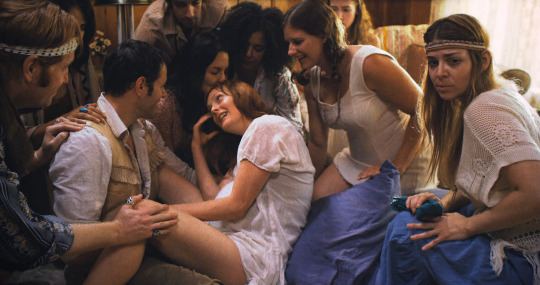
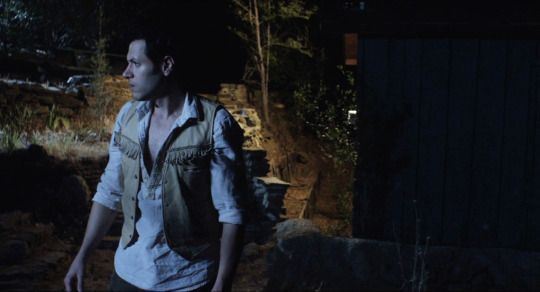
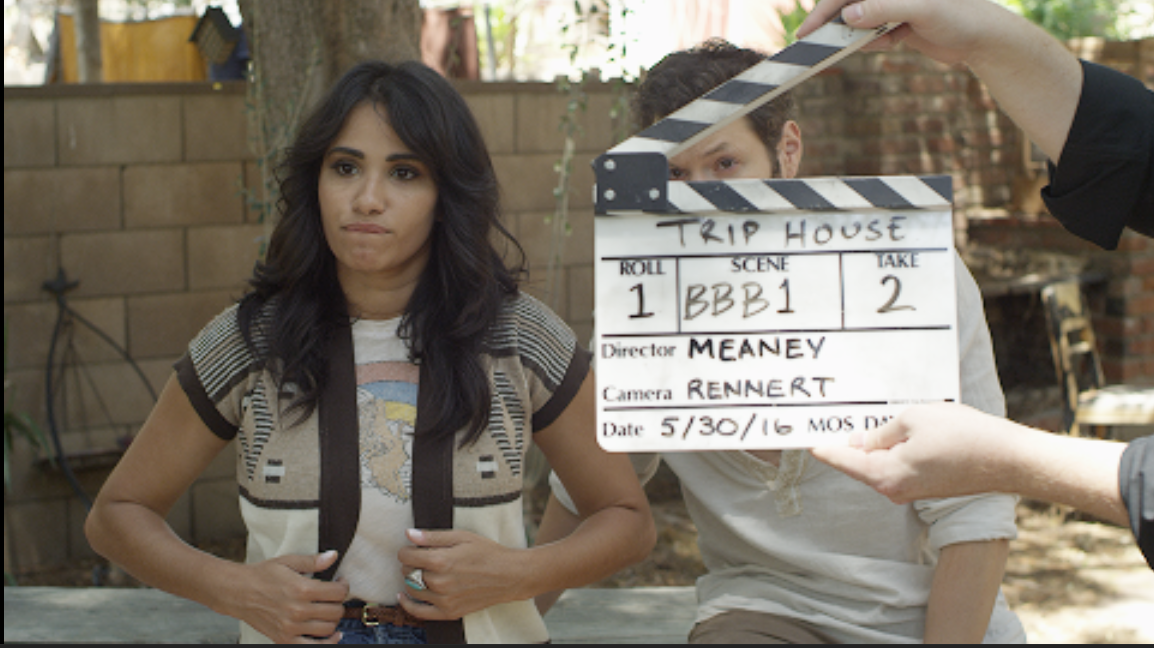
An early look at Patrick Meaney's TRIP HOUSE (now re-titled HOSE OF DEMONS)

(NOTE: TRIP HOUSE has been re-titled HOUSE OF DEMONS for its February 2018 release)

At the end of last week I got an email from director Patrick Meaney who was the mad genius behind one of the best films of the year NEIL GAIMAN DREAM DANGEROUSLY. He said he had just finished his latest film, a thriller and asked would I like to see it?

"Yes"I replied and the rest is history. 

What follows is a far from spoilery review for Mr Meaney's cinematic confection. I don't know if you need to know any more than that  other than  the film is going to be showing up in a theater near you soon and you'll want to have money aside so you too can buy a ticket and take a ride. It is that rarest of films, a great one that get better the more it's pondered. 

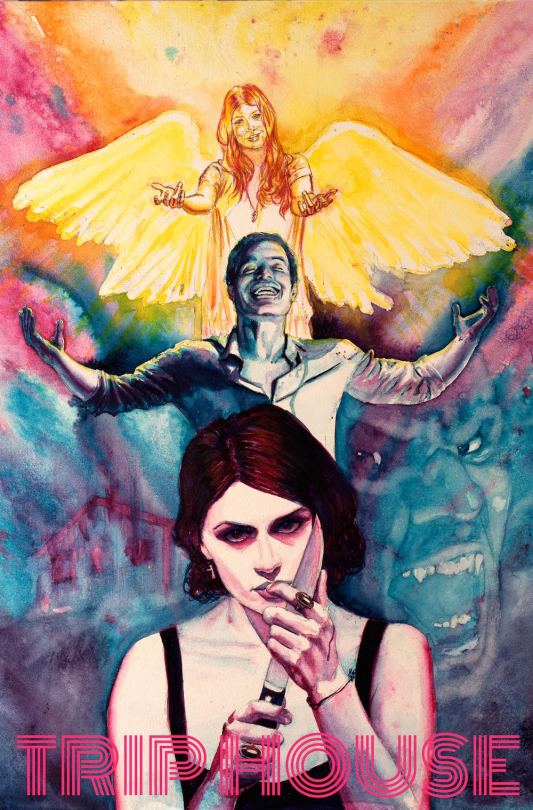
Thank you to Patrick Meaney for letting me see TRIP HOUSE and for supplying the poster art and stills.

Patrick Meaney's film TRIP HOUSE is a gem. Destined to be called a horror film because that is the easiest thing to call it, it is in fact something more than that. It simply transcends genres and easy description.  I suspect that if the film finds the right audience it will end up a touchstone film for many people for years to come.

Possessing elements of not only horror but fantasy, science fiction and thrillers as well TRIP HOUSE is in fact best described as a Vertigo comic book melded on to a 1970's drive-in movie.  I think the best way to describe it for people who know comics and films is imagine if  Grant Morrison decided to make a film version of  Steven T Seagle's House of Mystery in a style that approximated 1970's drive in films where there is a secluded house some where. (I'm thinking something with the feel of THE EVIL or EQUINOX or WE ARE STILL HERE) If that happened you'd end up with an exploitation style film with very high literary aspirations which is what you have with TRIP HOUSE.

Because the film is hasn't been released I don't want to say much about the plot other than a group of friends go to a house to crash the night before a mutual friend gets married. The past is recalled as the friends talk about their time apart. Things of course happen as there are other forces at work.And if you think you have any idea where this is going you are wrong. Where it goes and how it goes is nowhere near what you'd expect.

I'm not sure where to begin taking about the film. Should I mention the cast which is pretty much great across the board? Every one here is excellent and believable. Other than one awkward performance in a flash back everyone is spot on. These are well rounded characters created by actors who do more than just give line readings to the dialog. There is a physicality to them that makes them more than typical "horror" film characters.

Should I mention the technical achievements which create more than your typical amounts of tension? So much to say about the editing, music, camera works and everything that goes into a film that I'm not sure where to start...worse because of the construction of the film it's hard to really discuss sequences since to do so will give spoilers. I don't want to do that. I will say that the opening two minutes before the credits got my attention and I sat bolt up right just as the title popped on screen.  All I could ponder was wonder what the hell I had gotten myself into since the sequence makes clear that the technical crew have made a very tactile, very visceral film that gets inside you and makes stare at the screen.

Should I talk about the script which uses horror movie tropes and turns them upside down to create what amounts to drama about the the past? While it's clear Patrick Meany is working in the fields harvested by people like Neil Gaiman and especially the aforementioned Grant Morrison, he has marked out a little piece of property of his own. Meaney has taken what he has earned from the master storytellers he's profiled and in a way, uses it against the audience. We expect the story to go a certain, the film is throwing up various tropes left and right, but it isn't  using them the way we expected.

The most obvious way to see that is that Meaney has structured the story like a horror film, but it's not, there is something greater going on. The best example is if you compare what it is to Neil Gaiman's Sandman. Nominally Sandman is a fantasy comic, but the reality is it's ultimately simply a drama about people that uses the fantasy elements to accentuate the discussion of the human issues, which in Sandman would depend on the story arc. Here its about how we deal with our friends and our shared pasts. Are we chained to the past or are we going to move forward unencumbered? Can we even move forward? More importantly is hat we remember correct?

And at the same time TRIP HOUSE reaches into your belly and twists up your insides as things happen that don't bode well for anyone...because despite my insistence that it isn't, the film is very much a horror film, or if not straight on horror, a fantastical thriller.

You will forgive me I so want to write about the film but I don't feel it's fair because this is the sort of film you need to discover on it's own. If I knew when the film was going to be out for you to experience I would say more, but I don't want to dangle the film's delights until I know when you'll be able to experience them for yourself.

And I need to really ponder the film, perhaps see it a second time or two, since the film shifted before me as one thing that's promised in the first two minutes before the title to something else after the title to something else once things begin to happen. I was never on solid footing and I was never certain where it was going. That's a good thing,  since it kept me interested and wanting to know how it was all going to play out.

I have to say that this is the best sort of film - one that sticks with you and makes you think about it, not in a "that was good" or "that was scary" sort of way but rather 'I need to think about what the film was doing and trying to say" way. TRIP HOUSE is a film that I and hopefully you too will be pondering for a long time to come.

This film is highly recommend.  A beautiful marriage of genre and literary ideas this is a film that will delight anyone who wants more than hack and slash or blood and guts in their "horror" films.

Saturday, February 26, 2022

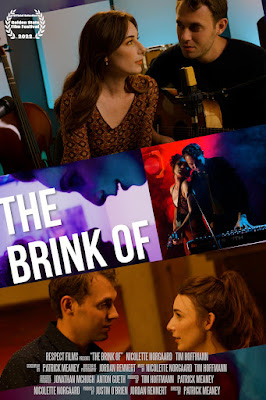
The Brink Of... (2022) Golden State Film Festival 2022


"He's probably better for you than me"

"But I'm not better for him"

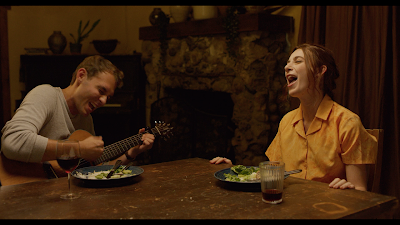
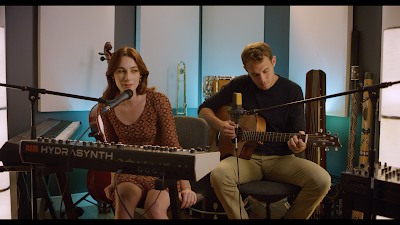
 Lena and James are the band The Brink Of...  As they were ending a six month tour and right after an influencer tweets put them on the radar of the world at large, they disappear. As the film begins the duo is back and are on a radio show explaining what happened.

If you know director Patrick Meaney you will think either of his comic work both as a documenary filmmaker (he's profiled Neil Gaiman, Grant Morrison and Chris Claremont) or as a writer, or you may know him as the director of the horror film HOUSE OF DEMONS. He would not be someone you instantly think of as a director of a sweet musical romance, but with THE BRINK OF.... he makes  romance films his own.

Beautifully acted and posessing a kick ass group of songs THE BRINK OF... soars. Director Meaney has fashioned a heartfelt and moving film. Its a film that had me misty at the end, not because it manipulated me but because it has given us a couple of people we can really root for. We like them  from frame one and are willing to go anywhere with them.


What I love is that in fashioning a love story Meaney has taken the romantic formula and used its tropes against us. I'm going to be honest and say there was a time when I just liked the film. The film was doing everything it was supposed to and hitting all the points exactly right but it didn't seem to be going the extra mile. It was technically great but it didn't seem to have all the emotion wired up to the power box... but at a perectly placed moment there is scene where the script clicks and you realize that while we were distracted with the songs and other things Meaney was laying in the heavy gauge wire so when the big moment cmes so do the the tears (and big yelp of joy which scared the neighbors). Everything that seemed to be throwaways cmed crashing it with a weight we never suspected. Simply put THE BRINK OF... does what few films do these days and gets the emotion and love of the audience by earning it and not manipulating us. 

Nicolette Norgaard and Tim Hoffman kick it out of the park. They make us believe that they coud be a  couple everyone knows are destined for each other but who refuse to see it. Indeed they manage to make that notion a perfectly played running gag. The pair also wrote their own songs and the emotion in them make the film even more special. Frankly while Patrick Meaney may have created the framework for the story, Norgaard and Hoffman's music, and their performances give the film life.

This film blew me away. Not just because I was sent the film totally blind and had no idea what it was at all, but because the film is just so damn good.

You must see this film because it will make you feel good.

The film World Premieres February 27 at the Golden State Film Festival and tickets and more information can be found here.

Look for mre on the film and an interview with director Patrick Meaney soon.

Monday, June 6, 2022

The Brink Of... (2022) Vero Beach Film Festival


"He's probably better for you than me"

"But I'm not better for him"

 Lena and James are the band The Brink Of...  As they were ending a six month tour and right after an influencer's tweets put them on the radar of the world at large, they disappear. As the film begins the duo is back and are on a radio show explaining what happened.

If you know director Patrick Meaney you will think either of his comic work both as a documenary filmmaker (he's profiled Neil Gaiman, Grant Morrison and Chris Claremont) or as a writer, or you may know him as the director of the horror film HOUSE OF DEMONS. He would not be someone you instantly think of as a director of a sweet musical romance, but with THE BRINK OF.... he makes  romance films his own.

Beautifully acted and possessing a kick ass group of songs THE BRINK OF... soars. Director Meaney has fashioned a heartfelt and moving film. Its a film that had me misty at the end, not because it manipulated me but because it has given us a couple of people we can really root for. We like them  from frame one and are willing to go anywhere with them.


What I love is that in fashioning a love story Meaney has taken the romantic formula and used its tropes against us. I'm going to be honest and say there was a time when I just liked the film. The film was doing everything it was supposed to and hitting all the points exactly right but it didn't seem to be going the extra mile. It was technically great but it didn't seem to have all the emotion wired up to the power box... but at a perfectly placed moment there is scene where the script clicks and you realize that while we were distracted with the songs and other things Meaney was laying in the heavy gauge wire so when the big moment comes so do the the tears (and big yelp of joy which scared the neighbors). Everything that seemed to be throwaways came crashing it with a weight we never suspected. Simply put THE BRINK OF... does what few films do these days and gets the emotion and love of the audience by earning it and not manipulating us. 

Nicolette Norgaard and Tim Hoffman kick it out of the park. They make us believe that they coud be a  couple everyone knows are destined for each other but who refuse to see it. Indeed they manage to make that notion a perfectly played running gag. The pair also wrote their own songs and the emotion in them make the film even more special. Frankly while Patrick Meaney may have created the framework for the story, Norgaard and Hoffman's music, and their performances give the film life.

This film blew me away. Not just because I was sent the film totally blind and had no idea what it was at all, but because the film is just so damn good.

You must see this film because it will make you feel good.

Look for more on the film and an interview with director Patrick Meaney  and Nicolette Norgaard tomorrow.

Monday, April 15, 2024

Patrick Meaney's wonderful THE BRINK OF (2022) has hit VOD - A review of the film and interview with the director and star.


"He's probably better for you than me"

"But I'm not better for him"

 Lena and James are the band The Brink Of...  As they were ending a six month tour and right after an influencer's tweets put them on the radar of the world at large, they disappear. As the film begins the duo is back and are on a radio show explaining what happened.

If you know director Patrick Meaney you will think either of his comic work both as a documenary filmmaker (he's profiled Neil Gaiman, Grant Morrison and Chris Claremont) or as a writer, or you may know him as the director of the horror film HOUSE OF DEMONS. He would not be someone you instantly think of as a director of a sweet musical romance, but with THE BRINK OF.... he makes  romance films his own.

Beautifully acted and possessing a kick ass group of songs THE BRINK OF... soars. Director Meaney has fashioned a heartfelt and moving film. Its a film that had me misty at the end, not because it manipulated me but because it has given us a couple of people we can really root for. We like them  from frame one and are willing to go anywhere with them.


What I love is that in fashioning a love story Meaney has taken the romantic formula and used its tropes against us. I'm going to be honest and say there was a time when I just liked the film. The film was doing everything it was supposed to and hitting all the points exactly right but it didn't seem to be going the extra mile. It was technically great but it didn't seem to have all the emotion wired up to the power box... but at a perfectly placed moment there is scene where the script clicks and you realize that while we were distracted with the songs and other things Meaney was laying in the heavy gauge wire so when the big moment comes so do the the tears (and big yelp of joy which scared the neighbors). Everything that seemed to be throwaways came crashing it with a weight we never suspected. Simply put THE BRINK OF... does what few films do these days and gets the emotion and love of the audience by earning it and not manipulating us. 

Nicolette Norgaard and Tim Hoffman kick it out of the park. They make us believe that they coud be a  couple everyone knows are destined for each other but who refuse to see it. Indeed they manage to make that notion a perfectly played running gag. The pair also wrote their own songs and the emotion in them make the film even more special. Frankly while Patrick Meaney may have created the framework for the story, Norgaard and Hoffman's music, and their performances give the film life.

This film blew me away. Not just because I was sent the film totally blind and had no idea what it was at all, but because the film is just so damn good.

You must see this film because it will make you feel good.

Look for more on the film and an interview with director Patrick Meaney  and Nicolette Norgaard below

Thursday, May 12, 2016

Neil Gaiman: Dream Dangerously is one of the best films of 2016

Earlier tonight I saw Patrick Meaney's film NEIL GAIMAN DREAM DANGEROUSLY, there is nothing special in that but a half an hour into seeing the film I emailed Mr Meaney and I said:

(This is) your best film
It may very well be one of the best films of 2016

When the film was done I emailed him again to say essentially the exact same thing adding that it one of the finest films on creation that I'd ever seen.

I then tweeted that sentiment to the world.

Now I know some of you are going to be saying, "Hey, it's just Steve going overboard on a film" or you're wondering if I'm just trying to to get in good with Mr Meaney. But I assure you that is not the case. It has nothing to do with anything, not even the fact that Unseen contributor Randi Mason is in the film influenced my feelings.

I said that DREAM DANGEROUSLY is great film because it is.

DREAM DANGEROUSLY is nominally the story of Neil Gaiman going on his final large scale book tour. No longer will he be traveling from city to city signing for everyone and on everything put before him. At the end of the months long tour he would be retreating to his home to do the one thing he's always loved to and and always wanted to do, which is "make shit up"

Over the course of the film Neil talks about his life, his work and most interestingly writing. It is not a be all and end all documentary on his life and work (many events are left out, numerous collaborators are not in the film), rather its a peak inside the head and the heart of the man who had delighted and moved millions of people across the globe. Its also a glorious look at how and why we create including the wonderful explanation of the reason "because I have to" that you'll ever see.

Okay, time to come clean. I am not what you would call a fan of Neil Gaiman. I am not one of the "Thingies" as some the first fans called themselves. With Neil I was on the outside looking in, but always aware of what was going on with him and his fandom because of my relationship with Randi. While I have been with Randi when she's seen Neil , I have not ever actually met the man, though I did get his autograph once when I pushed a New York Film Festival Program in front of him at the premiere of PRINCESS MONONOKE. I do not live and die with Neil which is why when I tell you that this film is incredible you should believe me, I have no stake in liking it.

And I really do like it, and then some.

There are a couple of things that I love about the film.

First the film seems to get the real Neil Gaiman, or at least the one I've seen over the years and the one that I've heard about in stories from the people I've talked to who have hung out with him. This is the guy who loves his fans, it witty and funny, and does what he has to do. I love that we get a sense of the man outside of the limelight, not so much directly, rather in the things that are mentioned in passing or stories that are related. No we don't delve into his whole life, we don't meet his kids for example, but we see enough to get a sense of the man away from the cameras.

The other thing I love is that we get a sense of the artist dying to create. Neil explains how and why he writes. We get glimpses into why and how stories came about and why he has always trekked toward the mountain of being a writer instead of taking a safe job. His frequent recounting of writing "because he has to" isn't just words, there is something more, and you feel it in his words. In conversations with people around him, at the signing table, or even with the film crew Neil talks about writing as if it were (and if you write you know it is) a sensual thing. He talks about writing by hand, of using different pens and ink colors so he knows how much he does each day. People talk about him being at parties talking up storms only to disappear for a bit to some corner to get some stray thought down.  If you write because you have to you know that's how the best stuff comes- out of nowhere and at the odd moment.  You must write it down or get it lost. Neil's conversations really let us feel that.

I can't praise director Patrick Meaney enough as to how over the course of the film and its conversations and it's small moments that we see are allowed to see into Neil Gaiman's heart of heart and the place where all the words and magic comes from. Meaney managed somehow to get all the right bits and stitch them together, not into a monster but something beautiful.

Ultimately this is a film about creation. It about how one writes, how stories are created and how Neil Gaiman became Neil Gaiman. It is a film that feels like a Neil Gaiman story.

For me the way the film goes about showing Neil goes about being himself and creating his stories resonated in me. Its a film that I want to how to my friends and yes this is a good portrait of Neil Gaiman, but at the same time if you ever want to know why I do what I do- why I write or why anyone does anything- this will explain it.

As with films I love I am in awe of this film. Here is a film that explained to me why Neil Gaiman has the fans he does while at the same time transcending its subject of a well known author to become something beautifully which explains why we create, This is a film for anyone anywhere who has ever been driven to make good art for whatever reason.

Hands down one of the best films on the act of writing/creating you will ever see.  This is one of the best cinematic biographies you'll ever see and one of the very best films of 2016.

Look for the film to premiere in the next couple of months (I will post details here at Unseen). Also look for an interview with director Patrick Meaney as soon as I finish typing up the questions not to mention another less personal pass by the film.

Tuesday, May 24, 2016

Speaking Dangerously: Patrick Meaney on his career and Dream Dangerously, his masterpiece on Neil Gaiman


I have been trying to write an introduction to this interview with Patrick Meaney for several days now and I’ve been failing miserably. It’s not that I have nothing to say — rather, it all sounds bogus and as if I’m trying to hype a man who needs no hype. Trust me: if you’ve seen Meaney’s earlier films (in particular GRANT MORRISON: TALKING WITH GODS and WARREN ELLIS: CAPTURED GHOSTS) you know he’s a man who makes films that are wonderful portraits of the people he chooses profile. His films reflect the artists in ways that most other documentaries would never consider.

And then he made NEIL GAIMAN: DREAM DANGEROUSLY and the universe changed.

With DREAM DANGEROUSLY, Meaney has made a film that transcends its subject to be about something greater. While specifically about Neil Gaiman and his final large scale book tour, the film is actually a film that explores why we need to create. Yes, the film is about the tour and Neil’s work, but it’s also about why he creates, and how and by extension how we all do. That's what’s really special about the film. Meaney frames it so that the specifics of how Neil creates echoes into the lives of everyone who has ever been driven to do anything.

Now, I came to this interview ass-backwards. It was not something that I really was planning on doing, nor was it something I wanted to do (I was a bit too busy). However an interview was suggested by Unseen’s chief researcher and social media director Randi Mason (who was interviewed for the film) and one thing lead to another.

To be honest, my plan was to simply ask couple of quick questions and be done with it… but then I saw DREAM DANGEROUSLY and my universe changed. I had to talk to him. (Actually, I wanted to give him a big hug, but that wasn’t possible since he was on the opposite side of the country)

I had the chance to do the interview with Meaney via telephone, but I opted to do it via email. I loved the film so much that I wanted to make sure that everything was right. I wanted to make sure all the questions and all of the answers were exactly as we both wanted them. I wanted to make sure that I asked everything I wanted to get answers to.

And I wanted to make sure that the interview stayed on point. Had I spoken with Patrick on the phone, I know I would have been very tempted to ask a number of questions that would have revealed too much about the film or been so specific that no one really would have cared except me. I wanted this to be an interview that would work before you see the film and not just after.

First, I want to thank Randi for getting me involved in all of this. Second and most important, I want to thank Patrick Meaney for not only doing the interview (and doing all the typing) but letting me be the first to see the wondrous treasure that he is shortly going to unleash on the world. NEIL GAIMAN: DREAM DANGEROUSLY rocks, and it's something that he should be thanked for repeatedly.

(All images in this interview are courtesy and copyright of Patrick Meaney)

Patrick Meaney (left) and friend take a break after a long shoot
STEVE: Thank you again for letting me see the DREAM DANGEROUSLY. I hope I didn't make too big a fool of myself gushing over it (note: the Unseen review is here). Trust me, my feelings for the film are genuine. I love the film, which was something the people I spoke after seeing the film are well aware of. (I'm going to take another pass or two at the film and do another piece.)

PATRICK: That’s awesome to hear. As I mentioned, you were literally the first person to see the film outside of the team, so it was great to hear some positive feedback. And it’s really nice to know that you got so much of what we were trying to convey with the movie.

STEVE: You’ve made a career out of profiling comic creators and comic related subjects. Where other filmmakers have profiled one writer or artist and were done, you’ve created almost a cottage industry. How did you come to do so many comic related films?

PATRICK: There’s a couple of reasons. On one level, I think it was a trust from the comics community, and other people felt like, well, if Grant Morrison trusted him to do a movie, I guess I will too. As we’ve gone on, it’s become easier to get interviewees, since we have a track record of projects to point to that give people confidence that this is going to be something professional and real, and not a take down or puff piece.

But, I think it’s also just a rich untapped field to tell stories about. It’s hard to make a new statement about The Beatles or The Rolling Stones, or Alfred Hitchcock or Scorsese, but in comics we have these people who are absolute masters of the medium whose stories have never been told. I had barely seen any video of Grant before we did the movie. Neil is out there a bit more, but there’s never been a feature length piece about him, and that’s kind of crazy.

And, the other biggest reason for doing these particular biographical subjects, is that they all developed public personas that are just as fascinating as the work, and in many ways integral to it. Reading The Invisibles almost requires knowledge of Grant’s own experiences at the time. And with Neil, his rapport with the fans has been key to his success since day one. You see as much fan art of Neil himself as you see of any of the characters. I think there was something about that era of comics in particular, in the late 80s and early 90s, when creators were rock stars, and it’s fun to explore that.

STEVE: Were you someone who was going to conventions and readings during the comic writer as rock star days?

PATRICK: No, I was a bit young during that time, and didn’t get into comics until the tail end of that. So, I wound up reading basically all the big Vertigo series quickly in succession, jumping from Watchmen to Sandman to Preacher to The Invisibles and then reading the end of Transmetropolitan was it was coming out. I read a bunch of interviews and got a sense of the personas of these creators, but I didn’t go to too many cons until later, and didn’t go to big cons like San Diego or New York until the mid 2000s, when it was a bit of a different scene. But, I definitely got a sense of it via the Warren Ellis Forum and other online places like that.

STEVE: Your most well-known films are on comic giants Grant Morrison, Warren Ellis and now Neil Gaiman. What brought you to them and what made them trust you?

PATRICK: Grant was the first project we did. I had written a whole series of blogs going through The Invisibles, issue by issue, just for fun. And I got approached to turn those into a book. So, I think it was checking that out that made Grant feel like I got his work, and saw where he was coming from. I had never done a documentary before, or a film project on that scale, so I’m really happy that he took a chance and entrusted us with his story. From there, I think knowing that Grant was cool with us made it easier for Neil and Warren to trust.

With Neil in particular, it was a bit of a different experience, since we filmed him on the road and out and about a lot more. So, I think being around us so much, and being filmed so much, made him let his guard down a bit and start to make jokes to the camera and get into it more.

STEVE: You came to Grant through your love of The Invisibles. What brought you to Warren?

PATRICK: I read Transmet early on when I was getting into comics. I actually got into comics seriously a bit later than some people, when I was around 14 or 15. I started reading Claremont X-Men, then jumped into Vertigo stuff. I always liked superhero stuff, but was even more into Phillip K. Dick style weird and mind bending sci-fi stories, and found those in comics.

At that time, I also started going on the Warren Ellis Forum. So, for me, Warren’s work was inseparable from his personality. I remember how cool it was to read the forum and see the culture that existed there. Now, lots of the regulars have gone on to be huge comics personalities, like Kelly Sue, Fraction, Kieron Gillen, Antony Johnston, etc. But, back then they were the ‘inner circle’ of the forum. I wasn’t a big poster, but I loved reading it, always found Warren very funny and cool, and got into comics through what they were doing there, and picked up a lot of books as a result of tips from people there.

So, for me, getting to do the film on Warren was exciting because of the work he had done, but even more so because it was a chance to be in a room with this legendary guy who had shaped my approach to comics and interest in creativity back then.

STEVE: I’ve heard you say that your films are structured around your subject's personality. How do you determine what that is, and how do you translate that to the screen?

PATRICK: With Grant and Warren, both films are centered around contrasting the ‘persona’ or ‘legend/mythology’ that they’ve built up around themselves. So, you might think of Grant Morrison as a drug tripping fifth dimensional shaman, but who is he really? Or Warren is a crank, whiskey drinking, foul mouthed cyber guru, but how much of that is a construction? So, I tried to start by introducing the public perception of them, then proceed to dig deep and discover what lies behind that, and how they were able to build that image. I’m basically taking the standpoint of the casual fan and the knowledge that they have of the person as the jumping off point to dig in deeper.

Neil is the same to some extent, in that you start on the outside, knowing his work, maybe having been to an event or heard him read, but then we go behind that and see how everything he does for the public both enhances and hinders his desire to be a writer.

STEVE: Do you go into a film and start shooting with the assumption its going to be one thing, or do you simply go in and just see what happens?

PATRICK: I always start with an outline, that goes over the major beats of what I have in mind for the story and arc. But, it usually changes quite a bit. Usually we’ll shoot with the main subject a few times, so I’ll go off and edit what we have in between those shoots and start to get a sense of what the story of the film is going to be, then we can ask the next round of questions to clarify.

With Grant at first, we interviewed him for three days with about 15 hours of footage, so I asked about all his works, all kinds of stuff that was fascinating. And I was thinking, we have to have some Seven Soldiers in the film or we have to have some New X-Men in the film, since I loved those works and wanted to feature them. But, ultimately we realized that the story was about Grant and the way his life and work mirror each other. So, it became less about the works themselves than how they reflected Grant’s experiences at the time of writing them.

Ultimately, the movie finds itself in the process of creating it, and the more you get to know the subjects, the more you understand what the story needs to be.

That’s the other big reason that you can’t stick to an outline. We’ll usually shoot around 40 hours for a project. With Neil, it was probably closer to 60. The biggest thing I realized early on was how to distinguish between a moment that is great on its own terms, and one that serves the story. I’ll sometimes allow a comedy bit that’s not super relevant to get into the movie, just because it helps keep people engaged with the movie and gives them a little breather. But generally, I try to be pretty ruthless about only putting in what enhances the story and is entertaining or insightful on its own merits.

So, with Neil, I love Miracleman. I would have really wanted to include it, but it’s not a key part of his overall story, so it didn’t make it into the cut.

STEVE: How do you prep for your films? Do you go in and reacquaint yourself with everything the subjects have done, or are you less concerned since your films aren’t literary retrospectives, but more portraits of the artists as human beings?

PATRICK: I try to read everything they’ve done, as best I can. With all three of these subjects, they’re so prolific, it’s hard to read absolutely everything, but I don’t want to be interviewing Warren and not know what Transmetropolitan is for example. And I like all their work a lot, so if there’s something I haven’t read, it’s a good opportunity to go out there and do it.

STEVE: Is there anything that you wanted to read but couldn't get your hands on? Did you read Neil's Penthouse pieces?

PATRICK: No, I didn’t read a lot of his journalism era stuff, like the Duran Duran book or the Penthouse pieces. I’d be curious to check it out, but I don’t think the subject matter was really essential to what we were doing. I know with Grant I’ve still never read ‘New Adventures of Hitler,’ and hadn’t read Zenith at the time we did the movie, so there was stuff that was hard to find. But with Neil, most of his work is in print and accessible, so it’s easier.

STEVE: When you shoot a film what is your target audience? Are you looking for a fan of the subject, of comics? Or are you hoping to cast a wider net? Or in your heart of heart you don’t care and you’re making the film for yourself because you wanted to do a film on Neil or Grant or Warren?

PATRICK: I always want to strike a balance of creating a film that will be accessible to someone who has no idea who these people are, but still feels totally fresh to people already familiar with the subject. So, if I’m talking about one of their works, I’ll try to reference it primarily through the lens of how it reflects the person or the ideas it presents, rather than the story.

So, with the Neil doc, we decided to talk about the origins and inspirations of the works, more than the content of the works themselves, since I think that’s more relatable to a wide audience than going into nitty-gritty plot details. I love to listen to Grant or Neil talk specifically about their works, but that can make the film’s appeal a bit too narrow, since it’s not that thrilling to hear someone talk about a comic book you’ve never heard of. But, you don’t want to shortchange the works either and not give anything substantive about them. That’s the challenge.

But my hope is always to reach people who can think about the ideas we’re talking about and enjoy those, even if they’ve never heard of the people before. And with Neil in particular, we were trying to create something that people who like to write or create could watch and enjoy, even if they’re not Gaiman fans.
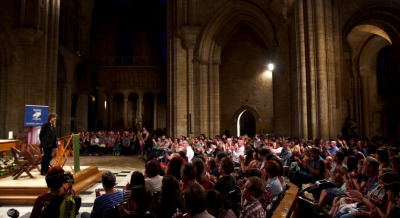
Neil reads

STEVE: Do you think that you had an easier time going for the general audience with Neil because he has been a best selling novelist as opposed to being primarily a comics writer?

PATRICK: To some degree, particularly with Coraline having become a movie and an American Gods TV show coming down the line, people will be more familiar with that stuff. But, in some ways it’s actually harder. The cool thing about comics is you can show stuff on screen. So, even if you don’t know what Sandman is, you can see freaky pale godlike guy and get the idea. But depicting Neverwhere or The Graveyard Book is a little trickier.

But, I do think Neil’s higher profile does make it a bit easier to target a general audience, as well as the fact that, at least when we were filming him, he was mostly out in the world doing stuff. So, we can observe him more in action rather than just through his words and anecdotes.

STEVE: How did the Neil Gaiman film come about?

PATRICK: We actually first got in touch with Neil around the time we were wrapping up the Grant doc. We were already deep into Ellis at that point, and were talking about other potential subjects to tackle, and Neil was certainly one of the most iconic and fascinating writers of all time in comics, as well as one of my personal favorites. So, we got in touch and he said he was interested, but scheduling wasn’t quite right then. It took a little bit, but finally came together in earnest when his last tour was coming up. I pitched the idea of following him on that tour, he liked it and that was where the movie really kicked off. You’ll notice that some of the interviews in this movie, like Wil Wheaton and Lenny Henry, were the same sessions as what was in the Ellis documentary.

STEVE: Did you shoot the Neil questions knowing the material was going to be used, or as something to have in case the project came together?

PATRICK: We were already planning the movie at that point, but it was very early stages, so only some of what we filmed ultimately fit in the final film. But there’s some good additional stuff that will probably turn up on the DVD.

STEVE: I know the film was been a long time in the works. I heard it was promised for last year, but I know you were still shooting last year. What prompted the delay? I believe you had said at New York Comic Con that the focus was going to be on the relationship between Neil and his fans, and while that's in the film, the film is now firmly on Neil and his race to get back to creating. Was there a change in focus? How did you pick the focus?

PATRICK: It did take a long time, for a few reasons. We had some ups and downs working with a potential distributor, that delayed things a while, but ultimately definitely worked out for the best.

It took a while to figure out the best focus for the film. As I mentioned, the original idea was to do a year in the life, but after we went on the tour, it felt like that was such an in depth and cool thing, we should try to focus more around that, since the rest of the year is going to pale in comparison. But, there was a lot of back and forth with the producing team about how much should the movie be strictly tour centric or more biographical or some hybrid of the two.

We had a pretty solid cut of the movie, and went to interview him one more time. And that’s where we talked more in depth about the writing process and his life as a writer, and once we had that material it became clear that was the other spine of the movie. The story was about the conflict between Neil was a writer and Neil enjoying the opportunities created by his writing. It’s about Neil as public figure versus Neil as private creator. And that conflict sort of knit together everything we had and was a great spine for the movie, that I think is pretty relatable whether you’re as successful as him or not: the conflict between observing life and processing it into stories, or just living it.

STEVE: When you sat down with Neil did you do an extensive interview on all his life and work or did you pick and choose?

PATRICK: We sat down with Neil several times for interviews, we started with a more extensive look at everything, but as time went on, it became clearer what the film was about, and we decided to focus on the elements that were thematically or narratively relevant. We already had so much material from shooting about 15 events on the tour that we had a great base of stories to work from and could hone in on whatever was missing.

STEVE: How long did you actually shoot with Neil? Was it the entire tour? You seem to be with him the entire time in England. Forgive me, but wasn't the stuff you shot at the Brooklyn Synagogue after the tour? And why did you go back?

PATRICK: We filmed with Neil at a couple of US stops, through all of Comic-Con and through all of the UK stops. So, it was about three weeks worth of events total. Ultimately, the UK became the core of the movie, since that’s where we spent the most time with him. That said, the American fans are generally much more enthusiastic than the UK crowd.

And we had just shot with Neil a few days before that Brooklyn event. He invited us to come down and shoot it, so we picked up some additional footage there.

STEVE: Was anything off limits?

PATRICK: Not particularly. There’s a lot of stuff we talked with him about that didn’t wind up in the film because it didn’t fit, some of which we’ll release on a DVD or other bonus format.

STEVE: As to the DVD/Blu-Ray super-special edition — what extras can we look forward to?

PATRICK: We’re figuring out the details now, but there’s a whole lot of deleted material to choose from. I’m thinking about potentially putting an entire alternate earlier cut on the DVD, which includes a lengthy section set at San Diego Comic-Con, which includes some really funny moments with Neil, Jonathan Ross and John Barrowman. There’s also lots more interview stuff with Neil, where he gives insight into the writing process, and a look at how he’s working on the new Good Omens TV series.

STEVE: Good Omens TV? I hadn't heard that was so active.

PATRICK: It was just announced that it’s back on, as a six-part TV series that Neil will be writing. I believe it’s being produced by the BBC, but there’s an outlet here in the US who will be picking it up.

STEVE: While we're talking current Neil projects: any thoughts, or did you catch anything on the Black Mirror-esque project, American Gods TV show or How to Talk to Girls at Parties film?

PATRICK: I heard a few things, but am not sure what can be said or not, so I won’t comment on that front. American Gods is shooting now though, with an eye towards a 2017 premiere.

STEVE: You just mentioned a different version of the film to me. How different was the earlier cut of the film?

PATRICK: We had a quite different cut of the film a while back. Originally, we started the movie with some US tour stuff, then went to comic con, and got to the UK about 25 minutes in. With this chronology, we started with Neil’s success with Sandman and other comics related projects, then jumped back to delve into his childhood. The cool thing about this was we got to show a lot of great material that we shot at comic con, the problem was it made it difficult to keep the narrative feeling like a progression. So, I wound up shuffling stuff around and losing a whole bunch of material and basically structuring the whole movie around the UK tour.

In the gaps of stuff that we had cut, we shot another interview with Neil, where we delved in depth into his writing process and views on creativity, and that became the dual threads of the movie: the tour and Neil’s growth as a writer. I had always struggled with finding the right balance of tour/not tour stuff, and how to make it feel like more than just a guy signing books, and I think that honing in on this conflict between Neil’s desire to write and his enjoyment of being a successful writer gave us the internal conflict that we needed to make the movie a bit more substantive.

Some sections were basically the same. The signing in the church and pieces surrounding that, as well as most of the signing parts near the end stayed basically the same, but nearly everything else shuffled around and evolved quite a bit.

STEVE: I have to ask: is there any footage of Neil's punk band playing? Or are there any audio recordings?

PATRICK: There doesn’t seem to be. We worked pretty closely with Neil’s childhood friend Geoff Notkin, who got us a lot of photos and rare stuff, but he said that there were no surviving recordings of the band. Maybe something will turn up one day, but it seems to be lost to the ages.

STEVE: Do you have any footage of Neil actually transporting the audience from England to Moscow and back again, or have you been sworn to secrecy as to how it was done?

PATRICK: Officially, this never happened, so no cameras allowed. It’s like court proceedings, only an artist’s rendering could be used to commemorate the moment.

STEVE: You use comic panels to link up or illustrate some events in Neil's life. Was that simply because film or video doesn't exist, or simply because of Neil's connection to the comics?

PATRICK: It’s a mix of both. There’s some events he’s talking about that wouldn’t have a direct photographic correlation, so we wanted to evoke the feeling of his story, and used a more subjective illustration to do that. And in other cases, it’s just about giving a visual for something that isn’t there. I don’t want to hammer the audience over the head by illustrating everything, but I think that one of the cool things about doing a documentary as opposed to just watching a video of a Neil lecture is that we can bring some of his stories to life in a dynamic way. So, particularly for some of his funnier or more evocative anecdotes, I wanted to find a way to put those visuals on the screen.

STEVE: How did you choose who to talk to in relation to the film? I ask this because there are several collaborators the artists he worked with who aren't mentioned in the film. And while we see Amanda, Neil’s current wife, we only get a sense of his children through old photographs. Was there any plan to try and get them on camera or they just didn’t figure into what you were shooting?

PATRICK: With this movie, particularly compared to the Warren and Grant, there was so much more material shot out in the field and on the fly, that going back to interviews all the time felt a bit less essential. So, rather than try to shoot every single person who had any interaction with the person ever, as we had on previous films to some degree, we focused on a few select people, and only used small portions of their interviews. In some cases, scheduling didn’t work out, and we would have loved to get others in, but it was less interview-centric as a whole.

We shot some material with Neil and his daughter at one of the tour stops, but it ultimately didn’t feel that relevant to the story we were telling. No offense to his children as people, but in the context of the film, they’re mostly relevant to how they inspired his writing. So, we hear a lot about Holly in the context of Coraline, or how having kids early in life pushed him down the path of becoming a writer. It would have been cool to hear more from them about what it’s like having Neil Gaiman as a dad, but I don’t think that was ultimately the story we were telling.

STEVE: We see Neil's mom in the film, but I was curious if you made any effort to interview her? How about Neil's sisters?

PATRICK: We were going to interview her that night in Portsmouth, but she wound up being too tired and leaving the event early, so we didn’t get the chance. I would have loved to talk to her, or Neil’s sisters, and get some insight from them, but I think we got really good insight into Neil’s childhood from Geoff Notkin and from Neil himself. Neil’s memory is pretty remarkable, and as you can tell from the movie or reading Ocean at the End of the Lane, he remembers pretty much everything about how it felt to be a kid.

STEVE: When you're doing interviews with someone as well as Neil, there are conflicting stories about him. How do you sort out what the truth is?

PATRICK: To some degree, I view each of these movies as presenting the viewpoints of different people and letting the viewer make the decision. In editing the Grant movie originally, I had some parts about what his critics or ‘haters’ disliked about the works, and ultimately I realized, let the viewer make those calls. If you think it’s improbable that he had a vision of all time and space after watching the movie and he’s lying about it or was just on drugs, you can decide that, I don’t need to tell you what to think.

So, we had Neil watch the movie and let us know if anything seemed false to him, but ultimately I think it’s up to the viewer to decide what they think of the people and their ideas.

We had one funny experience where we screened the Warren Ellis doc at a festival and a lady raised her hand during the Q&A and said she was worried about Warren and thought he should really stop drinking and smoking. So, she might be thinking that while other people are taking whiskey shots alongside Warren.

STEVE: With someone who's been in the public eye for the last 35 years, and you're doing a film such as this — are you ever afraid that doing a film will unfairly or unjustly fix, say, Neil’s history as one thing?

PATRICK: To some degree, that is the responsibility of the project. We’re creating the most sustained visual legacy of these people as individuals. Their work is one thing, but the movies immortalize the person themselves. And that’s why I always try to let the person’s own words and feelings be the guide and try to force my own stamp on it where it doesn’t belong. I don’t want to editorialize, I want to present their point of view and attitude and life story in their own words.

But, I think there’s enough books about Neil, and his tweets and blogs, as well as his actual work, that people will have plenty of history to choose from.

STEVE: I've had interactions with Grant and Neil, and to my mind, you've gotten things right... but I have to ask, would your films have been different had they not relied on being essentially the artist telling his own story? Would you have even attempted the films without the authors' considerable participation? Since your films are very much about the authors in their own words, have you ever worried that you would be accused of not being as objective as you should be?

PATRICK: Editing together a bunch of documentaries has taught me that objectivity is very, very hard to convey. Even in just presenting someone’s words, you’re choosing what words to present, and what other people say to build that narrative. I have thought about whether or not to include more counterpoints, or, in the case of Grant, have people say, it’s improbable that you would experience perception outside of time, or something like that. But, ultimately, what interests me is not trying to make a comprehensive, objective look at the life and work of any of these subjects, but instead to get their worldview across and find a way to encapsulate it in a film.

So, I wouldn’t want to do a movie that’s just about Grant, without having his participation. It’s great to get additional insight from people talking about him, but that’s supplemental to the main experience, of the person talking about his own experiences. I do obviously play a big part in shaping which sides of the person are presented in the film, but I want to try to let their interests ands passions guide that as much as possible, and convey what really drives them in the film.

STEVE: Was there anything you wanted to cover in the interviews but didn’t? Was there anything that you really wanted to have in the film but couldn't find a way to include it?

PATRICK: I love his run on Miracleman, and think it’s a pretty crazy story of how there was a 25 year struggle to get the rights and return to writing the series. There’s a lot of drama and ups and downs there, but it ultimately didn’t quite fit into this story.

STEVE: Did you consider doing a film on Miracleman?

PATRICK: I would love to! I think it’s a great story with a lot of ups and downs. If there was something like ESPN’s 30 for 30 for comics, I think it would be a great piece. But right now, it’s probably a bit too niche, and inside to do. One day maybe...
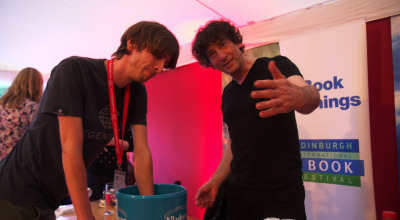
Neil shows Patrick how to ice down his hand after a long day answering silly questions

NEIL GAIMAN: DREAM DANGEROUSLY is due for release this July.

Sunday, November 20, 2016

Entering TRIP HOUSE: Patrick Meaney on making horror movies

Patrick Meany, in the white shirt behind the camera, directs
(Please note TRIP HOUSE has been re-titled for its February 2018 release)

2016 is the year of Patrick Meaney. 

Earlier this year he released the critically acclaimed NEIL GAIMAN DREAM DANGEROUSLY a documentary about the bestselling author. I found it one of the best cinematic biographies I’ve ever seen (Here’s my review). Recently Patrick has shift gears and has begun sneak peaking his genre busting horror film TRIP HOUSE and again he’s hit it out of the park.

For those who are unaware Patrick Meaney is a filmmaker best known for his documentary work focused on comics and their creators. He's done films on Neil Gaiman, Grant Morrison, Warren Ellis, and Chris Claremont.  It’s one hell of a body of work, with most of films considered the source for information on their subjects. TRIP HOUSE his new feature and with it he moves away from documentaries into the realm of horror films. And again he has made a film that hits the ball out of the park.

TRIP HOUSE is the story of four old friends who meet up on the eve of the wedding of one of  one of their number. Wine is drunk, conversations are had and intruders arrive. Unexpected things happen and the horror genre is turned on its head in unexpected ways. 

I was blown away by TRIP HOUSE (my review is here). It marvelously didn't go where I thought it would. It scared me and delighted me and made me go "wow".  Best of all it made me think a great deal. And when it was done I did what I did after I saw DREAM DANGEROUSLY, I emailed Patrick to ask if I could send him some questions concerning the film. He said yes and what follows is out brief email conversation.

A couple of quick notes

First because the film is only beginning it’s journey to you I have intentionally not steered this into a deep discussion of the plot. I’ve tried to not be specific- despite my wanting to be. That said there is one spoilery exchange toward the end (the question begins with a mention of it being a spoiler). I know that may clue you into stuff but it was something I had to ask

I also want to say that because I spoke with with Patrick earlier this year I didn't cover the same ground as the first interview (the earlier interview is here).  This interview is much shorter. Yes there is some overlap but that was because the questions are referring to different films.

Before I give you over to our talk I want to thank, Patrick Meaney for letting me see his films and talk to him about them. I want to thank him for his unending patience. I also need to say that in all seriousness it has been one of the coolest things that happened all year. Getting to talk to a director twice is an extreme rarity, and to do so twice in one year on very different films is pretty much unheard of.

Patrick, the next time you're in New York I owe you dinner.
Steve Cleff's poster art
STEVE: The most obvious way to begin this is to ask since you are best known for directing documentaries, did you have any trouble going from doing films like DREAM DANGEROUSLY or TALKING WITH GODS to doing the narrative TRIP HOUSE?

PATRICK: I’ve always directed narrative stuff, from back when I was in high school, so I’m used to that form of storytelling. The biggest adjustment was just the challenge of getting the project going. Docs require a budget, but there’s a much lower barrier to entry. You can just get the camera and go, narrative, even at the absolute bare bones micro budget level that we were working with on this project, requires a lot more resources, prep and is a more intense process. It’s more about executing a clear plan than filming a bunch of stuff and seeing what happens. So, it was harder in that respect, and more challenging to raise the money for, but creatively, it was a pretty smooth transition.

STEVE: This leads me to ask the typical questions- what was the budget? How long did it take to out together? How long did you shoot...

PATRICK: The budget was micro budget, under $150K, and it took me about a year of talking to people and hunting around to find the financing. Not easy!

We shot the film for thirteen days, so it was on average seven pages a day. And when you have a bunch of action scenes, makeup effects and so many cast members, is pretty tricky. It’s not only hard on a logistical crew level, of setting up lighting and shots, but for actors, it can mean swerving between wildly different emotions and moments in the character journey in quick succession, so it’s not easy.

STEVE: How do you classify the film? The easiest thing to call the film is a horror film, but that is kind of lazy since the film straddles so many other genres. Are you okay with it probably ending up with a horror classification? Were you looking to upset the status quo and expectations by crossing genres?

PATRICK: I’d say it’s a horror film, but that’s partially for ease of marketing. Horror is an easier label to get people engaged with than “psychedelic head trip” or “magical realist thriller.” I wanted to have enough horror tropes in there to help us make the film viable to appeal to the kind of genre audience that is willing to watch micro budget movies like this. I’ve seen a bunch of really good low budget dramas or comedies at festivals that just don’t have a viable path to get out there. But the genre audience is supportive of lower budget and newer content, so it’s a nice place to be.

But, part of the goal was to do something different with the genre. I wanted to bring some of the more out there concepts and storytelling that are commonplace in comic books to the screen, and have the sort of ‘casual surrealism’ that comic book readers are used to, but can sometimes be hard to grasp for movie audiences.

STEVE: One of the things that sets the film apart from anything remotely similar is that the film has a weight to it. The characters all seem to have back stories and lives that bleed off the screen. There is weight to their choices and their lives that you don't find in most films never mind horror films. It's almost as if the film was a novel or was adapted from one. Was that intentional and how did you manage to achieve that?

PATRICK: It’s funny you say that since some elements of the film were inspired or based on a web series that I had created with co-producer Jordan Rennert years back. The process of doing that web series was shooting stuff over a way too long period of five years or so, and in doing that, it was fun to be able to write things based on what I saw the actors doing or new ideas popping up over time. So, the characters of Matthew and Katrina were heavily inspired by material created for the series. It was streamlined and changed a bit to fit into a film context, but the essence of the relationship came out of years of work and thought about those characters. The same is true for Spencer, whose story was drawn from the backstory for one of the major characters in the web series.

One of the things that I do when I write a script is write lengthy backstories for the characters, even minor ones, to try to figure out where they come from and why they behave the way they do. So the character of Gwen actually started out as a supporting character in another script I was working on, someone who was very sarcastic and cynical, and I started to write up a backstory for her, and came up with the idea that her father was a professor who’s slept with one of his students. Normally you’d take that story from the angle of the professor whose life is in upheaval or the student who is suddenly in an awkward situation, but I tried to think about what it would mean to have that legacy and live in a college town where everyone knew what happened.

So I really liked this character and felt like she would have a lot of interesting conflicts and personality. So, when I was coming up with the idea of Trip House, I wanted to bring these characters who I had developed and put them into a story that would largely delve into character rather than being plot centric. And, I had a lot of details in mind that didn’t necessarily make it into the script but informed how I saw the characters.

Then, the actors bring their own spin to it, and their own experience. I sent these backstories to some of the actors, but others preferred to create their own spin on it. But, it was rewarding to hear Chloe as Gwen’s mom echoing stuff from the backstory when we were improvising on set that wasn’t included in the final script.

STEVE: What is the web series? If we watched the series will we see the connections?

PATRICK: It’s called The Third Age. I’d consider it basically my film school, getting to shoot a lot of content and experiment and have fun just making stuff. You’ll definitely see the connections, and a few shared cast members, though it’s nowhere near as polished as Trip House. There, we were working with only a budget to buy the actors lunch, so having 12 crew members and a little bit of money on Trip House felt incredibly luxurious to me.

STEVE: I can sense that you were influenced by Neil Gaiman and Grant Morrison and other writers but at the same time you don't play by any of their rules. You steadfastly and brilliantly go your own way-several times I thought you'd go left only to go right. Did you find it hard not to riff or borrow on material from people who are obviously important to you? The same question goes for the conventions of the horror genre did the story go as you wanted it or did you have to steer it away from being cliche?

PATRICK: I was definitely influenced by Grant and Neil’s work, but for me, it’s more about them staking out new territory in which to tell stories than looking at specific stories of theirs that I wanted to homage. So, having a more flexible reality, where time and space and fantasy and reality can all blur between each other is something I love in their storytelling, and wanted to do in the film.

I think the biggest influence for me from the two of them both as writers and in the context or interviewing them was hearing about how they pull stories from the world around them. Grant pulls so much from himself and Neil pulls from the things he sees in the world and I tried to similarly bring in the conflicts that I observe in the people that I know or the struggles that people have and make it relatable.

I think there’s some people who want to make horror movies, with blood and gore and just want enough character stuff in there to get the plot moving. And there’s other films that are more slice of life, think the new wave of TV comedies like Master of None, Girls, Love, etc. that are all about showing everyday life for a certain group of people. I’m equally interested in both aspects, I love the horror and weird elements, but I also love the simple character scenes, and finding a way to marry the two of them I think helps steer clear of horror cliche, because I’m not thinking how can I get another murder in this script, I’m more thinking what is true to the experience for this character.

STEVE: That's one of reasons I think the film is as strong as it is it is entirely character driven. I love that the fantastic element fits in perfectly and doesn't seem tacked on.

PATRICK: That goes back to one of the things that Grant told me, which was he tries to make stories that depict the way he feels about stuff, rather than the way it actually is. So, a grand cosmic Superman epic represents his inner turmoil when his father passed away. I like the idea that when thinking about a character, you use what’s possible in film to bring the emotion to the audience and immerse them in it. I don’t generally like movies that put a lot of distance between the character and the audience, I prefer getting immersed in someone’s subjectivity.

STEVE: Did you intend to structure the film as a "horror" film from the start or did the story just evolve that way? Do you think it could have worked any other way?

PATRICK: That was always the intent. I was looking at pretty limited resources and trying to figure out how to make a unique movie that was mostly in one location and be doable on a small budget. So, I liked the idea of a house that was a kind of crossroads in time/space, where strange things happened. I think you could make a movie with a similar story that doesn’t have the supernatural elements, but is more of a Big Chill vibe, where the characters all interact with each other and come to the same conclusions in a different way. With the actors we had, I think it would have been a good movie, but I think that’s been done before, and using the genre elements let me approach that same sort of story in a fresh way.

STEVE: Curse you for coming up with the Big Chill reference I wish I had thought of it.

PATRICK: I had actually never seen the movie when I wrote the script, but someone who read an early draft of the script was like “Oh, this is like The Big Chill meets The Shining.” So I checked out the movie and saw there was some structural similarity. It’s such a great structure as a writer because you have this inherent mystery and tense dynamic when people who were once very close but have drifted apart come together. Learning more about them makes you understand each person in different ways.

STEVE: Was the cult in the film based on any real group?

PATRICK: Once I had the idea for this house where strange things happen, I was always imagining it was due to a “reverse seance” where someone in the past opens up a gateway to the future. My original idea was that it would be people from the 1920s, which might have been too close to some of what Grant was doing in The Invisibles. But, I started reading a book about Charles Manson, and the opening of it had Manson on a dance floor and people saying they saw lightning coming off him.

So, I extrapolated the idea of what if someone like Manson really could do magic, and had these sort of powers he claimed to have. I was particularly fascinated reading about how Manson was able to manipulate people into following him, killing for him and doing whatever he wanted. I wanted to create a character who was charismatic and watch him break down the psyche of someone to the point where they would kill for him.

But, I also wanted to have Frazer be a bit more sympathetic than the real Manson, and developed the idea that was a scientist who got lost in his quest for power. It was a hard part to cast, and we read a bunch of people, but when Dove came in, he had this intensity and charisma that made you feel like “yeah, joining this cult is a good idea.”

STEVE: Where did you get the idea of how to cross the time barrier? That was something that has hung with me since I saw the film.

PATRICK: It all started with the idea I had of someone killing themselves, but smiling as they do it, because they’re just that much of a believer in what Frazer was trying to do. So, the original opening scene was someone slitting their throat and smiling as Frazer watched them die. I changed it to a drug since that fit better with the scientist idea and felt a little fresher and more thematically on point.

And there’s power in that sacrifice, it’s a classic magic or sorcery trope, a blood ritual to affect the world.

STEVE: I don't think the throat slitting would have been as effective because the shock is we don't know for certain what is happening. I think it’s perfect the way it is.

How much research did you do in to magik and sorcery? Did what you learn that make you change your script, of course that’s assuming you weren't well versed going into the writing.

PATRICK: I read a bunch of things about magick when working on the Grant doc, and just generally being interested in the occult and strange things. So, this is a mix of riffing on that, plus trying to imagine it from a scientific perspective, since that’s who the character is. He says when they’re doing the ritual “Energy cannot be created or destroyed, only transformed,” so it’s applying a scientific principle to this weird ritual.

But, as far as I know, no one is able to manipulate space-time like they do in the film, so you can’t make something like this too realistic.

STEVE: When you were shooting did you stick strictly to the script or did you allow things to play out and see how they went?

PATRICK: We changed things often on set. When you’re writing a script, there’s always a desire to “trim the fat,” so if a scene begins with someone saying “Hello, how are you?” you’ll probably hear a note of get right into it, and wind up with scenes that are very business oriented. But, that can be tricky for the actors since you have to jump in in the middle of something. So, in most scenes, we’d have the actors improv a bit before getting into the scene as written. In some cases, we didn’t use it, but a bunch of exchanges in the film do come out of that dialogue.

The biggest change was Chloe Dykstra’s character, who has barely any lines in the script. But, watching the scenes as we filmed them, it felt too fast and too impersonal. So, we came up with the idea of having her talk to Gwen quite a bit, and shot a lot of improvs of her trying to dig into Gwen’s insecurities. And it was a real product of collaboration, with the actors all thinking of what she could say to get under Gwen’s skin the most.

One of the great things about doing a movie as opposed to a book or a comic is you have a unique person whose only job is to be each character. They’re thinking about only one thing and it’s great to use their insight and personal perspective to bring something to a character that I might not have thought of.

STEVE: you budget time for the improv when planning the shoot?

PATRICK: The whole process of making a movie, on this budget, is figuring out the right compromises to make. Every person is looking at their specific element, be it lighting, production design, or whatever else. So, they’re going to want to take longer, and the director’s job is to figure out when something is “good enough” to move on because I’m always aware that having the perfect lighting or set design doesn’t mean anything if we have to rush through the time with the actors.

So, it’s a flexible thing. But my goal was always to light in a way where we didn’t need to switch lighting setups once we got going and could just focus on the acting. And I think it comes down to knowing when there’s a scene you need to spend a lot of time with and develop in more depth, but if it feels right from the start, just shoot on and move on and bank that time.

STEVE: The casting is damn near perfect, so I was did you write to the cast or cast to the script? Did you have to change things up?

PATRICK: There were a few people in the movie I knew I wanted to be in it right from the start of the script. I had met Amber Benson doing the Grant documentary, and I love her acting, so I’d always wanted to do a project together. I had just shot a short with Tiffany Smith and Chloe Dykstra so I had them in mind pretty early in the process.

In a lot of cases, there were people I had in mind who didn’t work out for whatever reason. But, I could not be happier with the cast we had. I did auditions with co-producer Jordan Byrne, and we saw a lot of people. I’m not sure how it is for other people, but when I’m casting, you get a lot of “I guess that person could work” auditions, then when it’s the right person, there’s no doubt. So, when Kaytlin Borgen auditioned for Gwen, everyone in the room instantly knew she was perfect. Same for Whitney Moore as Katrina.

I was so impressed with what everyone brought to their part, and it was just fun getting to work with people who knew their characters and were ready to bring this crazy script to life.

STEVE: Spoilery territory- How hard was it for you not to go for the gotcha ending that everyone expects? Also none of the main characters die. Did anyone try to talk you out of the happy ending?

PATRICK: I hadn’t even really thought about that until we started screening the movie for friends to get feedback and they were surprised that everyone lives. The movie, despite being a pretty rough ride for the characters, ultimately has an optimistic message. And I never thought about having any of the characters not make it to the end of that journey. I wanted them to overcome their issues, and it just felt right to have it end that way.

STEVE: How do you feel about the modern trend toward gotcha endings so you get that final scare/sequel opening? How do you feel about horror films seeming to always end pessimistically? Are you an optimist or pessimist?

PATRICK: I’m not a huge fan of that final zinger ending in most cases. Looking at a movie like The Guest, it has a really great, organic ending, then just tosses a final twist out there. It doesn’t feel true to the movie, but I also understand why and allow it since it doesn’t really negatively impact my opinion of the movie. It’s been happening since Carrie, and is sort of a trope of the genre.

But, that’s also where I didn’t see this in typical horror movie terms. I wouldn’t want to have an essentially optimistic ending, then have a twist that it was all a dream they had while dying or something like that.

While it’s certainly hard to stay optimistic on a week (ed. Note- This was done a day after the Trump election as President) like this, I think people are essentially good and things are getting better, but it’s not easy. And that’s what this movie is about, it’s about going through a lot of awful stuff to come out cleansed. So I think I’m an optimist, though it’s not easy.

STEVE: Did you have to change things to get financing or any other reason? Is this the film you intended to make?

PATRICK: I was very lucky because I had almost no oversight on the movie. I reached out to a contact I had met a while ago with information about the project to see if he’d want to invest. He called me and said “First off, I’m going to invest. Second, send me the script, I know you don’t want my feedback so I’m not going to give it to you. But I’m just curious.” So, that was great.

The thing I will say is that artists are often romanticized for having no oversight and total creative control. But, along with my producing team, particularly Jordan Byrne and Amanda Sonnenschein, we really put this movie through its punches in post. I got a lot of feedback from people and made many, many changes to try to make it the best movie that it could be. That meant shifting some scenes around chronologically from the script, changing voiceovers to clarify things and making all kinds of other changes.

It’s very hard to finish a cut of the movie, feel like you’ve nailed it 100%, then get feedback from people saying they’re confused or had problems with certain stuff. But, I always think of the fact that on Game of Thrones, their first pilot got a disastrous response. They retooled and now the show is a legend. So, I tried to figure out the way to make the best version of this movie, and one that is accessible to people without compromising the integrity of it. I know it’s not a movie for everyone, but I think that thanks to all that feedback, the movie turned out so much better, and is the best representation of what I set out to do.

STEVE: I have to applaud you for understanding that some people may not like the film. I know some filmmakers don't understand that, I had a PR person tell me recently that one of their clients can't understand why everyone doesn't love their film. Is this acceptance something that you've learned or always had? Do you read all your reviews?

PATRICK: It’s so hard in the test screening process because you’ve worked with a big team to create a movie that you feel is incredibly special. It takes so much time to make a movie and so much hardship, you have to believe in that story, and are incredibly invested in it. Plus, no matter when in the process, when you finish a cut you feel like “Wow, I nailed it. This movie is great!” So, to have someone come in and say “Yeah, but this is confusing and this just doesn’t quite work” is not easy to face. But, I always see it as the difference between the original Star Wars and the prequels. It’s not great to do exactly what you want without facing honest feedback from people.

When it comes to actual reviews of the finished film, I like to read them all, but what I keep in mind is that there are movies I absolutely love that were poorly received by critics and audiences. But, it’s the very thing that some people don’t like that makes me love it. So, a movie like Michael Mann’s Miami Vice is a good example. He could look at the critical response and feel disappointed that the movie didn’t resonate, but I loved it so much.

I just try to be realistic that even the best movies have people who don’t like them. I try to take lessons about why people might not respond to a movie, but trying to please everyone is insane. You’ll never do it.
Patrick Meaney and Neil Gaiman

STEVE: Because you've made films about Neil Gaiman and Grant Morrison I need to ask, have they seen the film?

PATRICK: Not yet, but I’m definitely going to be sending it to them to check out. I think it will be cool for them to see the influence of their work spreading out beyond comics and on to the screen.

STEVE: Where do your viewing tastes lie? Are you a big fan of horror and of the "cabin in the woods" genre that this riffs on?

PATRICK: I watch a lot of movies, and particularly here in awards season I’m freaking out and seeing three or four movies a week. I love really good genre movies. Something like It Follows or The Guest were a big inspiration in carving out the sort of sophisticated genre nitch I’m hoping to hit with this movie. But, I like all kinds of movies beyond genre stuff. Directors like Wong Kar-Wai or Terrence Malick are a huge inspiration in the way that they construct their films. They feel more like music than traditional narrative cinema, and that’s something that I tried to replicate.

In terms of the cabin in the woods genre, I loved Cabin in the Woods. I saw it opening night in the theater and it was such a crazy ride. Evil Dead 2 is also deservedly a legend. 10 Cloverfield Lane from earlier this year was also a fantastic riff on the one location horror genre. But, most of the horror that I like is more in the “elevated genre” realm, and I’m not someone who grew up watching every Friday the 13th or Halloween movie.

The most recent movie I saw that I really liked was 20th Century Women, which is beautifully constructed and features fantastic acting all around. Would definitely recommend it.

STEVE: Have you met some of the directors who have inspired you?

PATRICK: Living in LA, I’ve been lucky enough to see a lot of the directors I like to talk, but I haven’t met too many of them in depth. The best moment for me was meeting Wong Kar-Wai at a party at comic-con. I was there with my DP Jordan, and we always talk about a shot we really like that Wong Kar-Wai does, so we asked him to recreate the shot with him and us in it. But, he was like “No, let’s do it different,” so he put my girlfriend in there, had a guy at the party use his hand to bounce light on to us then took an awesome photo.

STEVE: What are the release plans for the film?

PATRICK: We’re hoping to play some festivals early next year. I’ve been fortunate enough to work with a sales team who sold several of my docs, and they’re going to be shopping the film. It’s hard to say now, but I’m hoping it will be available on VOD by Spring or Summer of next year. Keep an eye on my twitter (@patrickmeaney) or the Trip House twitter (@triphousemovie) for all the details. I can’t wait for the movie to get out there to an audience.

STEVE: What's next for you?

PATRICK: I’ve been busy working on three scripts that I’m going to work on developing and hopefully be shooting sometime in the not too distant future. One is a Western tinged noir thriller, one is a conspiracy thriller and the other a grounded fantasy. But I’m hoping to reteam with some of the Trip House cast and team to bring them to life.

I’m also working on a couple of documentary series pitches, which hopefully will be going forward next year. It’s so tough raising the money and setting up distribution for each project individually, being able to do a series would be fantastic because it would mean just focusing on making the best movie.
Patrick Meaney (to the right in the jacket) directs a scene