Following up my review of music documentary The Punk Syndrome, I asked some questions via email to the movie's directors J-P Passi and Jukka Kärkkäinen, as well as members of the band Pertti Kurikka's Name Day, Pertti Kurikka, Sami Helle, Kari, and Toni. I was also able to correspond with Kalle Pajamaa, who has worked closely with the band over the years. Below is a transcript piecing together my questions with responses from everyone mentioned above, from various spots between stops along the film festival circuit. This leads up to the US premiere of the movie at AFI Silverdocs on Tuesday, June 19 and Wednesday, June 20.
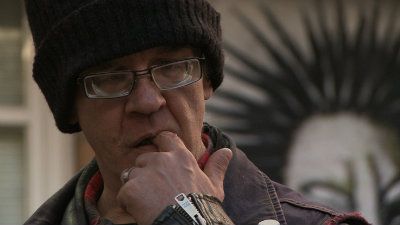
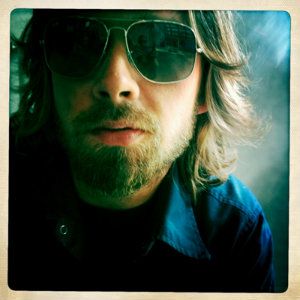
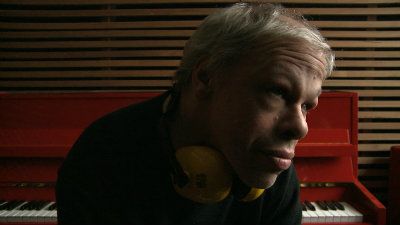
IN THE PHOTOS (FROM TOP TO BOTTOM): Pertti, Jukka, J-P Possi, Kari)
When and how did you form Pertti Kurikka's Name Day?
Sami: The band was formed three years ago. Pertti is the one in the band who really digs punk rock, he’s been listening to it since he was a little kid. Pertti wanted to form a punk band, and so he asked us to join him.
Near the end of the movie, you are performing a song that seems to explain the meaning of your band's name. But, could you explain a bit more about the band's name Pertti Kurikka's Name Day?
Pertti: 24th April is the official name day of Pertti, and then it all started. (Note: Name Day is a tradition in many countries in Europe that consists of celebrating the day of the year associated with one's given name)
Sami: Pertti was repeating all the time that it’s his name day, and then we just decided that this must end and that Pertti should have his own band with his own name.
How did you discover Pertti Kurikka's Name Day?
J-P: Jukka discovered them. We didn't have any money and we didn't know what we would do exactly, but we really wanted to make a documentary about the guys.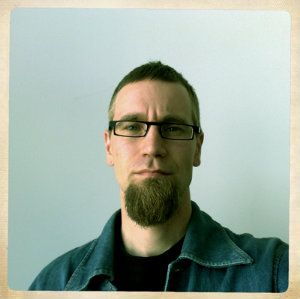
Jukka: I saw the band on television in December of 2009. Time passed, and I just couldn’t get them out of my mind, thinking how wonderful they are. Even if we wouldn’t really have had the time to start making a film about this band, they stayed deeply in my thoughts, and finally we just needed to start making this film.
How did you first get into punk music? Both as a fan and as musicians?
Pertti: I’ve listened to punk since I was a kid. I really like bands like Sex Pistols, Ramones, and Finnish bands such as Pelle Miljoona, Eppu Normaali, Kollaa kestää, Ratsia etc. Punk music was born in the 70’s, and I’ve been listening to it since the 80’s.
Sami: I’ve never listened to any punk, and before this band didn’t really even know what it’s all about.
Kari: I’ve been listening to bands like The Ramones and Sex Pistols, and some Finnish bands too. I’ve been playing drums since I was 15 and singing for a long time too. Not punk music before this band, but other types of music.
Toni: I’ve played in many different bands, but these bands have mostly been playing other kinds of music besides punk, for example Schlagers.
How did you learn to play? Did you have formal training or were you self taught?
Sami: All of us have played in a music center in Kulosaari, Helsinki, and without it we wouldn’t have the skills to play now in this band.
How did you first feel upon meeting each other?
Jukka: The only thing I can remember from our first meeting with the band was that Pertti asked if I had any CD:s, meaning if I have recorded any music, and I then let him listen to some funny songs I’ve made and downloaded to MySpace. We listened to those songs together, and it seemed to convince Pertti.
Sami: I was thinking that who are these guys, they’re a bit weird, and that are they really sure they want to make a film about us.
Kari: It was clear from the beginning that the people from Mouka Filmi (the production company) are all great human beings and great characters, fun and nice personalities, and people who do their job well.
Pertti: I was wondering ‘who are those guys and why are they here?’
Was it difficult to convince the band to allow you to follow their lives on camera?
J-P: No, it was one of the easiest things we ever did, because they went for it right away. Of course we also had to convince their social workers in the cultural workshop where they started the band. One of them, Kalle, initially said he didn't want to be in the film and we respected that, but after a while he became part of the film anyway and he doesn't mind at all.
Jukka: No it wasn’t. When I met them for the first time they said that they are stars and that of course a film needs to be made about them.
Were any of you in any other bands or have you played with other musicians before?
Sami: All of the band members have had other band projects besides Pertti Kurikka’s Name Day. There’s been a lot of different types of bands, and some of us have also played in other bands together.
Are there any artists, musical or visual or other, that have been an influence or inspiration?
Kari: I’ve really enjoyed films and TV shows such as Sunday Monday Happy Days, Fonzie and Richie, Cry Baby and American Graffiti and I think they’ve influenced me musically. I also listen to rap, reggae, rock, heavy metal, sometimes even soul and funk. During my free time I don’t listen that much punk. I also like Neil young, bob Dylan. Cat Stevens.
Sami: I really enjoy Finnish comedies such as Uuno Turhapuro and the actor Vesku Loiri, also Benny Hill, White Snake, Dream Theater, James LaBrie, Remu Aaltonen, Antti Tuisku and Urho Kaleva Kekkonen.
Pertti: My favourite is the singer Kari Tapio.
Toni: I listen to Schlagers, Kari Tapio, Antti Tuisku, Esa Pakarinen, I also really like jazz and play it too. Some other bands that have influenced are Eppu normaali and Kollaa kestää.
How much time did you spend with the band on shooting the documentary? How many live shows did you attend?
Jukka: We spent about a couple of days a week with the band (over the course of) two years. We shot more or less ten of their live gigs.
J-P: We shot about 70 days and around 10 shows, four of them were in Germany, the rest in Finland. That's quite long for a documentary, but some projects can take even longer.
Were there any obstacles of any kind to making the documentary?
Jukka: No, everything went really well. This has been an exceptionally easy project in that sense. We also had such a big urge to do this film that nothing could really have stopped us from doing it.
J-P: After ten days of shooting we made a trailer, which they saw on Vimeo or YouTube, which contains some footage of them fighting. They really became conscious of the fact that we were shooting their lives and resolved not to fight anymore, even though we still had two months more shooting to go. It was very important that they understand that we were really recording their lives and that it had consequences. Eventually they returned back to being themselves very quickly and we ended up watching that fight about the pedicure, which is already a classic scene.
While shooting the movie, did anything come up that surprised you or turned out very different from what your expectations of making the movie was like? Did it cause you to change anything about the production?
Jukka: We had been working with mentally challenged before in other films, so there wasn’t anything new or surprising doing this movie in that sense.
J-P: Every day surprised us. We knew the story we were aiming for, but every day that we went to their workshop we didn't know what would happen and we didn't have a specific time table. We decided to focus on the guys' personal stories through interviews: Kari's relationship, Toni looking for a group home, Sami's political work and Pertti as the main character who has such complex back story.
We didn't really change anything, but we did add something at the last minute. We had almost edited the film already, when Pertti was invited to meet the president on the Independence Day gala, which is the highest official honor you can get as a citizen. So we decided to shoot Pertti going there and meeting this president.
Kalle, could you explain a bit about the workshop where the band is often shown practicing?
Kalle: Culture Workshop VALO is a workshop for nine mentally disabled adults who work in the field of performing arts. The workshop was founded in 2004 and is unique by its standard of activity in Finland.
Can you explain a little more about your role in working with the guys in the band?
Kalle: I started with the guys in 2004 as a civil servant. It means that in Finland if you don't go to the army you have to do civil service for a year. And if you refuse, you go to jail. I am not a licensed care giver or a nurse. I was offered a job here after the civil service was over. I was more than happy to take the job. I am self educated in music and these eight and half years has been my "school" working with people with disabilities.
When I first met Pertti in the beginning of 2004, I learned that he has been into punk rock since the 1970's. I had listened punk rock since the late 80's when I was about ten years old and played in several bands since the early 90's.
I had the idea for years that, shit, Pertti HAS to have his own punk band. It's the music he loves the most, although he likes almost every kind of music. But there's no better music than punk rock for him. Mostly Finnish punk rock so he can understand the lyrics.
I arrange the songs. Pertti writes all the music. Kari writes most of the lyrics, Pertti writes some too. And a few songs are from Pertti's diaries. They can do the riffs and lyrics but they have no ability to build them together as a song. So I have to help them. I don't mess with the riffs or lyrics, I just put them in an order. Of course, with the guys. The lyrics usually come as angry bursts while Pertti is playing the new riff. I listen and try to write down as much as possible.
OK. I am the "manager". I also arrange the songs, record the records, sell the gigs, road crew, photograph, etc etc. The band takes so much time that my it's almost my day job nowadays! Of course I try to do other things too that the culture workshop does.
When you play live, it is seems a lot of distress disappears. Do you find making music therapeutic?
Sami: It’s therapeutic, especially when you have to work with these nutcases, heh heh.
Do you have any words of advice or encouragement for people that struggle in any way in their daily lives?
Kari: One must be brave and find sympathy towards other people. One must be interested in different things, and needs to be social and open-minded. With this attitude one can get really far in his or her life.
Pertti: I agree.
Toni: Same here!
Sami: No matter how hard your life is, you must not lose the joy of life. You can always do the things you like, then all the bad things will go away. Everybody is feeling a lot better when there are no prejudices. You have to have the guts to do different things, and to really take the bull by the horns. Nobody else is going to do it for you.
THE PUNK SYNDROME is being screened at the AFI Silverdocs film festival in Silver Lake, MD on Tuesday, June 19 and Wednesday, June 20.
Me on twitter = @mondocurry
IN THE PHOTOS (FROM TOP TO BOTTOM): Pertti, Jukka, J-P Possi, Kari)

When and how did you form Pertti Kurikka's Name Day?
Sami: The band was formed three years ago. Pertti is the one in the band who really digs punk rock, he’s been listening to it since he was a little kid. Pertti wanted to form a punk band, and so he asked us to join him.
Near the end of the movie, you are performing a song that seems to explain the meaning of your band's name. But, could you explain a bit more about the band's name Pertti Kurikka's Name Day?
Pertti: 24th April is the official name day of Pertti, and then it all started. (Note: Name Day is a tradition in many countries in Europe that consists of celebrating the day of the year associated with one's given name)
Sami: Pertti was repeating all the time that it’s his name day, and then we just decided that this must end and that Pertti should have his own band with his own name.
How did you discover Pertti Kurikka's Name Day?
J-P: Jukka discovered them. We didn't have any money and we didn't know what we would do exactly, but we really wanted to make a documentary about the guys.

Jukka: I saw the band on television in December of 2009. Time passed, and I just couldn’t get them out of my mind, thinking how wonderful they are. Even if we wouldn’t really have had the time to start making a film about this band, they stayed deeply in my thoughts, and finally we just needed to start making this film.
How did you first get into punk music? Both as a fan and as musicians?
Pertti: I’ve listened to punk since I was a kid. I really like bands like Sex Pistols, Ramones, and Finnish bands such as Pelle Miljoona, Eppu Normaali, Kollaa kestää, Ratsia etc. Punk music was born in the 70’s, and I’ve been listening to it since the 80’s.
Sami: I’ve never listened to any punk, and before this band didn’t really even know what it’s all about.
Kari: I’ve been listening to bands like The Ramones and Sex Pistols, and some Finnish bands too. I’ve been playing drums since I was 15 and singing for a long time too. Not punk music before this band, but other types of music.
Toni: I’ve played in many different bands, but these bands have mostly been playing other kinds of music besides punk, for example Schlagers.
How did you learn to play? Did you have formal training or were you self taught?
Sami: All of us have played in a music center in Kulosaari, Helsinki, and without it we wouldn’t have the skills to play now in this band.
How did you first feel upon meeting each other?
Jukka: The only thing I can remember from our first meeting with the band was that Pertti asked if I had any CD:s, meaning if I have recorded any music, and I then let him listen to some funny songs I’ve made and downloaded to MySpace. We listened to those songs together, and it seemed to convince Pertti.
Sami: I was thinking that who are these guys, they’re a bit weird, and that are they really sure they want to make a film about us.
Kari: It was clear from the beginning that the people from Mouka Filmi (the production company) are all great human beings and great characters, fun and nice personalities, and people who do their job well.
Pertti: I was wondering ‘who are those guys and why are they here?’
Was it difficult to convince the band to allow you to follow their lives on camera?
J-P: No, it was one of the easiest things we ever did, because they went for it right away. Of course we also had to convince their social workers in the cultural workshop where they started the band. One of them, Kalle, initially said he didn't want to be in the film and we respected that, but after a while he became part of the film anyway and he doesn't mind at all.
Jukka: No it wasn’t. When I met them for the first time they said that they are stars and that of course a film needs to be made about them.
Were any of you in any other bands or have you played with other musicians before?
Sami: All of the band members have had other band projects besides Pertti Kurikka’s Name Day. There’s been a lot of different types of bands, and some of us have also played in other bands together.
Are there any artists, musical or visual or other, that have been an influence or inspiration?
Kari: I’ve really enjoyed films and TV shows such as Sunday Monday Happy Days, Fonzie and Richie, Cry Baby and American Graffiti and I think they’ve influenced me musically. I also listen to rap, reggae, rock, heavy metal, sometimes even soul and funk. During my free time I don’t listen that much punk. I also like Neil young, bob Dylan. Cat Stevens.
Sami: I really enjoy Finnish comedies such as Uuno Turhapuro and the actor Vesku Loiri, also Benny Hill, White Snake, Dream Theater, James LaBrie, Remu Aaltonen, Antti Tuisku and Urho Kaleva Kekkonen.
Pertti: My favourite is the singer Kari Tapio.
Toni: I listen to Schlagers, Kari Tapio, Antti Tuisku, Esa Pakarinen, I also really like jazz and play it too. Some other bands that have influenced are Eppu normaali and Kollaa kestää.
How much time did you spend with the band on shooting the documentary? How many live shows did you attend?
Jukka: We spent about a couple of days a week with the band (over the course of) two years. We shot more or less ten of their live gigs.
J-P: We shot about 70 days and around 10 shows, four of them were in Germany, the rest in Finland. That's quite long for a documentary, but some projects can take even longer.
Were there any obstacles of any kind to making the documentary?
Jukka: No, everything went really well. This has been an exceptionally easy project in that sense. We also had such a big urge to do this film that nothing could really have stopped us from doing it.
J-P: After ten days of shooting we made a trailer, which they saw on Vimeo or YouTube, which contains some footage of them fighting. They really became conscious of the fact that we were shooting their lives and resolved not to fight anymore, even though we still had two months more shooting to go. It was very important that they understand that we were really recording their lives and that it had consequences. Eventually they returned back to being themselves very quickly and we ended up watching that fight about the pedicure, which is already a classic scene.
While shooting the movie, did anything come up that surprised you or turned out very different from what your expectations of making the movie was like? Did it cause you to change anything about the production?
Jukka: We had been working with mentally challenged before in other films, so there wasn’t anything new or surprising doing this movie in that sense.
J-P: Every day surprised us. We knew the story we were aiming for, but every day that we went to their workshop we didn't know what would happen and we didn't have a specific time table. We decided to focus on the guys' personal stories through interviews: Kari's relationship, Toni looking for a group home, Sami's political work and Pertti as the main character who has such complex back story.

We didn't really change anything, but we did add something at the last minute. We had almost edited the film already, when Pertti was invited to meet the president on the Independence Day gala, which is the highest official honor you can get as a citizen. So we decided to shoot Pertti going there and meeting this president.
Kalle, could you explain a bit about the workshop where the band is often shown practicing?
Kalle: Culture Workshop VALO is a workshop for nine mentally disabled adults who work in the field of performing arts. The workshop was founded in 2004 and is unique by its standard of activity in Finland.
Can you explain a little more about your role in working with the guys in the band?
Kalle: I started with the guys in 2004 as a civil servant. It means that in Finland if you don't go to the army you have to do civil service for a year. And if you refuse, you go to jail. I am not a licensed care giver or a nurse. I was offered a job here after the civil service was over. I was more than happy to take the job. I am self educated in music and these eight and half years has been my "school" working with people with disabilities.
When I first met Pertti in the beginning of 2004, I learned that he has been into punk rock since the 1970's. I had listened punk rock since the late 80's when I was about ten years old and played in several bands since the early 90's.
I had the idea for years that, shit, Pertti HAS to have his own punk band. It's the music he loves the most, although he likes almost every kind of music. But there's no better music than punk rock for him. Mostly Finnish punk rock so he can understand the lyrics.
I arrange the songs. Pertti writes all the music. Kari writes most of the lyrics, Pertti writes some too. And a few songs are from Pertti's diaries. They can do the riffs and lyrics but they have no ability to build them together as a song. So I have to help them. I don't mess with the riffs or lyrics, I just put them in an order. Of course, with the guys. The lyrics usually come as angry bursts while Pertti is playing the new riff. I listen and try to write down as much as possible.
OK. I am the "manager". I also arrange the songs, record the records, sell the gigs, road crew, photograph, etc etc. The band takes so much time that my it's almost my day job nowadays! Of course I try to do other things too that the culture workshop does.
When you play live, it is seems a lot of distress disappears. Do you find making music therapeutic?
Sami: It’s therapeutic, especially when you have to work with these nutcases, heh heh.
Do you have any words of advice or encouragement for people that struggle in any way in their daily lives?

Kari: One must be brave and find sympathy towards other people. One must be interested in different things, and needs to be social and open-minded. With this attitude one can get really far in his or her life.
Pertti: I agree.
Toni: Same here!
Sami: No matter how hard your life is, you must not lose the joy of life. You can always do the things you like, then all the bad things will go away. Everybody is feeling a lot better when there are no prejudices. You have to have the guts to do different things, and to really take the bull by the horns. Nobody else is going to do it for you.
THE PUNK SYNDROME is being screened at the AFI Silverdocs film festival in Silver Lake, MD on Tuesday, June 19 and Wednesday, June 20.
Me on twitter = @mondocurry


