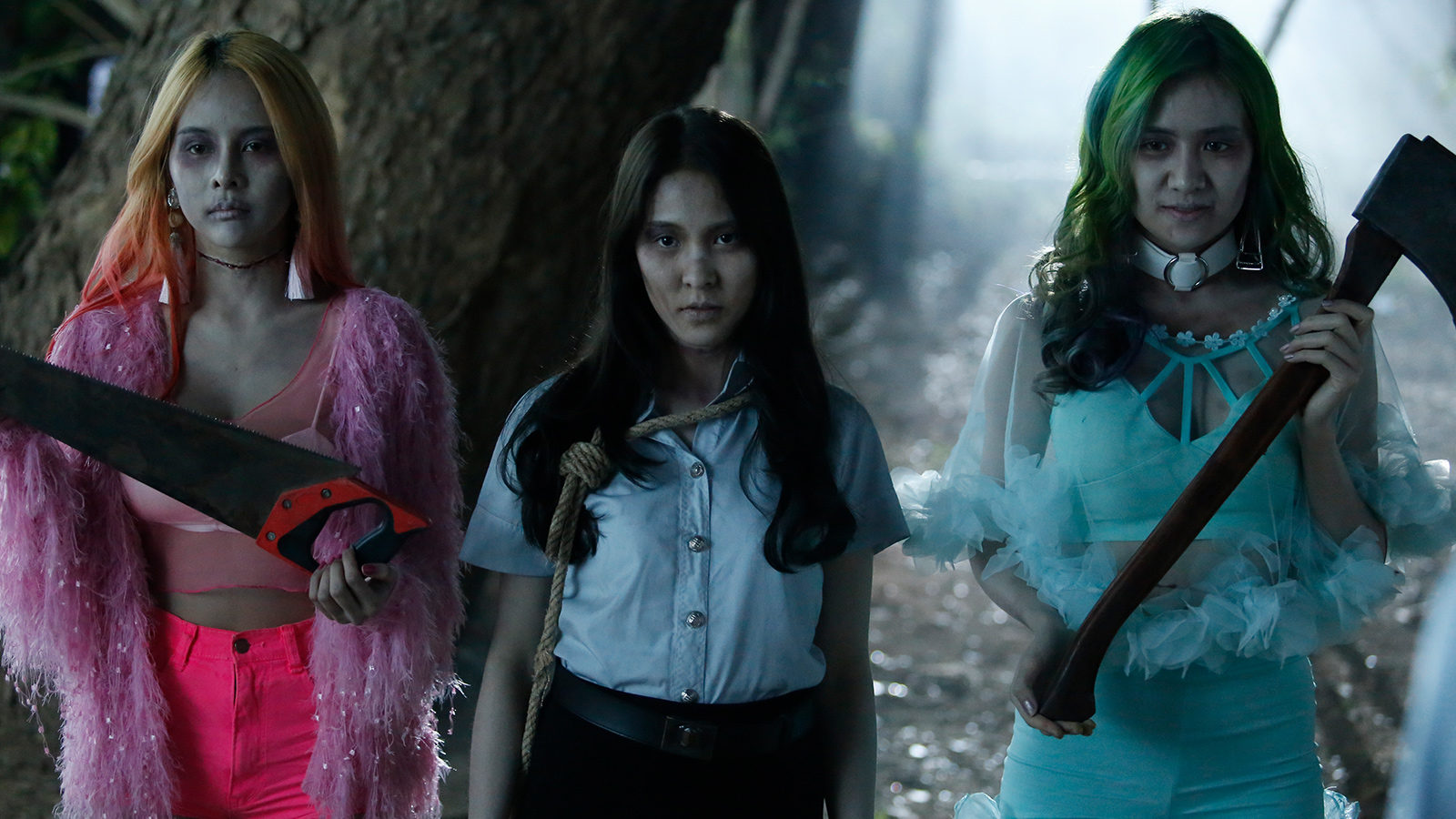
This is a Korean movie, so even though it starts out like a Blake Edwards sex farce, there will be some tragedy eventually. Men are indeed acting badly, but they are not the only ones in Lee Byeong-hun’s What a Man Wants, which screens during Fantasia 2018.
Seok-geun constantly cheats on his patient and lovely wife Dam-deok, because he is a cad. Ironically, he often tricks his straight-laced brother-in-law Bong-soo into covering for him. A lot of people would give him a pass if he had some side action, because Seok-geun’s sister Mi-young can be a you-know-what-buster. One fateful night, Bong-soo naively shows up for the pool game that was supposed to serve as Seok-geun’s alibi and inadvertently steals away the attention of his new prospective lady friend, Je-ni. Seok-geun had been daring him to have an affair of his own, so he finally gives into temptation.
Not long after the affair begins, Bong-soo’s professional standing as a chef-restauranteur dramatically improves. Alas, tragedy also strikes the family. As a result of these combined events, Bong-soo and Seok-geun effectively trade places. However, when Mi-young hires Je-ni as a waitress in the restaurant, things revert back to a farcical level.
There is a fair amount of door-slamming in WAMW, but there is also a good deal of guilt and grief. When it loses a character, the repercussions are felt all the way through to the end. Still, there is plenty of physical comedy, mostly executed without excessive mugging.
Most of that sneaking around and hiding under tables falls to Shin Ha-kyun, who is quite nimble and rather poker-faced as Bong-soo. Initially. Lee Sung-min plays Seok-geun as a roguish shaggy dog, almost like a Korean Jim Belushi, but he gets surprisingly serious during the third act. In fact, it is a rather smoothly and subtly evolving performance. Yet, the biggest surprise might be Lee El, who elevates Je-ni beyond a mere sex status, giving her complicated depth and dimension, very much in the tradition of Dada Chan.
Nobody gets off easily in WAMW, but Lee and co-screenwriters Jang Gyu-sung Bae Se-young do not hold grudges against anyone either. You might have missed the connection, but their screenplay is based on the 2011 Czech film Men in Hope, yet they definitely incorporate distinctly Korean attitudes. They also capitalize on the temperate and inviting Jeju Island locales. A nice balance of funny and sad, What a Man Wants screens today as part of Fantasia 2018
A collection of reviews of films from off the beaten path; a travel guide for those who love the cinematic world and want more than the mainstream releases.
Showing posts with label nyaff 2018. Show all posts
Tuesday, July 31, 2018
Monday, July 30, 2018
The Brink (2018) Fantasia 2018
A disgraced cop who never says a word or changes expressions, is reinstated to the force after being charged with killing a bad cop. He ends up on the trail of a super bad ass villain who also never says a word and never changes expression.The bad guy is smuggling gold from a sunken ship and killing anyone who gets in his way.
The plot is unimportant in this ever building series of action set pieces. People fight, cars crash, people scuba dive and it all climaxes on a small ship in a big storm. The action is mind blowing and will make your jaw hang open. In all seriousness the action set pieces are some of the best from the last decade...
...the problem is there are no real characters and the plot seems to be an after thought with the result there is nothing to hang anything on. I watched the film twice because I thought I missed something- nope I got it all. Moving at a breakneck pace the forward motion of everything drives the film forward and keeps us interested. However the lack of plot never full engages us.
Don't get me wrong, I like the film. But the action sequences are so good that I should be loving this instead of liking it.
Reservations aside THE BRINK is a must for any action film lover when it plays Fantasia again tomorrow.
The plot is unimportant in this ever building series of action set pieces. People fight, cars crash, people scuba dive and it all climaxes on a small ship in a big storm. The action is mind blowing and will make your jaw hang open. In all seriousness the action set pieces are some of the best from the last decade...
...the problem is there are no real characters and the plot seems to be an after thought with the result there is nothing to hang anything on. I watched the film twice because I thought I missed something- nope I got it all. Moving at a breakneck pace the forward motion of everything drives the film forward and keeps us interested. However the lack of plot never full engages us.
Don't get me wrong, I like the film. But the action sequences are so good that I should be loving this instead of liking it.
Reservations aside THE BRINK is a must for any action film lover when it plays Fantasia again tomorrow.
Wednesday, July 18, 2018
The 2018 New York Asian Film Festival Wrap-Up Roundtable
The 2018 New York Asian Film Festival is done.
It was a year of change. This was the first year where all of the original founders seemed not to be in the house. It was as if in turning 17 the festival headed off into the big bad world to face it on its own. Now with the lights dimmed and everyone heading home it is time to take stock of what happened and ponder where the festival is going.
As he did with Tribeca Peter set up a roundtable discussion for the Unseen crew to take part in. Joe, Nate and myself took the bait and shared our thoughts and impressions. In a lot of way what you are going to read is a version of the discussions that we had been having in the trenches and in personal emails.
NYAFF 2018 Wrap-Up Roundtable
Participants: Steve Kopian (SK), Nathanael Hood (NH), Joe Bendel (JB). Questions by: Peter Gutierrez
***
Any big surprises, positive or negative, from this year’s edition of NYAFF?
NH: I was actually dismayed at how weak the main competition slate was. There were many, many standout films this year, but none of them were up for jury competition.
SK: I never liked the idea of competition films where it is only a small fraction of what is being shown. Tribeca does it slightly better; they have their films broken up into sections but I always wonder about the rest of the films. I always wonder why they picked those films in particular.
The one of the big surprises for me was the seeming high number of truly black and depressing films. I don’t think the festival ever went this dark before. Films like LIVERLEAF, AFTER MY DEATH, RESPETO, and bunch of the others (including the superhero riff INUYASHIKI) just depressed me. I know the world is a terrible place, but geeze couldn’t they have found less [dark] films? I wonder if I liked some of the less [depressing] films just because they had a ray of sunshine.
JB: For me, some of the biggest surprises were the films that weren’t here, like THE OUTLAWS and VIP screening soon at Fantasia, which seem very much like NYAFF films on paper. I’m even more surprised neither NYAFF or Fantasia programmed COLOUR OF THE GAME, which is a very enjoyable HK gangster throwback (that just screened in DC). There were still plenty of happy surprises, like ONE CUT OF THE DEAD, which is sort of like the NOISES OFF of zombie movies.
That’s a great way to put it. Perhaps my favorite film of the fest.
SK: You are right about what wasn’t here. I’m curious if it was just the result of not being able to get them or because the taste in programing has changed.
How about non-screening moments that stood out for you—Q&A’s, awards, and so on?
NH: I liked the musical opening for the HOUSE OF THE RISING SONS screening. That’s the kind of stuff I particularly enjoy at NYAFF.
SK: The drum solo intro to HOUSE was unique. It was cool. It was a true NYAFF moment.
This year what surprised me was the quietness of the audiences. In past years it was loud and rowdy. Everyone talked to each other. I mean I’ve made so many friends at the festival simply because we all talked to each other. This year there seemed to be less talking between random people. This year it was almost like any other non-NYAFF festival, except slightly quieter. People didn’t seem to interact as much. Everything was lowkey especially the openings.
I loved that when Jiang Wu got his Star Asia Award he brought in director Xin Yukun and Sam into the mix of photos. It was as if he were sharing it with everyone.
Those positives are great, but what about let-downs in terms of the fest itself? Not the films, but the way things were organized or presented.
JB: This might be a little inside, but there was not a lot of time between the announcement of the films and the start of the festival. We cover a lot of fests, so we want to schedule our coverage in advance, as best we can. For some reason, many fests seem to be waiting longer and longer to unveil their slates, which doesn’t make any sense to me. In book publishing, the preorder period is getting more and more marketing time and attention, but festivals are just counting on patrons buying tickets a week or so before screenings start. Seriously, for a fest like NYAFF, audience anticipation should be one of their greatest marketing assets, but they are not maximizing it.
SK: Short of some of the smaller festivals I run across, the shortest window I’ve seen was this years NYAFF, it was about two weeks between announcement of titles and festival. And this year the festival didn’t officially announce any titles other than OPERATION RED SEA until they did the full slate. I spoke with a number of people, not just writers, who were unhappy because they could only do a night or a day because they announced the schedule so late.
For me the biggest let down--actually the biggest WTF--was the debacle I, you and several attendees had before the BUYBUST screening. Admittedly I didn’t physically go to a lot of screening (the shortness of the schedule going up meant I had things slotted), so I don’t know what happened at other screenings, but after BUFFALO BOYS the theater manager came around and insisted that we had to leave the theater. We could leave our stuff to mark our seats but we had to go outside. This was after everyone told us we could stay since they simply checked your ticket (like at Lincoln Center). Thrown out we had to go down to almost 9th Ave to get on line to go back in to find your program gone, my bag moved, as was the stuff left by several other patrons. A woman named Fanny had an exchange of words with one guy who was holding or appropriated her scarf. Another woman named Laura was diving down rows to find her stuff.
If you want to mark where the “we are all family attitude” the festival always had went away, this was it.
To me there’s such a simple fix that’s not a rare practice: just make a separate short line for those who were already physically in the theater. Not that they deserve some amazing special treatment, but they shouldn’t be penalized by being sent to the end of a line that formed while they were watching something else they also bought a ticket for. Okay, so next question. Any genres that were particularly strong or well represented—or the opposite?
SK: Do downers count? As I said this year was pretty bleak--or just seemed that way. There also a shift away from some of the crazy genre films that used to fill the slate. Perhaps it’s what was available. Dramas, heavy dramas were well represented. While there were some crazy action films there didn’t seem to be as many. No Korean gangster films. Also only a handful of true genre films.
I especially missed the Korean crime thrillers. Anything else?
JB: I do miss the over-the-top spirit the festival had six or seven years ago. The Chinese, HK, Japanese, and Korean film industries are so prolific, they could easily program a slate packed with action, horror, and cult weirdness without stepping on the toes of Well Go, China Lion, and CJ USA. On the other hand, they were the first NY fest to program MISSING JOHNNY, OLD BEAST, and LOOKING FOR LUCKY, which are important films, either for their sly social commentary or the circumstances surrounding them, so you have to give them credit for that.
One of the things the programming PR does is break things down by country of origin. Any observations or comments about the offerings from individual countries—either in comparison with each other or with themselves based on past years’ offerings?
NH: The Thai films this year were particularly good. I hope the festival continues to expand into lesser known Southeast Asian markets.
SK: It’s not just lesser known markets--how about India? I don’t remember any films from India running at the festival. While I know the Indian studios can be difficult to deal with, and I know there is a huge influx of Indian films into New York I know there are more to be screened. I’ve read and conversed with Josh Hurtado at Screen Anarchy for years and he is frequently mentioning all the films from India that need to be seen.
We’ve touched on this a bit, but following from that, how did the fest itself as whole compare with previous years?
SK:: How is it compared to other years? Different. Really different. Even more different than what NYAFF was three, five or ten years ago as JB alluded to above. I mean, when the festival came to Lincoln Center it was like the barbarians storming into Rome. The people going to the festival were not the sort of people who went to other festivals and series at the Film Society. There was a glorious sense of fun and the sense of anything-could-happen. A huge part of that was the original founders Grady, Goran, Marc, Dan and later Rufus who were aided and abetted by Gavin Smith at the Film Society. You can see the difference when you go to something that Grady is involved in--say, his all day movie marathons. With Gavin Smith gone and many of the long-time programmers, the FIlm Society’s taste has become less far reaching and more staid and of a type. It’s the same with many of their festivals, which tend to be safe. NYAFF’s sense of anything-is-possible is gone.
I’ve only been to a handful of screenings this year and it really has been lowkey. There were limited prize giveaways which always pumped every one up. They used to be as important as the films themselves This year those seemed to be almost no excitement for them. And there is no madman on stage flogging the crowd into a frenzy even for serious dramas. I’m not referring to just Grady, because, let’s face it, no one can match Grady, but previously we had Rufus with his wickedly dry wit, and some of the other crew trying to one up each other. I mean in the last couple of years have we had a man strip down to his jock strap and put a pair of panties on his head to be the main character in a film? I don’t think so. Okay, yes, the Sushi Typhoon screenings probably went too far (and probably ended the Japan Cuts co-presentations) but there was this wicked sense of fun. Now it’s kind of like going to some random series at the Film Society.
The festival now is Sam’s festival. He is the face and the main influence. I say this because the festival now kind of mirrors when he was doing Japan Cuts. When NYAFF and Cuts overlapped you could tell which ones were really NYAFF-chosen films and which ones were not. The truly insane stuff tended to drop away. You also saw the difference in the first year the overlap and co-presentations stopped. That’s not a bad thing just something that is different, at least as far as NYAFF’s history is concerned.
And of course more and more Chinese and Korean films come into New York on a weekly basis so you don’t want to repeat unless you have a guest. I know there is now a battle between festivals for films. Plus the festival chopped off pretty much all the retro screenings to run as a separate festival. I know why the changes have happened but at the same time… it kind of lost its uniqueness. And that is the sound of me being disinvited to the festival next year…
In my defense let me say that my feelings have been really influenced by the fact that I do so much festival coverage. I mean, anyone who follows Unseen knows that. Coming into NYAFF I had seen most of the Japan Cuts titles and during the course of the festival I was moonlighting with Fantasia so I’ve seen a large number of films that could have played here but didn’t. Clearly I am a frustrated unemployed film festival programmer--then again that’s why I started Unseen, to essentially program a never ending film festival.
Closing thoughts? Anything we haven’t touched upon?
SK: The truth? In a weird way I think I’m going to do much less with NYAFF from here on out. I think on some level I’m maybe done with it as an all-consuming festival. (Of course it will depend on what shows up next year.)
NYAFF was always home for me. It was a festival I stumbled on and fell into and shaped who I am cinematically. It’s a festival that I’ve watched grow and change. I know festivals have to change to grow but somewhere in the last couple of years I’ve stopped connecting and caring. I’ve started to wonder “Why are they showing this?” about more than just a single film every year. This year I pondered the whole slate of bullying-themed films.
I know that the difference has been the final leavetaking of the old corps and the change in programmers. Which is fine. But I also know that part of my unhappiness is due in large part to the fact that Unseen is covering so many other festivals around the world and I am seeing what the festival might have been. Right now I’m covering Fantasia in Montreal and I could name at least five films playing there that should have been here.
And I think the biggest part of why I’m stepping a little bit away is the change in the feel. The audience isn’t family anymore. The quiet non-talkative audiences where people expressed their thoughts are gone. So many of the familiar faces are gone--now it’s Kristie, Lee and Sean and maybe an occasional other person. I see more of the old regulars elsewhere but not at NYAFF. For whatever reason NYAFF isn’t NYAFF any more, it stopped being special and it’s just another festival.
###
Tuesday, July 17, 2018
Nat Hood falls in love with SID AND AYA (NOT A LOVE STORY) NYAFF 2018
Don’t let the coy title confuse you—Irene Villamor’s Sid & Aya: Not a Love Story is, in fact, a love story. But the point is that, unlike the majority of Filipino romances, it isn’t just a straight romance with a clean-cut ending.
In keeping with the recent trend of female Filipino directors reinterpreting the romance genre, Sid & Aya seeks to examine the buried hurts and needs that drive lonely people together and the fears and anxieties that oh so often drive them apart. The film follows Sid (Dingdong Dantes), a cutthroat stockbroker plagued by insomnia. One night while grabbing a midnight snack at a cafe, he encounters Aya (Anne Curtis), a brassy waitress who impresses him by finding him completely unimpressive. The two strike up a friendship and Sid eventually offers to pay her $20 an hour to talk him to sleep. Though initially hesitant, Aya agrees because she needs the money. The two slowly fall in love, both in the course of their midnight conversations and through a series of meet-cutes where Sid keeps accidentally running into her at her other part-time jobs. Things promptly fall apart as soon as they consummate their relationship: Aya’s father has a stroke and she moves to Japan to take care of her mother. As lovesick young men are wont to do in these movies, Sid follows her overseas and tries to rekindle their affair.
But as the film continues we start to suspect that maybe Sid doesn’t love Aya because he loves her, but because he sees her as a bandaid for his self-imposed social isolation. Does he love Aya or simply need her? And what about Aya? Was her father’s stroke the real reason for moving abroad or merely an easy out for Aya to cut ties with Sid after things became too intense too quickly? Villamor deliberately keeps the details of her genre deconstructions vague, allowing multiple interpretations. Some can see the film as a sincere tragic romance; others will see a defiant woman justifiably rejecting a creepy ex-boyfriend.
Ultimately the film works thanks not to the script but to Curtis’ performance as the mercurial Aya. She does wonders at keeping the audience guessing about her true intentions and feelings, whether she’s confessing her love or performing at a Japanese burlesque house. If she played it too straight, it’d be cheap melodrama. If she played it too loose, it’d be comedy. But she finds the perfect middle ground for a film with no easy answers.
Rating: 7/10
In keeping with the recent trend of female Filipino directors reinterpreting the romance genre, Sid & Aya seeks to examine the buried hurts and needs that drive lonely people together and the fears and anxieties that oh so often drive them apart. The film follows Sid (Dingdong Dantes), a cutthroat stockbroker plagued by insomnia. One night while grabbing a midnight snack at a cafe, he encounters Aya (Anne Curtis), a brassy waitress who impresses him by finding him completely unimpressive. The two strike up a friendship and Sid eventually offers to pay her $20 an hour to talk him to sleep. Though initially hesitant, Aya agrees because she needs the money. The two slowly fall in love, both in the course of their midnight conversations and through a series of meet-cutes where Sid keeps accidentally running into her at her other part-time jobs. Things promptly fall apart as soon as they consummate their relationship: Aya’s father has a stroke and she moves to Japan to take care of her mother. As lovesick young men are wont to do in these movies, Sid follows her overseas and tries to rekindle their affair.
But as the film continues we start to suspect that maybe Sid doesn’t love Aya because he loves her, but because he sees her as a bandaid for his self-imposed social isolation. Does he love Aya or simply need her? And what about Aya? Was her father’s stroke the real reason for moving abroad or merely an easy out for Aya to cut ties with Sid after things became too intense too quickly? Villamor deliberately keeps the details of her genre deconstructions vague, allowing multiple interpretations. Some can see the film as a sincere tragic romance; others will see a defiant woman justifiably rejecting a creepy ex-boyfriend.
Ultimately the film works thanks not to the script but to Curtis’ performance as the mercurial Aya. She does wonders at keeping the audience guessing about her true intentions and feelings, whether she’s confessing her love or performing at a Japanese burlesque house. If she played it too straight, it’d be cheap melodrama. If she played it too loose, it’d be comedy. But she finds the perfect middle ground for a film with no easy answers.
Rating: 7/10
The Buffalo Boys NYAFF Q&A July 15,2018 at the SVA theater
And yes, that is Nate Hood in the blue shirt ten minutes in.
Monday, July 16, 2018
Nate Hood rides with the Buffalo Boys (2018) NYAFF 2018 Fantasia 2018
Whatever the intention of the individual filmmakers, the Western genre has always been one about the triumph of colonialism. Despite the genre's preoccupations with justice, personal honor, and rugged individualism, America's westward expansion necessitated the displacement of native peoples and the exploitation of immigrant populations, usually at the point of a gun. It's a bloody, brutal history sanitized through literal decades of whitewashing and cultural sanitization. But it's because of all this that Mike Wiluan's Buffalo Boys is such an odd and exciting surprise—an Indonesian Western that borrows wholesale the visual trappings and thematic touchstones of John Ford, Sergio Leone, and Sam Peckinpah to tell a defiant story of gory colonial revolt.
Set in 1860, the film follows two gun-slinging brothers—Jamar (Ario Bayu) and Suwo (Yoshi Sudarso)—as they return to their ancestral homeland after growing up in the wilds of California to avenge their father, an Indonesian sultan murdered by a cruel Dutch overseer named Van Trach (Reinout Bussemaker). Traveling with their elderly uncle Arana (Tio Pakusadewo), they embark on a perilous quest taking them through a countryside ravaged by Dutch exploitation: of families massacred for growing food crops instead of opium; of company-branded children; of roaming bands of criminals allowed to rape and pillage in exchange for keeping Van Trach's peace; of barely pubescent girls forced into sex slavery. Van Trach's right-hand man, a pitiless "half-breed" enforcer with a silver six-shooter and superhuman aim, even feels like a direct nod to the stoic and silent gunslingers of Clint Eastwood and Franco Nero.
The majority of the film takes place in a Dutch settlement ripped straight from Poverty Row, complete with a swinging-door saloon with a tack piano and petticoated prostitutes. But Wiluan never loses his ultimate focus: the brothers have arrived to enact brutal, apocalyptic revenge on murderous imperialists.
The film's overly long second act is an emotional endurance test for audiences as Wiluan graphically details every imaginable horror inflicted upon native Indonesians, complete with scenes of whipping and rape lifted wholesale from American slave narratives. But these sequences are also an endurance test for the audience's patience. Both brothers spend a good 15-20 minutes of screen-time watching said atrocities take place no more than 10 feet away from them while in disguise, leaving the audience wanting to scream "Do something!" in their stunned, stupid faces. There are times where their impotent inaction seems less like appropriate character responses than poor screenwriting designed to prolong Wiluan's indulgent torture-porn. But when the action kicks back in it does so with a fury.
The last third is a superb rollercoaster of expertly shot and choreographed shootouts, fistfights, and open warfare. All complaints about the plodding second act go right out the window at the sight of two Indonesian cowboys riding water buffalo into an enemy encampment as an Ennio Morricone electric guitar twangs in the background.
Rating: 8/10
BUFFALO BOYS World Premiered at Fantasia July 14th. It played NYAFF July 15th. It will premiere in Indonesia Thursday July 19th and go in general release in it's home country the next day.
It should also be noted that the film has spawned a sequel series which will play on HBO Asia in the fall and HBO everywhere before year's end.
Set in 1860, the film follows two gun-slinging brothers—Jamar (Ario Bayu) and Suwo (Yoshi Sudarso)—as they return to their ancestral homeland after growing up in the wilds of California to avenge their father, an Indonesian sultan murdered by a cruel Dutch overseer named Van Trach (Reinout Bussemaker). Traveling with their elderly uncle Arana (Tio Pakusadewo), they embark on a perilous quest taking them through a countryside ravaged by Dutch exploitation: of families massacred for growing food crops instead of opium; of company-branded children; of roaming bands of criminals allowed to rape and pillage in exchange for keeping Van Trach's peace; of barely pubescent girls forced into sex slavery. Van Trach's right-hand man, a pitiless "half-breed" enforcer with a silver six-shooter and superhuman aim, even feels like a direct nod to the stoic and silent gunslingers of Clint Eastwood and Franco Nero.
The majority of the film takes place in a Dutch settlement ripped straight from Poverty Row, complete with a swinging-door saloon with a tack piano and petticoated prostitutes. But Wiluan never loses his ultimate focus: the brothers have arrived to enact brutal, apocalyptic revenge on murderous imperialists.
The film's overly long second act is an emotional endurance test for audiences as Wiluan graphically details every imaginable horror inflicted upon native Indonesians, complete with scenes of whipping and rape lifted wholesale from American slave narratives. But these sequences are also an endurance test for the audience's patience. Both brothers spend a good 15-20 minutes of screen-time watching said atrocities take place no more than 10 feet away from them while in disguise, leaving the audience wanting to scream "Do something!" in their stunned, stupid faces. There are times where their impotent inaction seems less like appropriate character responses than poor screenwriting designed to prolong Wiluan's indulgent torture-porn. But when the action kicks back in it does so with a fury.
The last third is a superb rollercoaster of expertly shot and choreographed shootouts, fistfights, and open warfare. All complaints about the plodding second act go right out the window at the sight of two Indonesian cowboys riding water buffalo into an enemy encampment as an Ennio Morricone electric guitar twangs in the background.
Rating: 8/10
BUFFALO BOYS World Premiered at Fantasia July 14th. It played NYAFF July 15th. It will premiere in Indonesia Thursday July 19th and go in general release in it's home country the next day.
It should also be noted that the film has spawned a sequel series which will play on HBO Asia in the fall and HBO everywhere before year's end.
BUYBUST (2018) NYAFF 2018 (World Premiere) Fantasia 2018
With BUY BUST director Erik Matti moves from dramas and films that flirted with moments of action into a full on non-stop action. I wish I could report the master director was successful in the move, but it wasn’t. To me it’s proof that some directors should avoid some genres, after all there is probably a good reason Ingmar Bergman never directed a car chase film.(Though in fairness I would love to see what would have resulted.)
The plot of the film is minimal. A big crime lord has gone underground. The cops want to flush him out so they set up a sting with a lower dealer. The target doesn’t show and changes the location of the deal from a large open plaza to the narrow maze like confines of a shanty town. It is a set up (as was an earlier raid that wiped out cop Anne Curtis’s previous squad) and an unending battle for survival results.
Destined to be compared to THE RAID, the close quarters locations and no sense of where we are is probably closer to the scifi thriller the CUBE where people jumped from room to room. However don’t be fooled by any comparisons BUY BUST fails on its own terms and is a two hour long bore.
The film collapses from the outset when it fails to establish any characters. I knew Anne Curtis and the big guy who looked like David Bautista because of how they look. I picked up a few other people but basically if they had bullet proof vests they were cops, if they didn’t they were bad guys. Names? Forget about it. They fly by if they are mentioned at all. Back story? Curtis’s previous squad was killed. And another female cop has kids, but she doesn’t last long,(And the attempt to draw emotion out of her death fails miserably because one audible line about her kids in the middle of multiple people talking does not a character create.
There is no attempt at establishing the geography. We are just dropped into this maze and walked around for ten minutes before all hell breaks loose. While the location is based on a real place, there is no shot to let us (specifically anyone not from the Philippines) know what this place is (one overhead shot would have been nice). The result is we are in CUBE like series of “rooms” and alleys. We are not in a real place but what could be simply a soundstage where they shifted the walls around. We don’t know where the cops are trying to get to other than the amorphous and cryptic out- but where is that? Even as a vague idea?
The lack of geography reduces the action sequences because we aren’t watching a sequence in a story progression as people go from place to place with a goal but rather a series of set pieces that don’t connect because we don’t know where anything is happening.
The violence is good but the close quarter nature and frequent view from above works against the film since because of the rain, the low light and everyone looking similar we are just looking at motion without anyone we are invested in. I was frequently wondering, what the hell I was watching. Worse the outcome of the violence is wildly uneven with some people falling quickly, while others with the same wound in the same sequence still going on and on.
While the cast all seems to be good, the one person I knew, lead, Anne Curtis seemed out of place. Of the entire cast, her thin fashion model good looks made her look out of place (and don’t get me started on how she held a gun). Anne I love you, but no.
Seeing this at the World Premiere at the New York Asian Film Festival was a trial. I kept wanting to reach for the remote to jump to something that wasn’t muddy ill-defined action. It tried my patience and wasted my evening
BUYBUST is mess and not recommended.
Screened as the closing night film of the New York Asian Film Festival and screens Wednesday July 18 at Fantasia (For information go here)
The plot of the film is minimal. A big crime lord has gone underground. The cops want to flush him out so they set up a sting with a lower dealer. The target doesn’t show and changes the location of the deal from a large open plaza to the narrow maze like confines of a shanty town. It is a set up (as was an earlier raid that wiped out cop Anne Curtis’s previous squad) and an unending battle for survival results.
Destined to be compared to THE RAID, the close quarters locations and no sense of where we are is probably closer to the scifi thriller the CUBE where people jumped from room to room. However don’t be fooled by any comparisons BUY BUST fails on its own terms and is a two hour long bore.
The film collapses from the outset when it fails to establish any characters. I knew Anne Curtis and the big guy who looked like David Bautista because of how they look. I picked up a few other people but basically if they had bullet proof vests they were cops, if they didn’t they were bad guys. Names? Forget about it. They fly by if they are mentioned at all. Back story? Curtis’s previous squad was killed. And another female cop has kids, but she doesn’t last long,(And the attempt to draw emotion out of her death fails miserably because one audible line about her kids in the middle of multiple people talking does not a character create.
There is no attempt at establishing the geography. We are just dropped into this maze and walked around for ten minutes before all hell breaks loose. While the location is based on a real place, there is no shot to let us (specifically anyone not from the Philippines) know what this place is (one overhead shot would have been nice). The result is we are in CUBE like series of “rooms” and alleys. We are not in a real place but what could be simply a soundstage where they shifted the walls around. We don’t know where the cops are trying to get to other than the amorphous and cryptic out- but where is that? Even as a vague idea?
The lack of geography reduces the action sequences because we aren’t watching a sequence in a story progression as people go from place to place with a goal but rather a series of set pieces that don’t connect because we don’t know where anything is happening.
The violence is good but the close quarter nature and frequent view from above works against the film since because of the rain, the low light and everyone looking similar we are just looking at motion without anyone we are invested in. I was frequently wondering, what the hell I was watching. Worse the outcome of the violence is wildly uneven with some people falling quickly, while others with the same wound in the same sequence still going on and on.
While the cast all seems to be good, the one person I knew, lead, Anne Curtis seemed out of place. Of the entire cast, her thin fashion model good looks made her look out of place (and don’t get me started on how she held a gun). Anne I love you, but no.
Seeing this at the World Premiere at the New York Asian Film Festival was a trial. I kept wanting to reach for the remote to jump to something that wasn’t muddy ill-defined action. It tried my patience and wasted my evening
BUYBUST is mess and not recommended.
Screened as the closing night film of the New York Asian Film Festival and screens Wednesday July 18 at Fantasia (For information go here)
Inuyashiki (2018) NYAFF 2018 Fantasia 2018
Inuyashiki is the name of the protagonist of the film with the same name. A put upon salaryman he is transformed into a robotic super robot when an “alien:” forces crashes in a park late one night and destroys his body. Also killed and rebuilt is a teenage boy. Where Inuyashiki begins to use his powers for good, healing the sick, the teen turns his angst and hatred of his father into an excuse to kill all of mankind. Eventually the two robots collide.
The programmers of the New York Asian Film Festival called this one of the best manga adaptions ever. I think they are over selling the film. It’s really good but hardly great, thanks to a heavy downer of a back story of our hero, an unsatisfying ending and wildly uneven CGI effects. (Then again the bleakness of the film is keeping with the bleakness of the festival programming)
The problems with the film begin with the whole back story of Inuyashiki. He has a shrew of a wife and kids who are monsters. I hated them so much that when it looked like his daughter was going to die I cheered (in a packed theater). His life is so stacked against him it is not only crushing but ridiculous. Why so many miserable people would be together is beyond me. This may have worked in the manga where multiple volumes to build characters but here everyone is vile and deserve to die.
The tone of the film is all over the place. The opening third is bleak and dark. Then the film picks up moments of humor as the superpowers are tested and then it goes into full superhero mode. The problem is that the film never balances the tone the sadness, super and superhero as the darkness is always there and the humor bounce in and out uncomfortably. I never knew what I was supposed to feel.
The film also has some huge plot holes such as how does the bad guy know how to work everything while our hero doesn’t. Also why is the villain so much stronger than the hero? There are no answers.
While there are some good things in the film, the killing from a distance, Inuyashiki’s sense of right and wrong and some of the final battle, the film never seems to satisfy. Something is always off or just missing.
Nowhere is that more clear than the mid- credits stinger where, surprise surprise, we find out that there is a possible sequel.
To be honest, I liked the film but not much more than that.
Inuyashiki played on the closing day of NYAFF and at Fantasia fest July 23 and 24 (Tickets here)
The programmers of the New York Asian Film Festival called this one of the best manga adaptions ever. I think they are over selling the film. It’s really good but hardly great, thanks to a heavy downer of a back story of our hero, an unsatisfying ending and wildly uneven CGI effects. (Then again the bleakness of the film is keeping with the bleakness of the festival programming)
The problems with the film begin with the whole back story of Inuyashiki. He has a shrew of a wife and kids who are monsters. I hated them so much that when it looked like his daughter was going to die I cheered (in a packed theater). His life is so stacked against him it is not only crushing but ridiculous. Why so many miserable people would be together is beyond me. This may have worked in the manga where multiple volumes to build characters but here everyone is vile and deserve to die.
The tone of the film is all over the place. The opening third is bleak and dark. Then the film picks up moments of humor as the superpowers are tested and then it goes into full superhero mode. The problem is that the film never balances the tone the sadness, super and superhero as the darkness is always there and the humor bounce in and out uncomfortably. I never knew what I was supposed to feel.
The film also has some huge plot holes such as how does the bad guy know how to work everything while our hero doesn’t. Also why is the villain so much stronger than the hero? There are no answers.
While there are some good things in the film, the killing from a distance, Inuyashiki’s sense of right and wrong and some of the final battle, the film never seems to satisfy. Something is always off or just missing.
Nowhere is that more clear than the mid- credits stinger where, surprise surprise, we find out that there is a possible sequel.
To be honest, I liked the film but not much more than that.
Inuyashiki played on the closing day of NYAFF and at Fantasia fest July 23 and 24 (Tickets here)
NYAFF is done
Went to 3 NYAFF films today- reviews are coming. I'm tired so they have to wait.
I love seeing Mondo and his son, Peter, Nate, Chris Bourne, Lee, Sean and Kristieas well as meeting Fnny and Laura. Friends are why I go to the fest.
I am still fuming from from being told we had to leave between the final two films. We we told we could leave our stuff, but when we left we were forced to the end of the huge line, found are stuff was moved (mine and Fanny's) or gone Peter's. We then had to scramble to refind seats in the packed out theater.
I should let it go but its a clear shift in the festival I'll be talking about.
I love seeing Mondo and his son, Peter, Nate, Chris Bourne, Lee, Sean and Kristieas well as meeting Fnny and Laura. Friends are why I go to the fest.
I am still fuming from from being told we had to leave between the final two films. We we told we could leave our stuff, but when we left we were forced to the end of the huge line, found are stuff was moved (mine and Fanny's) or gone Peter's. We then had to scramble to refind seats in the packed out theater.
I should let it go but its a clear shift in the festival I'll be talking about.
Sunday, July 15, 2018
The Third Murder (2017) opens Friday at the Quad
Hirokazu Kore-eda’s Third Murder is not something you’d expect from someone known for carefully crafted family dramas. Who would have thought he’d suddenly show up with a court room mystery? Then again lurking at the heart of the film are various family dynamics.
Brought in after the defendant has confessed, and everything looking like a slam dunk for the prosecutors, a defense attorney takes the case of man who has confessed to the killing. As he begins to work on a defense, hoping at the very least not to get the death penalty, things begin not to add up. Sure his client could have done it, and there is evidence to point to his doing it, but he can’t tell the same story twice. Every telling has another twist. Worse the background of the man and outside factors make it look less and less likely that he did it.
As with Kore-eda’s best work this is a family film. At its heart are three men, victim, alleged killer and defense attorney, who are all fathers of daughters. It is a relationship that colors how each men acts or acted. It also shades how we feel about everything we see. It’s this additional level that lifts the film up from being a simple run of the mill mystery and makes it worth repeated viewings as you ponder not only what happened but the relationships.
While a tad too leisurely to generate true nail biting suspense, The Third Murder still manages to hold your attention. It’s a film that draws you in and drags you along because you want to know the truth. The truth is a dicey thing in this film since, as one character remarks “no one tells the truth here”. Everyone has an angle. Personally I was so engrossed that when my cellphone went off at the moment of a key revelation I wanted to reach through the phone and kill the caller.
I really liked The Third Murder a great deal. It is highly recommended when opens Friday at the Quad cinemas in New York.
Brought in after the defendant has confessed, and everything looking like a slam dunk for the prosecutors, a defense attorney takes the case of man who has confessed to the killing. As he begins to work on a defense, hoping at the very least not to get the death penalty, things begin not to add up. Sure his client could have done it, and there is evidence to point to his doing it, but he can’t tell the same story twice. Every telling has another twist. Worse the background of the man and outside factors make it look less and less likely that he did it.
As with Kore-eda’s best work this is a family film. At its heart are three men, victim, alleged killer and defense attorney, who are all fathers of daughters. It is a relationship that colors how each men acts or acted. It also shades how we feel about everything we see. It’s this additional level that lifts the film up from being a simple run of the mill mystery and makes it worth repeated viewings as you ponder not only what happened but the relationships.
While a tad too leisurely to generate true nail biting suspense, The Third Murder still manages to hold your attention. It’s a film that draws you in and drags you along because you want to know the truth. The truth is a dicey thing in this film since, as one character remarks “no one tells the truth here”. Everyone has an angle. Personally I was so engrossed that when my cellphone went off at the moment of a key revelation I wanted to reach through the phone and kill the caller.
I really liked The Third Murder a great deal. It is highly recommended when opens Friday at the Quad cinemas in New York.
Friday, July 13, 2018
Nate Hood makes THE BIG CALL (2018) NYAFF 2018
Oxide Pang’s THE BIG CALLl may be one of the few times I’ve seen a film sabotaged by its need to flesh out its villains as sympathetic human beings. When we first meet Lin Yahai (Joseph Chang) and his lover Liu Lifang (Gwei Lun-mei), they’re depicted as the cruel, unfeeling, amoral heads of a Thai phone scamming ring defrauding innocent people out of their savings. An early montage sees the two of them literally throwing fistfuls of cash to groupies as their operators—Chinese nationals trafficked into Thailand where their passports are confiscated and they’re forced to work 14 hour days—steal tens of thousands of dollars from gullible seniors while what sounds like an industrial cover of Dies Irae drones in the background. They only get more vicious from there, with Liu going so far as to repeatedly threaten to kill her trafficked girls for disobedience.
The film even opens with a grim portrayal of the havoc they wreak: a police officer named Ding Xiaotian (Cheney Chen) fails to stop an elderly man from killing himself after losing all his savings to Lin and Liu’s ring. But a strange thing happens about halfway through—the film actually tries to get us to sympathize with the two of them. In a horrific twist of fate, their ring accidentally scams Lin’s sister out of her tuition money, causing her to kill herself like the man at the start of the film. (One of the cruelest and subtlest details of the film is that a multi-millionaire like Lin has done so little to support his family that his own sibling would be driven to suicide over losing a few thousand dollars.) And through a series of conversations with Xu Xiaotu (Jiang Mengjie), one of the trafficked slaves from Hong Kong who’s actually an undercover cop for a Sino-Thai joint task force working to bring the ring down, we learn that Liu is miserable in her relationship with Lin whom she suspects of cheating on her.
But by that point, the film has done such a good job of convincing us that they’re unrepentant monsters that these appeals towards the audience’s better nature fall flat. This is all a shame, for otherwise THE BIG CALL is an excellent, pulse-pounding thriller. Pang does an fantastic job building tension as we watch both the task force and the phone ring struggle to stay one step ahead of each other, particularly after Liu starts to suspect that Xu might not be who she says she is. The film eventually climaxes with a Hong Kong-style action scene of considerable merit that nonetheless feels out of place in a film about mind games, psychological manipulation, and intrigue, but no more than the villains’ ill-advised babyface turns. It’s a testament to Pang’s direction that THE BIG CALL manages to weather these miscalculations so successfully.
Rating: 7/10
The film even opens with a grim portrayal of the havoc they wreak: a police officer named Ding Xiaotian (Cheney Chen) fails to stop an elderly man from killing himself after losing all his savings to Lin and Liu’s ring. But a strange thing happens about halfway through—the film actually tries to get us to sympathize with the two of them. In a horrific twist of fate, their ring accidentally scams Lin’s sister out of her tuition money, causing her to kill herself like the man at the start of the film. (One of the cruelest and subtlest details of the film is that a multi-millionaire like Lin has done so little to support his family that his own sibling would be driven to suicide over losing a few thousand dollars.) And through a series of conversations with Xu Xiaotu (Jiang Mengjie), one of the trafficked slaves from Hong Kong who’s actually an undercover cop for a Sino-Thai joint task force working to bring the ring down, we learn that Liu is miserable in her relationship with Lin whom she suspects of cheating on her.
But by that point, the film has done such a good job of convincing us that they’re unrepentant monsters that these appeals towards the audience’s better nature fall flat. This is all a shame, for otherwise THE BIG CALL is an excellent, pulse-pounding thriller. Pang does an fantastic job building tension as we watch both the task force and the phone ring struggle to stay one step ahead of each other, particularly after Liu starts to suspect that Xu might not be who she says she is. The film eventually climaxes with a Hong Kong-style action scene of considerable merit that nonetheless feels out of place in a film about mind games, psychological manipulation, and intrigue, but no more than the villains’ ill-advised babyface turns. It’s a testament to Pang’s direction that THE BIG CALL manages to weather these miscalculations so successfully.
Rating: 7/10
Nate Hood reads The Empty Hands (2018) NYAFF 2018
The main problem with Chapman To’s THE EMPTY HANDS isn’t that it’s a bad movie, it’s that it should’ve been a short film. Better yet, it should’ve been a short story. Written words allow for a greater tonal and emotional elasticity, one undercut by the requirement of visual images in movies.
THE EMPTY HANDS is nothing if not elastic: it’s not funny, but there are moments of humor; it’s not sad, but there’s a prevailing melancholy beneath it; it’s not an action movie, but there are a handful of gruesomely graphic fight scenes; it’s not a psychological study, but it careful interrogates its characters’ emotional interiors. It veers wildly between introspective naturalism and hyper-stylized carnage on a whim, leaving one with a prevailing sense of whiplash. The film’s schizophrenia is only salvageable only thanks to To’s confident direction and an excellent lead performance from Stephy Tang.
Tang plays Mari Hirakawa, a Japanese-Chinese twentysomething with no real ambitions in life. When her strict father—a local karate instructor—dies, she plans on selling their family dojo and splitting it up into rentable apartments, allowing her to live a carefree life on the rent proceeds. But her dreams of easy street are smashed when she discovers her father only left 49% of the dojo to her and the other 51% to Chan Keung (To), a former pupil who recently got kicked out of the Triads for assaulting his boss when he discovered he was trafficking high school girls. To her horror, she finds that Chan has every intention of preserving her father’s dojo with a new crop of young students. Mari throws a temper tantrum, resulting in Chan giving her an ultimatum: if she can win a single match in an upcoming karate tournament, he’ll hand over the rest of the rights to the dojo and leave. So she trains, rediscovers her childhood love of karate, and fights a disastrous match against an MMA she-beast.
Despite it’s short run-time, the film seems aware that it doesn’t have much plot to speak of, so it fills itself with digressions such as Mari’s relationship with her best friend, a message parlor prostitute, her affair with a local philandering playboy, and numerous silence-soaked trips to a local ramen shop. THE EMPTY HANDS isn’t trying to be ROCKY or RAGING BULL—it wants to be a reflective I’ve-already-come-of-age-and-now-I-have-to-act-like-it story. And while there are meaningful moments, it still feels to unfocused to work as a full-length feature. There’s plenty of meat here, but much too much fat.
Rating: 6/10
THE EMPTY HANDS is nothing if not elastic: it’s not funny, but there are moments of humor; it’s not sad, but there’s a prevailing melancholy beneath it; it’s not an action movie, but there are a handful of gruesomely graphic fight scenes; it’s not a psychological study, but it careful interrogates its characters’ emotional interiors. It veers wildly between introspective naturalism and hyper-stylized carnage on a whim, leaving one with a prevailing sense of whiplash. The film’s schizophrenia is only salvageable only thanks to To’s confident direction and an excellent lead performance from Stephy Tang.
Tang plays Mari Hirakawa, a Japanese-Chinese twentysomething with no real ambitions in life. When her strict father—a local karate instructor—dies, she plans on selling their family dojo and splitting it up into rentable apartments, allowing her to live a carefree life on the rent proceeds. But her dreams of easy street are smashed when she discovers her father only left 49% of the dojo to her and the other 51% to Chan Keung (To), a former pupil who recently got kicked out of the Triads for assaulting his boss when he discovered he was trafficking high school girls. To her horror, she finds that Chan has every intention of preserving her father’s dojo with a new crop of young students. Mari throws a temper tantrum, resulting in Chan giving her an ultimatum: if she can win a single match in an upcoming karate tournament, he’ll hand over the rest of the rights to the dojo and leave. So she trains, rediscovers her childhood love of karate, and fights a disastrous match against an MMA she-beast.
Despite it’s short run-time, the film seems aware that it doesn’t have much plot to speak of, so it fills itself with digressions such as Mari’s relationship with her best friend, a message parlor prostitute, her affair with a local philandering playboy, and numerous silence-soaked trips to a local ramen shop. THE EMPTY HANDS isn’t trying to be ROCKY or RAGING BULL—it wants to be a reflective I’ve-already-come-of-age-and-now-I-have-to-act-like-it story. And while there are meaningful moments, it still feels to unfocused to work as a full-length feature. There’s plenty of meat here, but much too much fat.
Rating: 6/10
Nate Hood ponders SAD BEAUTY (2018) NYAFF 2018
With virtually no women directors in mainstream Thai cinema, the indie and festival circuits have become the sole refuges for their few female filmmakers. Consider actress Bongkod Bencharongkul's second directorial feature SAD BEAUTY--an alternatively pensive and energetic, life-affirming and heart-breaking examination of female friendship. Originally rejected by major studios and facing considerable blowback from producers who wanted it to be a straightforward thriller, the film underwent a tumultuous six-year production cycle necessitating the replacement of the entire production team three times. The film has gathered some minor attention in festivals outside its native Thailand, and its North American debut here at NYAFF allows new audiences to witness this fascinating if inconsistent kaleidoscope that represents a crucially underrepresented facet of Southeast Asian cinema.
It centers on the relationship between Yo (Florence Faivre) and Pim (Pakkawadee Pengsuwan), two co-dependent, diametrically opposite best friends. Tall, beautiful, spoiled, and half-European, Yo is an irresponsible, self-centered fashion model; short, plain, haggard, and pure Thai, Pim doesn't seem to have much of a life outside of taking care of Yo. Though they obviously care for each other, their relationship is clearly toxic: Pim sees Yo as a kind of perfect, angelic being (Yo even catches her admiring her body while taking a shower together); Yo sees Pim as perhaps the one person in her life she can fully control (Yo gets jealous and pissy when someone hits on Pim when they go clubbing together). But their complex relationship is strained to the breaking point following two terrible tragedies in Pim's life. First, she gets diagnosed with eye cancer. Second, they accidentally kill Pim's abusive stepfather with a butcher's knife when he attacks them in a drunken stupor. With the stepfather's body in their trunk, the two go on the lam, both from the police and from their insurmountable personal responsibilities.
The film drifts between hazy drug-phantasms as the two take ecstasy in clubs and smoke weed on the road and starkly, uncomfortably sober moments of dread and tension as they seek someone to help them dispose of the stepfather's body. Eventually it slowly veers towards tragedy in the last act as Yo's inherent selfishness eclipses her capacity to reciprocate Pim's affections. These different tones and techniques don't quite mesh, but they don't not not mesh, either--one gets the sense that the film is a deliberate stylistic collage mimicking the emotional and psychological traumas suffered by its characters. But these formal fireworks occasionally distract from the true heart of the film--the touching, troubling friendship between two doomed women. It is in the quiet moments of silence and washing and driving that Sad Beauty springs to life.
Rating: 6/10
SAD BEAUTY play tomorrow, July 14 at NYAFF. For tickets and more information go here.
It centers on the relationship between Yo (Florence Faivre) and Pim (Pakkawadee Pengsuwan), two co-dependent, diametrically opposite best friends. Tall, beautiful, spoiled, and half-European, Yo is an irresponsible, self-centered fashion model; short, plain, haggard, and pure Thai, Pim doesn't seem to have much of a life outside of taking care of Yo. Though they obviously care for each other, their relationship is clearly toxic: Pim sees Yo as a kind of perfect, angelic being (Yo even catches her admiring her body while taking a shower together); Yo sees Pim as perhaps the one person in her life she can fully control (Yo gets jealous and pissy when someone hits on Pim when they go clubbing together). But their complex relationship is strained to the breaking point following two terrible tragedies in Pim's life. First, she gets diagnosed with eye cancer. Second, they accidentally kill Pim's abusive stepfather with a butcher's knife when he attacks them in a drunken stupor. With the stepfather's body in their trunk, the two go on the lam, both from the police and from their insurmountable personal responsibilities.
The film drifts between hazy drug-phantasms as the two take ecstasy in clubs and smoke weed on the road and starkly, uncomfortably sober moments of dread and tension as they seek someone to help them dispose of the stepfather's body. Eventually it slowly veers towards tragedy in the last act as Yo's inherent selfishness eclipses her capacity to reciprocate Pim's affections. These different tones and techniques don't quite mesh, but they don't not not mesh, either--one gets the sense that the film is a deliberate stylistic collage mimicking the emotional and psychological traumas suffered by its characters. But these formal fireworks occasionally distract from the true heart of the film--the touching, troubling friendship between two doomed women. It is in the quiet moments of silence and washing and driving that Sad Beauty springs to life.
Rating: 6/10
SAD BEAUTY play tomorrow, July 14 at NYAFF. For tickets and more information go here.
Nate Hood and the craziness that is PREMIKA (2018) NYAFF 2018
The first death scene in Siwakorn Jarupongpa surreal splatter-comedy PREMIKA sees a nerdy pervert with a gigantic, hairy wart on his mouth get decapitated with an axe in a bathroom by an undead 15-year old schoolgirl after getting sprayed with a toilet geyser of ghost-blood. Said pervert spends the rest of the film as a kind of zombie herald for the schoolgirl, appearing before and taunting her victims before they're forced to play a life-or-death round of karaoke with a possessed jukebox containing the schoolgirl's butchered heart. Those unfortunate enough to sing off key, sing the wrong lyrics, or get lower than an 80 score are quickly sliced, diced, chopped, and/or sawed to bits, becoming yet another member of the ghost girl's entourage as she picks off the rest of the group of tourists, musicians, and investors unfortunate enough to spend the night at the grand opening of a haunted hotel.
The set-up is hilariously preposterous, the characters deliberately one-dimensional, the effects ostentatiously hackneyed--it's less a film than a live-action Herschell Gordon Lewis Hanna-Barbera cartoon complete with rimshotted punchlines, comedically exaggerated double-takes and zoom-ins (usually at the cleavage of the hotel's well-endowed supermodels), and even a chase scene where multiple characters inexplicably manage to hide behind an undersized tree.
And yet of all the films I've seen so far at this years New York Asian Film Festival, it packs by far the greatest emotional punch. It's easy to forget that ghosts--even vengeful ones who murder pudgy, Danganponpa T-shirt wearing nerds with demonic jukeboxes--only stick around on this material plain because of tragedy, and the backstory of Jarupongpa's middle-school killer is so unexpectedly awful that it grinds the whole film to a screeching halt, brilliantly re-contextualizing all the preceding insanity. Most films can't handle such jarring tonal shifts, but Premika succeeds through the very vehicle of its absurdity: the fatal karaoke songs. Before long we realize that the songs the victims are forced to perform are ironic indictments of their pasts. And when the ghost is finally forced to literally sing her backstory, it hits with an emotional heft all the greater for its unexpectedness.
The film's B-plot follows two cops trying to hunt down the ghost's killer, culminating in a twist the film didn't need and certainly didn't earn. I suspect it was only added to pad the film's 91-minute run-time; one wonders if it could've succeeded more as a 30-45 minute anthology short. But as it is Premika is a delightful, gory treat for audiences looking for something different than this year's festival slate of soul-sucking, nihilistic drudges.
Rating: 7/10
PREMIKA plays tonight at NYAFF
The set-up is hilariously preposterous, the characters deliberately one-dimensional, the effects ostentatiously hackneyed--it's less a film than a live-action Herschell Gordon Lewis Hanna-Barbera cartoon complete with rimshotted punchlines, comedically exaggerated double-takes and zoom-ins (usually at the cleavage of the hotel's well-endowed supermodels), and even a chase scene where multiple characters inexplicably manage to hide behind an undersized tree.
And yet of all the films I've seen so far at this years New York Asian Film Festival, it packs by far the greatest emotional punch. It's easy to forget that ghosts--even vengeful ones who murder pudgy, Danganponpa T-shirt wearing nerds with demonic jukeboxes--only stick around on this material plain because of tragedy, and the backstory of Jarupongpa's middle-school killer is so unexpectedly awful that it grinds the whole film to a screeching halt, brilliantly re-contextualizing all the preceding insanity. Most films can't handle such jarring tonal shifts, but Premika succeeds through the very vehicle of its absurdity: the fatal karaoke songs. Before long we realize that the songs the victims are forced to perform are ironic indictments of their pasts. And when the ghost is finally forced to literally sing her backstory, it hits with an emotional heft all the greater for its unexpectedness.
The film's B-plot follows two cops trying to hunt down the ghost's killer, culminating in a twist the film didn't need and certainly didn't earn. I suspect it was only added to pad the film's 91-minute run-time; one wonders if it could've succeeded more as a 30-45 minute anthology short. But as it is Premika is a delightful, gory treat for audiences looking for something different than this year's festival slate of soul-sucking, nihilistic drudges.
Rating: 7/10
PREMIKA plays tonight at NYAFF
Thursday, July 12, 2018
Nate Hood takes ONE CUT OF THE DEAD (2018) NYAFF 2018
It takes a little time to figure out exactly what’s going on in Shin'ichirô Ueda’s ONE CUT OF THE DEAD. But as the film barrels on, the bits and pieces click into place and one can’t help but smile at Ueda’s cleverness and the sheer complexity of his undertaking. This is a film that works best when audiences go into it completely cold with no preconceptions. But since the phrase “Please go see this movie” is about 395 words short of my minimum for reviews, I’ll have to let part of the cat out of the bag. But only a small part.
The first thirty minutes are presented as a found footage movie about a film crew shooting a cheesy zombie film at an abandoned factory when—surprise!—real zombies attack. Filmed in one long take with a handheld camera, it’s awkwardly paced, irregularly acted, and most crucially, not scary. The whole things reeks of unintentional camp, from a middle-aged make-up artist demonstrating women’s self-defense techniques straight out of Diedrich Bader’s karate class in Napoleon Dynamite to a twist revealing the director went insane a long time ago and deliberately led the film crew to the zombie-infested site so he could film their “real fear.” (This director is responsible for the single genuinely entertaining part of the documentary when he suddenly reappears after seemingly being bludgeoned to death, throwing open one of the side doors of the car the surviving actors are trying to escape in, pushing a zombie into it, and maniacally screaming “Action!”) It finally ends with an amateurish climax where the Last Girl—an actress who’d been berated by the insane director for blowing takes with her mediocre acting skills—confronts her freshly zombified co-star and behind-the-scenes love interest with an axe. She raises it, begs him to come around, steels herself, and pauses as if she forgot her line or that she’s on a roof being attacked by a zombie. She raises it a second time. Again she chokes. A third time, and she finally manages to chop his head off. With the zombies defeated, the camera pulls back into the sky for a bird’s-eye view revealing she’s standing in a giant pentagram of blood. And then the film abruptly jumps a month into the past where we watch the producers, director, film crew, and cast get together to plan the fateful zombie shoot we just watched.
I refuse to spoil what happens next, but please believe me when I say that it’s nothing you might expect. One Cut of the Dead represents everything great about the New York Asian Film Festival: a celebration of bold new talents, unexpected genre mashing, and audacious filmmaking that leaves your mouth on the floor.
Rating: 9/10
ONE CUT OF THE DEAD plays Friday July 13th at the New York Asian Film Festival.(Tickets and info here)
It also will be playing July 29th at Fantasia in Montreal Canada. (Tickets and info here)
The first thirty minutes are presented as a found footage movie about a film crew shooting a cheesy zombie film at an abandoned factory when—surprise!—real zombies attack. Filmed in one long take with a handheld camera, it’s awkwardly paced, irregularly acted, and most crucially, not scary. The whole things reeks of unintentional camp, from a middle-aged make-up artist demonstrating women’s self-defense techniques straight out of Diedrich Bader’s karate class in Napoleon Dynamite to a twist revealing the director went insane a long time ago and deliberately led the film crew to the zombie-infested site so he could film their “real fear.” (This director is responsible for the single genuinely entertaining part of the documentary when he suddenly reappears after seemingly being bludgeoned to death, throwing open one of the side doors of the car the surviving actors are trying to escape in, pushing a zombie into it, and maniacally screaming “Action!”) It finally ends with an amateurish climax where the Last Girl—an actress who’d been berated by the insane director for blowing takes with her mediocre acting skills—confronts her freshly zombified co-star and behind-the-scenes love interest with an axe. She raises it, begs him to come around, steels herself, and pauses as if she forgot her line or that she’s on a roof being attacked by a zombie. She raises it a second time. Again she chokes. A third time, and she finally manages to chop his head off. With the zombies defeated, the camera pulls back into the sky for a bird’s-eye view revealing she’s standing in a giant pentagram of blood. And then the film abruptly jumps a month into the past where we watch the producers, director, film crew, and cast get together to plan the fateful zombie shoot we just watched.
I refuse to spoil what happens next, but please believe me when I say that it’s nothing you might expect. One Cut of the Dead represents everything great about the New York Asian Film Festival: a celebration of bold new talents, unexpected genre mashing, and audacious filmmaking that leaves your mouth on the floor.
Rating: 9/10
ONE CUT OF THE DEAD plays Friday July 13th at the New York Asian Film Festival.(Tickets and info here)
It also will be playing July 29th at Fantasia in Montreal Canada. (Tickets and info here)
Sid and Aya (Not a Love Story) (2018) NYAFF 2018
Actually SID AND AYA is a love story, just not a typical one.
Stockbroker Sid has insomnia. Finding he can hold long conversations with Aya, a young woman who works at a near by 24 hour restaurant shop, he hires her to talk with him all night.
Delightfully atypical the film scores points because we really don't know how it will play out. You kind of can, but at the same time these aren't really your typical movie characters so anything is possible. You can't fill in the blanks which not only holds your attention but makes it a much more real film.
How good is this film? This was not anywhere remotely on my must see list. It was a film I went into purely because I was trying to see as many of the New York Asian films as possible. However where so many of the other films depressed me with their bleak sadness, SID AND AYA delighted me with it's one of a kind approach. Frankly this is one of the few films playing at NYAFF that recalled the halcyon days on a decade ago when every film was a wondrous surprise.
One of my favorite films at this year's NYAFF, it is highly recommended.
For tickets and more information go here.
Stockbroker Sid has insomnia. Finding he can hold long conversations with Aya, a young woman who works at a near by 24 hour restaurant shop, he hires her to talk with him all night.
Delightfully atypical the film scores points because we really don't know how it will play out. You kind of can, but at the same time these aren't really your typical movie characters so anything is possible. You can't fill in the blanks which not only holds your attention but makes it a much more real film.
How good is this film? This was not anywhere remotely on my must see list. It was a film I went into purely because I was trying to see as many of the New York Asian films as possible. However where so many of the other films depressed me with their bleak sadness, SID AND AYA delighted me with it's one of a kind approach. Frankly this is one of the few films playing at NYAFF that recalled the halcyon days on a decade ago when every film was a wondrous surprise.
One of my favorite films at this year's NYAFF, it is highly recommended.
For tickets and more information go here.
Wednesday, July 11, 2018
Nate Hood on Dukun (2006/2018) NYAFF 2018
It's been twelve years since director Dain Said completed his true crime/supernatural thriller DUKUN, a highly fictionalized retelling of the Mona Fandey case in Malaysia. Fandey, an ex-nightclub singer-turned-shaman, was accused of murdering a politician in 1993 during a black magic ritual intended to grant him invincibility. The rite, shall we say, wasn't particularly successful: he ended up decapitated with the rest of his body chopped into 18 pieces. As if this wasn't suspicious enough, Fandey reportedly went on a shopping spree with the politician's money where she bought a Mercedes-Benz and a facelift. She was eventually arrested, tried, and executed along with her husband and assitant. The trial gained international notoriety, partly due to the sensationalized nature of the case and partially due to the sensationalized nature of Fandey herself: during the trial she acted like a Hollywood celebrity, mugging for the cameras and wearing ostentatiously colorful dresses.
Whether it was for the film's graphic content, its frank examination of female sexuality, its depiction of black magic as a real and dangerous force (reminder: Malaysia is a Muslim-majority country and Islam is highly intolerant of such things), or its drawing attention to an embarrassing legal case, Said's retelling was declared verboten by Malay authorities until earlier this year. But now that it's been released, audiences can finally enjoy this overlooked and bizarre little movie.
You could slice DUKUN in half with a sword and one side would be a tense courtroom drama and the other an effects heavy horror film. On the one hand we have Karim (Faizal Hussein), the appointed lawyer for the Fandey surrogate here named Diana Dahlan (Umie Aida). Karim refuses to take the job until he's forced into it by a superior who offers to expedite the missing person's case surrounding his 17-year old daughter in exchange. The courtroom scenes where witnesses are examined and cross-examined are standard boilerplate and at best suggest an underlying theme of the lengths religious freedom can be taken--are potentially fatal rituals protected under law? After all, Diana claims, the politician only died during the ritual because he failed to follow the right pre-ritual taboos, in essence committing indirect suicide. But Said ultimately fails to explore it, deciding instead to invest the rest of his time and energy on the other half of the film where a team of police officers investigate an apparent conspiracy orchestrated by Diana, a feat involving hidden ritualistic murder sites forming a giant pentagram, possessed teenagers, and a unpleasant surplus of pickled fetuses and wombs.
Whether these two parts of the film mix will depend largely on the temperament of the viewer--those looking for a straightforward experience might be frustrated by the tonal inconsistencies. But those looking for an intense, genre-bending chiller will find DUKUN satisfying. It may not have been worth a twelve year wait, but it's good that this film finally got it's day in the sunshine.
Rating: 7/10
Whether it was for the film's graphic content, its frank examination of female sexuality, its depiction of black magic as a real and dangerous force (reminder: Malaysia is a Muslim-majority country and Islam is highly intolerant of such things), or its drawing attention to an embarrassing legal case, Said's retelling was declared verboten by Malay authorities until earlier this year. But now that it's been released, audiences can finally enjoy this overlooked and bizarre little movie.
You could slice DUKUN in half with a sword and one side would be a tense courtroom drama and the other an effects heavy horror film. On the one hand we have Karim (Faizal Hussein), the appointed lawyer for the Fandey surrogate here named Diana Dahlan (Umie Aida). Karim refuses to take the job until he's forced into it by a superior who offers to expedite the missing person's case surrounding his 17-year old daughter in exchange. The courtroom scenes where witnesses are examined and cross-examined are standard boilerplate and at best suggest an underlying theme of the lengths religious freedom can be taken--are potentially fatal rituals protected under law? After all, Diana claims, the politician only died during the ritual because he failed to follow the right pre-ritual taboos, in essence committing indirect suicide. But Said ultimately fails to explore it, deciding instead to invest the rest of his time and energy on the other half of the film where a team of police officers investigate an apparent conspiracy orchestrated by Diana, a feat involving hidden ritualistic murder sites forming a giant pentagram, possessed teenagers, and a unpleasant surplus of pickled fetuses and wombs.
Whether these two parts of the film mix will depend largely on the temperament of the viewer--those looking for a straightforward experience might be frustrated by the tonal inconsistencies. But those looking for an intense, genre-bending chiller will find DUKUN satisfying. It may not have been worth a twelve year wait, but it's good that this film finally got it's day in the sunshine.
Rating: 7/10
Tuesday, July 10, 2018
NYAFF 2018: Capsules AFTER MY DEATH, MICROHABITAT, SMOKIN' ON THE MOON and MIDNIGHT BUS
AFTER MY DEATH
Bleak hellish tale of a missing high schoolgirl and the firestorm that follows in the wake of the disappearance. This is a prime example of the one of the dark nightmares that the Korean's excel at, namely films that are so full of blackness you want to kill yourself when it's done. Seeing this film was the point where I realized that whom ever was doing the programming hates the NYAFF audience since they filled this year with pain and suffering.
MICROHABITAT
When a woman sees a rise in the price of cigarettes she decides to give up her apartment and crash on the various couches of her friends. The shift changes the way she sees the world as she sees the problems her friends face. Okay comedy drama isn't bad but never really manages to get the balance between comedy, drama and quirk quite right.
(This film also play July 13 and 15th at Fantasia in Montreal)
SMOKIN' ON THE MOON
Form over content film about two slackers who work in a bar and get involved with a yakuza and other trouble. Energetic presentation can't hide the the messy tale. If you can forgive the fact that almost every shot is framed exactly the same way and from the same distance the film could be seen as calling card for those involved, but as something on its own terms it could be missed.
MIDNIGHT BUS
A bus driver on an an overnight route has his life disrupted when an ex-girlfriend ends up on his bus one night Cracks begin to be seen in his neatly organized life. Like it or lump it domestic drama is very well done and very evocative but I'm not too sure that the film can sustain it's two and a half hour run time. While never bad the film tends to go on and as the film wore on I found my interest waned.
Bleak hellish tale of a missing high schoolgirl and the firestorm that follows in the wake of the disappearance. This is a prime example of the one of the dark nightmares that the Korean's excel at, namely films that are so full of blackness you want to kill yourself when it's done. Seeing this film was the point where I realized that whom ever was doing the programming hates the NYAFF audience since they filled this year with pain and suffering.
MICROHABITAT
When a woman sees a rise in the price of cigarettes she decides to give up her apartment and crash on the various couches of her friends. The shift changes the way she sees the world as she sees the problems her friends face. Okay comedy drama isn't bad but never really manages to get the balance between comedy, drama and quirk quite right.
(This film also play July 13 and 15th at Fantasia in Montreal)
SMOKIN' ON THE MOON
Form over content film about two slackers who work in a bar and get involved with a yakuza and other trouble. Energetic presentation can't hide the the messy tale. If you can forgive the fact that almost every shot is framed exactly the same way and from the same distance the film could be seen as calling card for those involved, but as something on its own terms it could be missed.
MIDNIGHT BUS
A bus driver on an an overnight route has his life disrupted when an ex-girlfriend ends up on his bus one night Cracks begin to be seen in his neatly organized life. Like it or lump it domestic drama is very well done and very evocative but I'm not too sure that the film can sustain it's two and a half hour run time. While never bad the film tends to go on and as the film wore on I found my interest waned.
Monday, July 9, 2018
I Can Speak (2018) NYAFF 2018
I CAN SPEAK is a surprisingly moving film about a bitch on wheels senior citizen who runs rough shod over everyone so that laws are followed and developers don’t take over her humble home. She runs head long into a young civil servant who is also by the book but also has a strong sense of right and wrong. When she discovers that he knows English and is willing to teach her she begins to thaw.
Bring a hankie because you’re going to get misty- though not for the reason you think. The need for the hankie comes the reason she wants to learn English, dealing with a lost relative and the damage caused by being a comfort woman during the Second World War. Unlike many films that go for cheap emotion I CAN SPEAK earns it’s tears. We’ve made the trip with the characters and we feel for them.
While on some level the structure of the film is par for the course of film like this it really doesn’t matter since the cast puts it over. We like everyone and we want to see what happens to them. There are also enough twists and turns that we are kept interested. It also doesn’t hurt by the fact that this is based on a true story.
What a delight. A hidden gem of NYAFF.
Highly recommended- especially since so many of NYAFF’s films are bleak downers.
For tickets and more information go here.
Bring a hankie because you’re going to get misty- though not for the reason you think. The need for the hankie comes the reason she wants to learn English, dealing with a lost relative and the damage caused by being a comfort woman during the Second World War. Unlike many films that go for cheap emotion I CAN SPEAK earns it’s tears. We’ve made the trip with the characters and we feel for them.
While on some level the structure of the film is par for the course of film like this it really doesn’t matter since the cast puts it over. We like everyone and we want to see what happens to them. There are also enough twists and turns that we are kept interested. It also doesn’t hurt by the fact that this is based on a true story.
What a delight. A hidden gem of NYAFF.
Highly recommended- especially since so many of NYAFF’s films are bleak downers.
For tickets and more information go here.
Sunday, July 8, 2018
NYAFF 2018 Capsule Reviews: LITTLE FOREST, THE LAST VERSE, WE WILL NOT DIE TONIGHT and LIVERLEAF
LITTLE FOREST
Sweet and adorable romantic comedy about a woman returning home to the country after spending time in the big city. Wonderful and utterly charming this is a film deserving of much more than this brief write up. Unfortunately the weight of so many other films in the festival pushed this one aside. Perhaps down the road I will give it the longer review it is more deserving of.
THE LAST VERSE
The course of relationship over time is a well acted drama. Following things from the Halcyon early days on to the relationship's conclusion this is a stark drama that will leave you feeling down.
WE WILL NOT DIE TONIGHT
One of my must sees at NYAFF was a complete bust. A not very good quasi remake of THE WARRIORS has a stunt woman and her friends fleeing some bad people who want to harvest people'sorgans over the course of a night. An okay script and uneven acting mix with action sequences that are shot in such away as to keep us distanced and unconnected to them. This resulted in an action film that just sort of lays there. I lost interest early and never cared.
LIVERLEAF
New girl in town is tormented by the other kids in the school. She stoicly takes it until things get out of hand and he destroys everyone who crosses her path like a killing machine. Manga based exercise in cruelty is really well done, but ugly and unpleasant you have to wonder what sort of person would want to watch this. You'll want to shower with lye when this one is done.
Sweet and adorable romantic comedy about a woman returning home to the country after spending time in the big city. Wonderful and utterly charming this is a film deserving of much more than this brief write up. Unfortunately the weight of so many other films in the festival pushed this one aside. Perhaps down the road I will give it the longer review it is more deserving of.
THE LAST VERSE
The course of relationship over time is a well acted drama. Following things from the Halcyon early days on to the relationship's conclusion this is a stark drama that will leave you feeling down.
WE WILL NOT DIE TONIGHT
One of my must sees at NYAFF was a complete bust. A not very good quasi remake of THE WARRIORS has a stunt woman and her friends fleeing some bad people who want to harvest people'sorgans over the course of a night. An okay script and uneven acting mix with action sequences that are shot in such away as to keep us distanced and unconnected to them. This resulted in an action film that just sort of lays there. I lost interest early and never cared.
LIVERLEAF
New girl in town is tormented by the other kids in the school. She stoicly takes it until things get out of hand and he destroys everyone who crosses her path like a killing machine. Manga based exercise in cruelty is really well done, but ugly and unpleasant you have to wonder what sort of person would want to watch this. You'll want to shower with lye when this one is done.
Subscribe to:
Posts (Atom)